
Exceeding Expectations: Final Results of the “CeMeWE” Mentoring Program in Zemgale

As the international “CeMeWE” project reaches its conclusion, the Zemgale Planning Region (ZPR) has compiled the final results, which notably exceed the initial targets. What began as a strategic response to an emergency flow of refugees has proven to be a successfully functioning, practice-tested mentoring model.
The Power of Numbers: Final Data
The final statistics tell a story of resilience and effective support. Out of 93 Ukrainian women who participated in the intensive support program across all six municipalities of Zemgale:
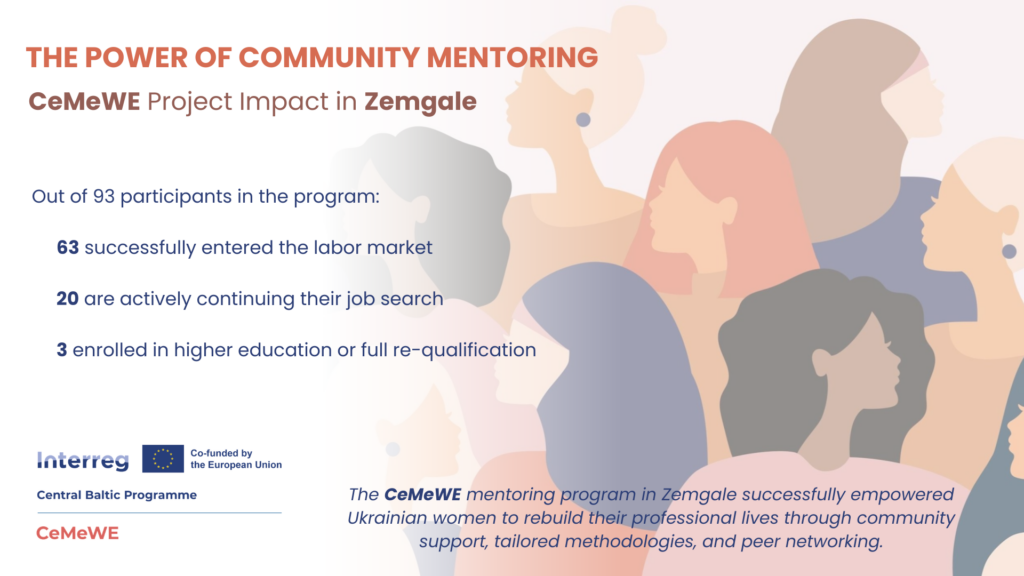
- 63 women have successfully entered the labor market (as employees or self-employed entrepreneurs);
- 2 women have enrolled in higher education;
- 1 woman has completed full professional re-qualification.
When the active phase of the program concluded in January, initial reports indicated that 50 women had found employment. However, as the final data was aggregated and participant progress was fully updated, the true scale of the program’s impact became clear. With 20 more participants still actively seeking jobs, the positive ripple effect continues.
The Foundation of Success: Project Methodologies and Local Adaptation
The success in Zemgale is deeply rooted in the methodologies developed collaboratively within the international project partnership. The core frameworks, including the “SMILE” methodology among others, provided a valuable and effective foundation for social mentoring, skills development, and breaking down emotional barriers.
To maximize the impact of these project tools for the specific target group in Zemgale, ZPR and the local NGO “Džerelo” adapted the approach based on the “Ukrainians for Ukrainians” principle.
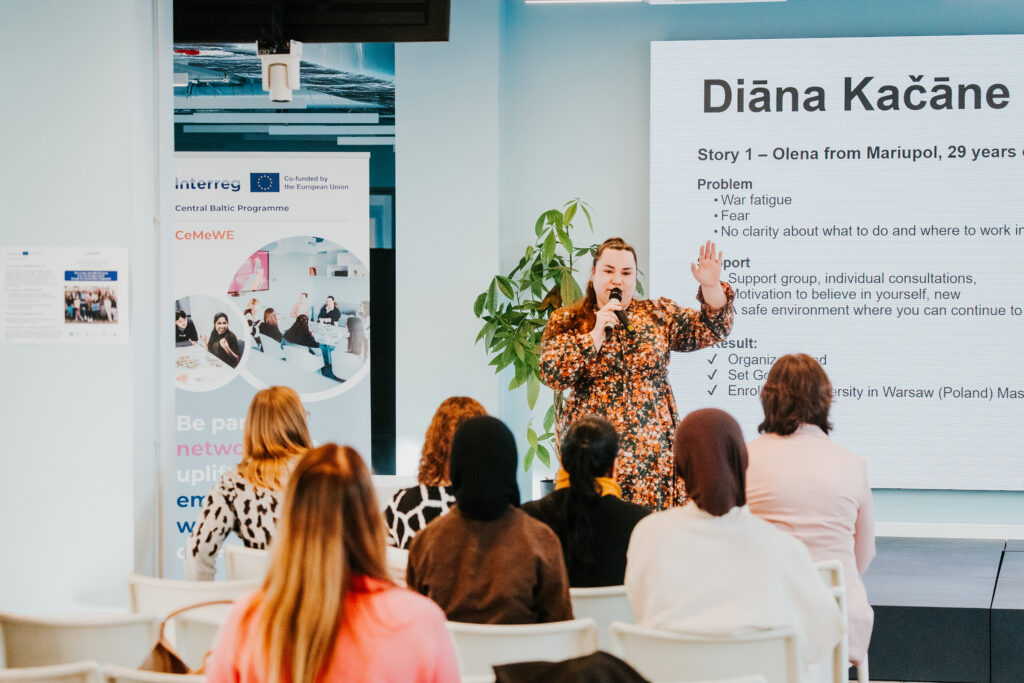
“For women over 40 who lost their professional stability due to the war, the emotional barrier was the hardest to break,” explains Diana Kačane, the support program coordinator and mentor. By supplementing the strong foundation of the project’s methodologies with the “iSMART” approach, participants moved away from overwhelming long-term goals to small, achievable tasks planned for just five days at a time. This significantly reduced stress and replaced “waiting mode” with proactive action.
Practical Outcomes of Community Support
The final phase of the program has produced remarkable success stories that directly illustrate the power of this community-based mentoring:
The Beauty Trio: This story is a perfect example of the project’s networking power. Three beauty specialists, previously unknown to each other, connected through the program’s group sessions. By leveraging their shared professional backgrounds and the mentor’s guidance on self-employment, they decided to open a joint beauty salon within just a week of meeting.
Cultural Entrepreneurship: Karina, a professional choreographer, utilized the program’s support to register as self-employed. She now enriches the local community in Jelgava by leading creative workshops and Ukrainian folk dance classes for children.
Economic Integration: Many other participants have found long-term stability in major regional enterprises, such as “Putnu fabrika Ķekava,” proving that the program successfully bridged the gap between the participants’ skills and the needs of the local Latvian economy.
Legacy and Future Sustainability

Although the “CeMeWE” project is officially concluding, its impact in Zemgale is designed to last. The partnership has significantly strengthened the capacity of the NGO “Džerelo”, which has become a cornerstone for the community.
The established mentor network and the Ukrainian Women’s Club will continue to provide peer support and a sense of belonging. Furthermore, new initiatives are already underway, focusing on advanced Latvian language learning to ensure that these women continue to build competitive, long-term careers in the region.
This publication has been prepared with the financial support of the European Union. The Zemgale Planning Region is solely responsible for its content, and it may not reflect the official position of the European Union.