Sustaining the health and care workforce under pressure
At the EUSBSR Annual Forum 2026 in Tallinn, where resilience was largely discussed in terms of security, defence, and infrastructure, the session organised by the Coordinator for Policy Area Health – Northern Dimension Partnership in Public Health and Social Well-being, focused on a more fundamental issue: the people who keep systems running. The session Caring For Those Who Care For Us brought attention to the health and social care workforce, and the SAFE project. Meanwhile, the heart of the Forum – its Networking Village, was buzzing with interest as the entire SAFE project team introduced participants to the project in detail and built new connections to bring the initiative to new partners and audiences.
The EU is facing a projected shortage of nearly one million health and care workers by 2030, while demand continues to grow. The workforce is ageing, and mental health indicators show sustained strain, with one in three professionals reporting anxiety or depression. This is not a workforce preparing for a crisis, but one already working under constant pressure.
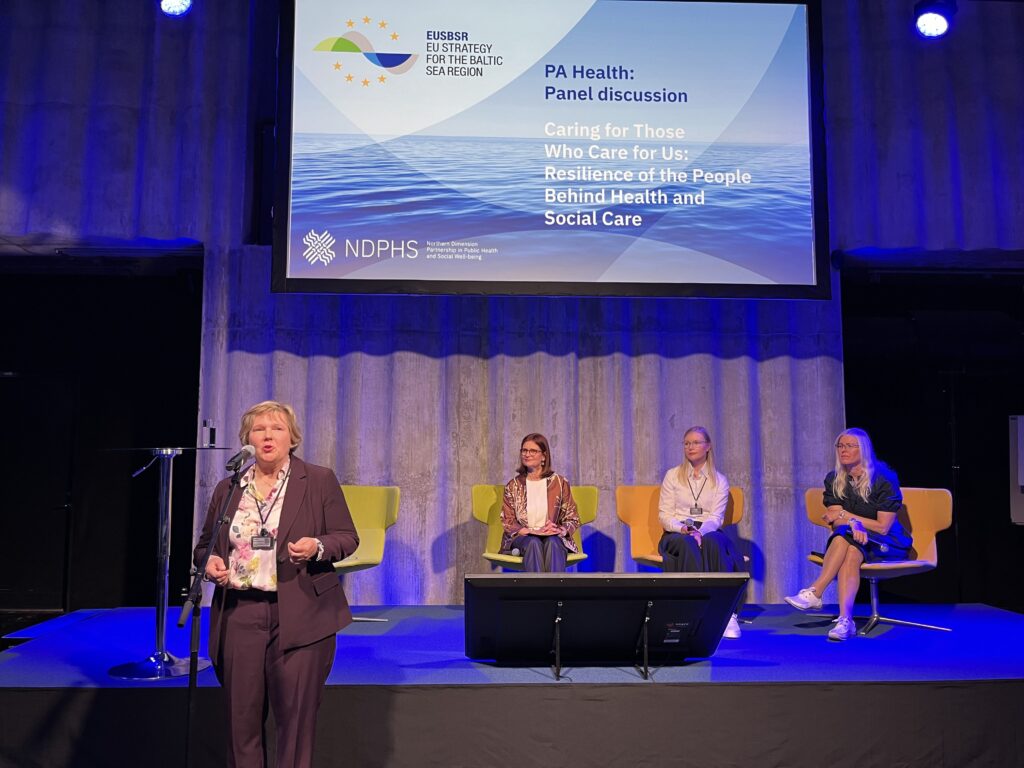
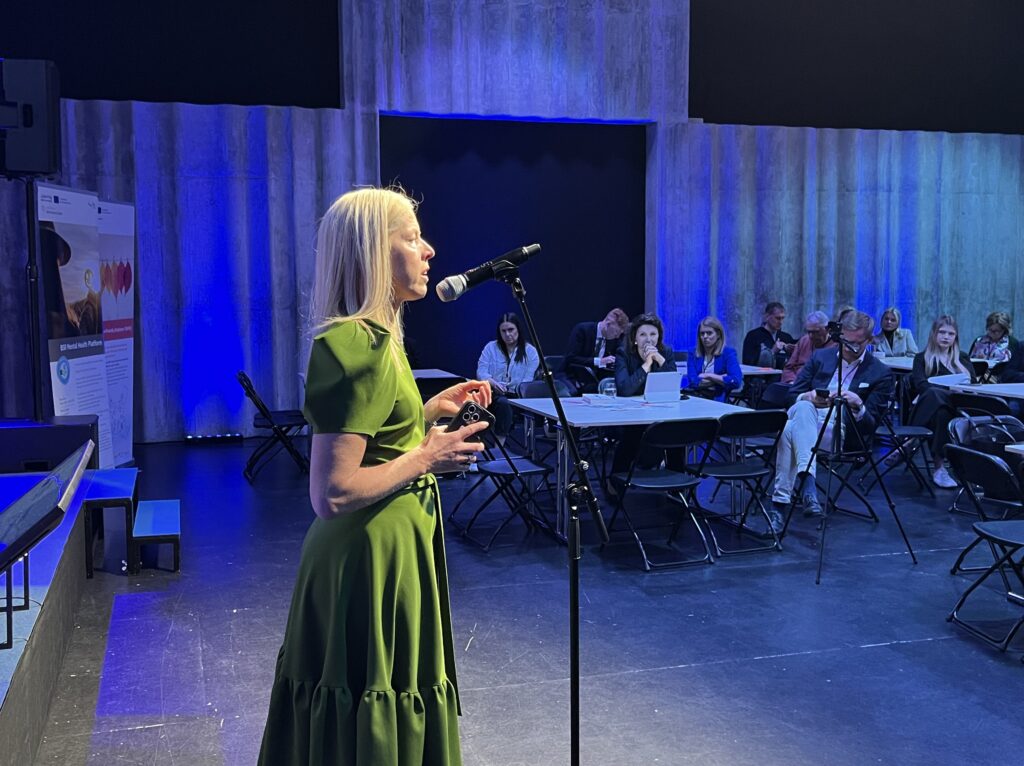
Heini Maisala-McDonnell, Metropolia University (Finland) and Krista Mulenok, Golden League (Estonia) take the stage during the “Caring For Those Who Care For Us” session, EUSBSR Annual Forum 2026
“It is people who keep our societies functioning every day, especially during crises. Simply put, without physically and mentally well individuals, there is no resilient workforce, no resilient services, and ultimately, no resilient societies,” said Ülla-Karin Nurm from the NDPHS Secretariat / PA Health in her opening remarks. Addressing resilience in the Baltic Sea Region, she emphasised that it depends on people, shifting the focus beyond “hard” security such as critical infrastructure, stockpiles, and technical preparedness. A positive sign is that many of the challenges faced by frontline workers can be prevented through decisive leadership, stronger social support, stable working conditions, and greater autonomy at work. To support and sustain this workforce, PA Health is advancing several initiatives, including the SAFE project on retaining ageing workers, the EPIC project on crisis preparedness, and the BSR Mental Health Platform.
Moderated by Karolina Mackiewicz (NDPHS Secretariat/PA Health), the session challenged the idea that resilience can be expected from individuals. Mairi Savage from Karolinska Institutet reframed resilience as a multi-level capacity, shaped by teams, organisations, and systems rather than personal endurance alone. Her research within Apollo 2028 projects, pointed out that leadership and team climate have a greater impact on resilience than workload itself. Where teams function well, individuals recover and adapt. Where leadership is absent or environments are toxic, resilience erodes regardless of external conditions.
Karin Reinhold from Tallinn University of Technology brought this into the context of crisis management, where uncertainty, misinformation, and time pressure dominate decision-makings. In such environments, employees do not expect perfection, they expect clarity, honesty, and presence. Leadership becomes less about control and more about trust. Importantly, this trust is not built during the crisis itself, it is established beforehand, and determines how teams respond when pressure escalates.
From there, the focus moved to what resilience looks like in practice. Julia Mnich’s work with the Polish State Fire Service positioned psychological resilience as a form of infrastructure, something that must be trained, embedded, and maintained. Her approach integrates immediate support, continuous mental health training, and on-scene psychological stabilisation, treating resilience as a physiological capacity that can be developed over time.
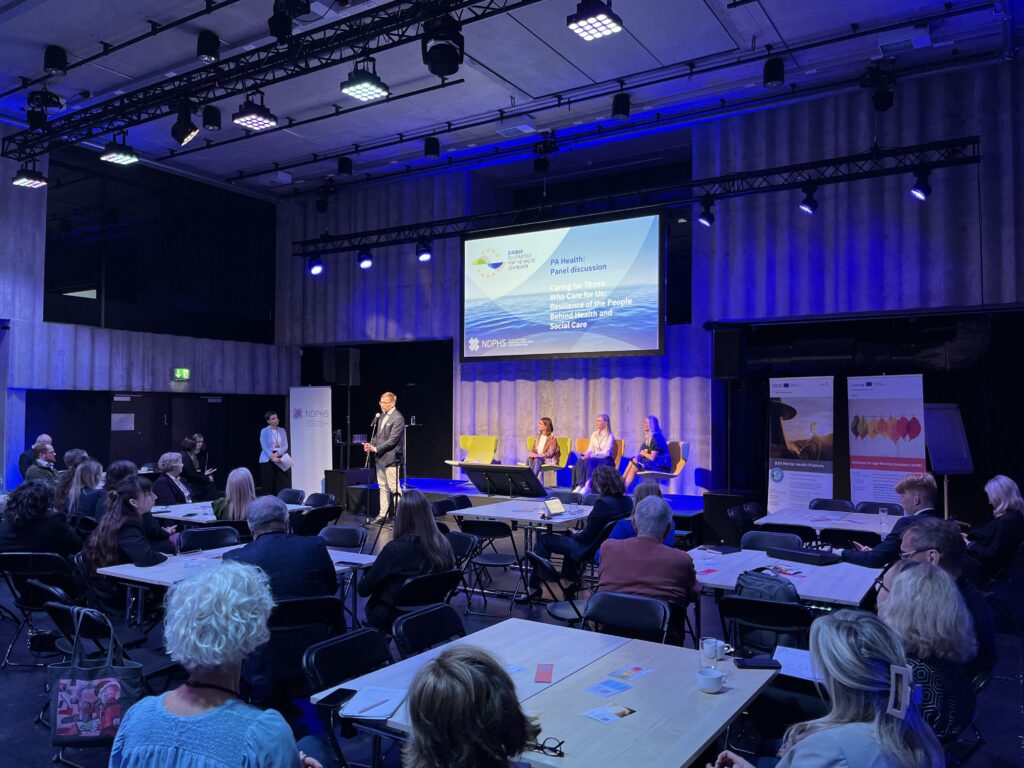
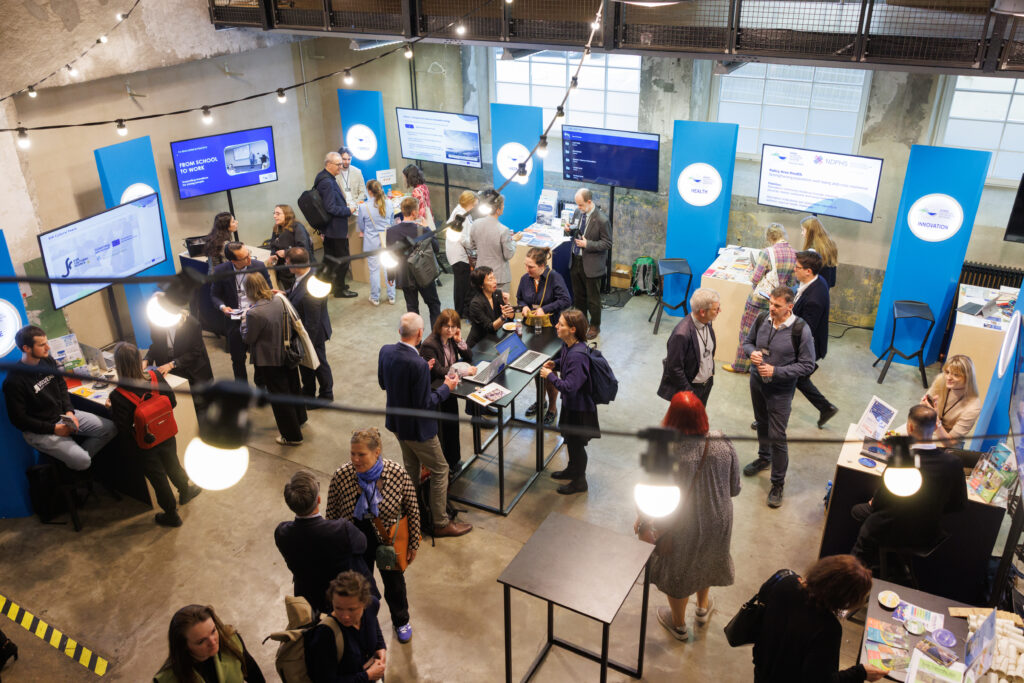
Peep Peterson, Golden League (Estonia) takes the stage during the “Caring For Those Who Care For Us” session. EUSBSR Annual Forum 2026 Networking Village. Tallinn, Estonia
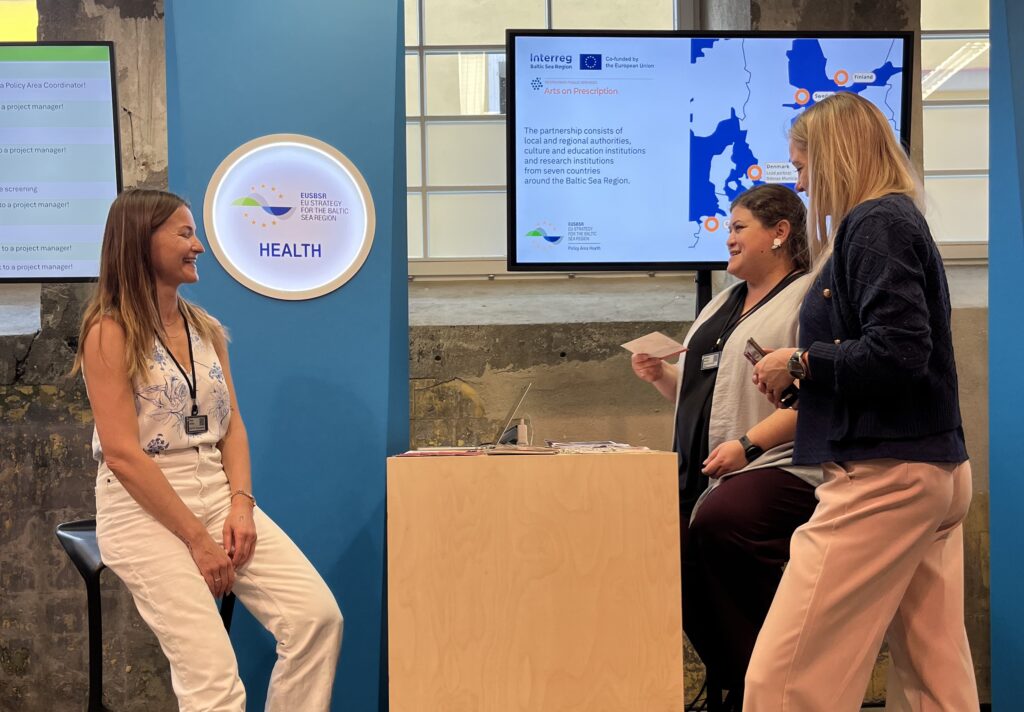
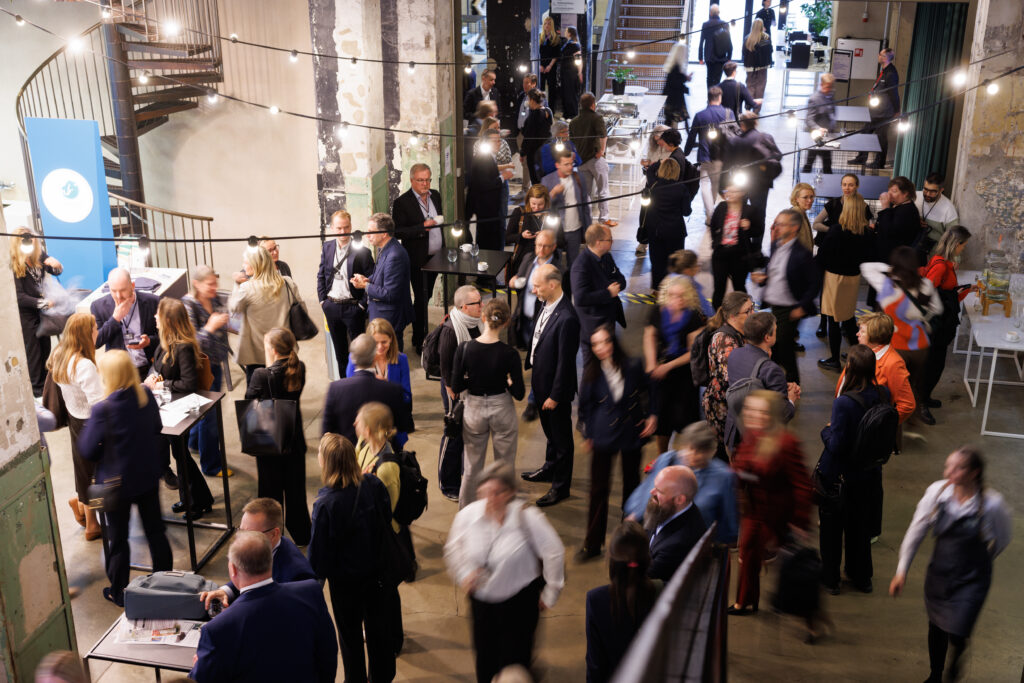
SAFE project at the EUSBSR Annual Forum 2026 Networking Village, Tallinn, Estonia
Elena Bondar’s (Well-being Company) insights from Ukraine reinforced this shift from concept to capability. Evidence from organisations operating under sustained disruption shows that crisis plans alone do not determine outcomes. What matters is whether organisations have built decision-making structures, communication systems, and support mechanisms that function under pressure. A key insight is that most failures occur not at the onset of a crisis, but later, when exhaustion sets in and organisations are no longer able to sustain their response.
The region faces converging risks, from geopolitical tensions to infrastructure vulnerabilities, yet organisational readiness, particularly the human dimension, remains unevenly developed. What emerged from the PA Health session is a shift in how resilience should be approached: less as an abstract goal, more as something that is systematically designed, practised, and sustained over time. The SAFE project aims to do just that by helping organisations sustain inclusive and age-friendly workplaces that support well-being, participation, and sustainable working lives for employees of all ages.