Will a new digital textile waste collection point encourage better sorting?
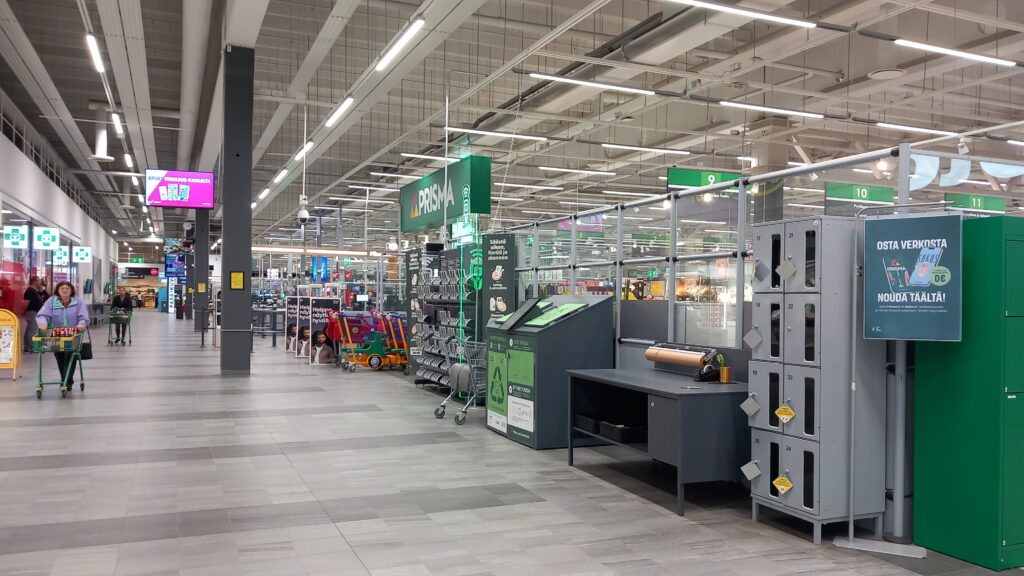
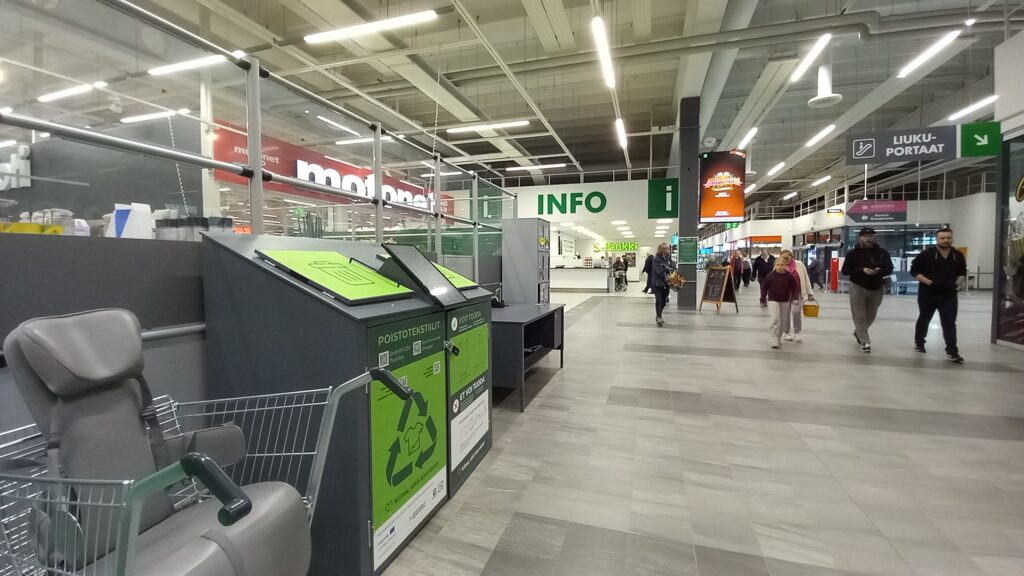
A new digital textile waste collection point has been launched at Mansikkala Prisma in Imatra, Finland. The SustainaCycle project pilot combines textile collection with digital guidance and aims to test how the solution can help people sort end-of-life textiles correctly.
The collection point is intended for dry and clean clothes and household textiles, such as jackets, shirts, trousers, skirts, towels, sheets and tablecloths, that have reached the end of their useful life and are no longer suitable for reuse or sale as second-hand items. The textiles should be packed in a plastic bag and closed tightly before being placed in the collection container.
Clear sorting instructions are displayed directly on the container. In addition to Finnish instructions, information is also provided in English and Russian.
The SustainaCycle project’s digital textile waste collection pilot is designed to test new waste collection solutions and improve the collection and recycling of textile waste. The pilotwill also provide practical experience and information about how the collection solution works and how people use it.
Residents can also contribute to the research. A QR code on the collection point leads to a broader survey, giving users an opportunity to share information and experiences that cansupport the evaluation of the pilot.
The Imatra pilot will run until 30.4.2027.
The pilot is implemented by the SustainaCycle project by LAB University of Applied Sciences and is co-funded by the European Union through the Interreg Central Baltic Programme. The pilot collection point will be located at Prisma’s premises. Prisma will provide the space for the pilot, whereas SaimaanVirta Ry will be responsible for the collection, handling, and sorting of the collected textiles.
Maria Jäppinen, project manager: We’re looking forward to seeing how residents embrace the pilot and how well textiles are sorted at home. The results will help us identifyopportunities to further improve how we can support more effective textile recycling.
Raisa Pajarinen, development engineer: While building and launching the pilot, it has been gratifying to see how various stakeholders have joined forces for a good cause – increasing recycling.