
Planning Libraries of Things for local needs – shared idea, three different paths
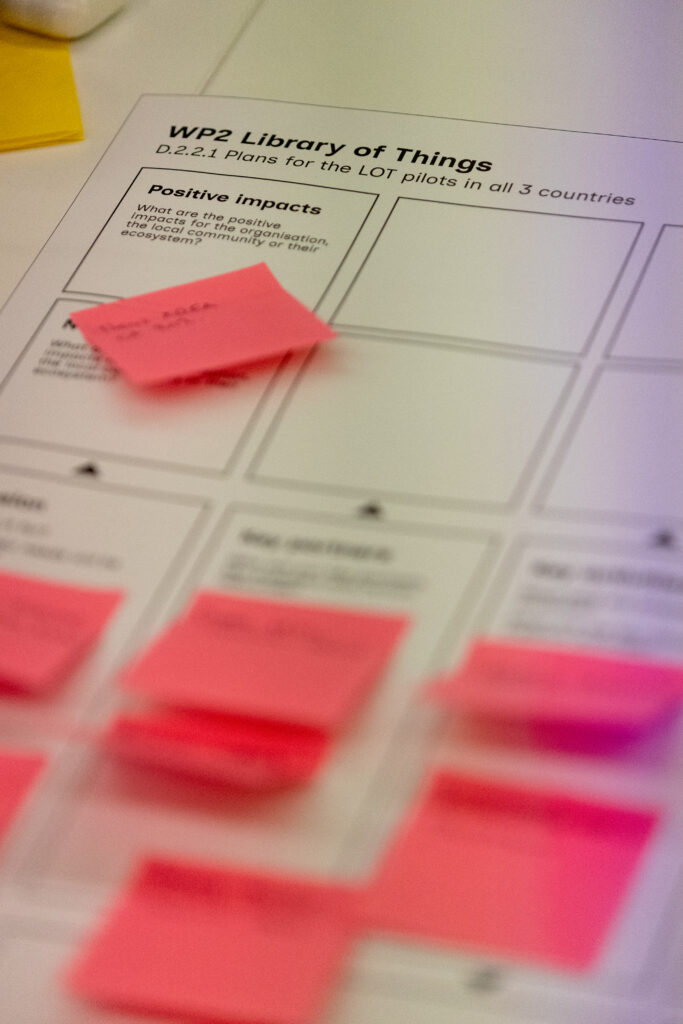
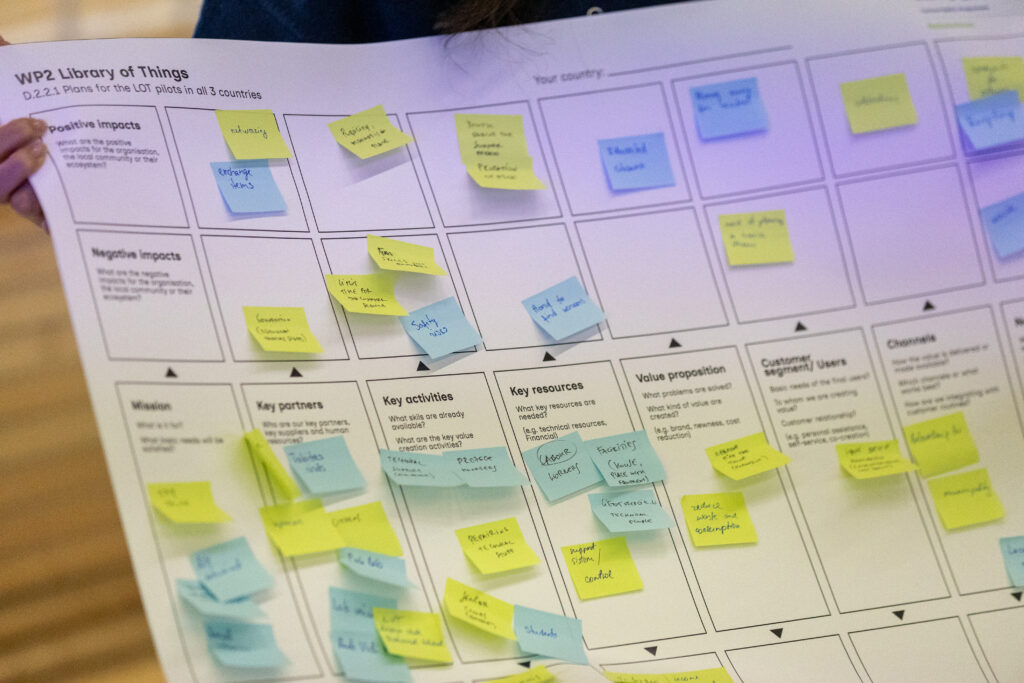
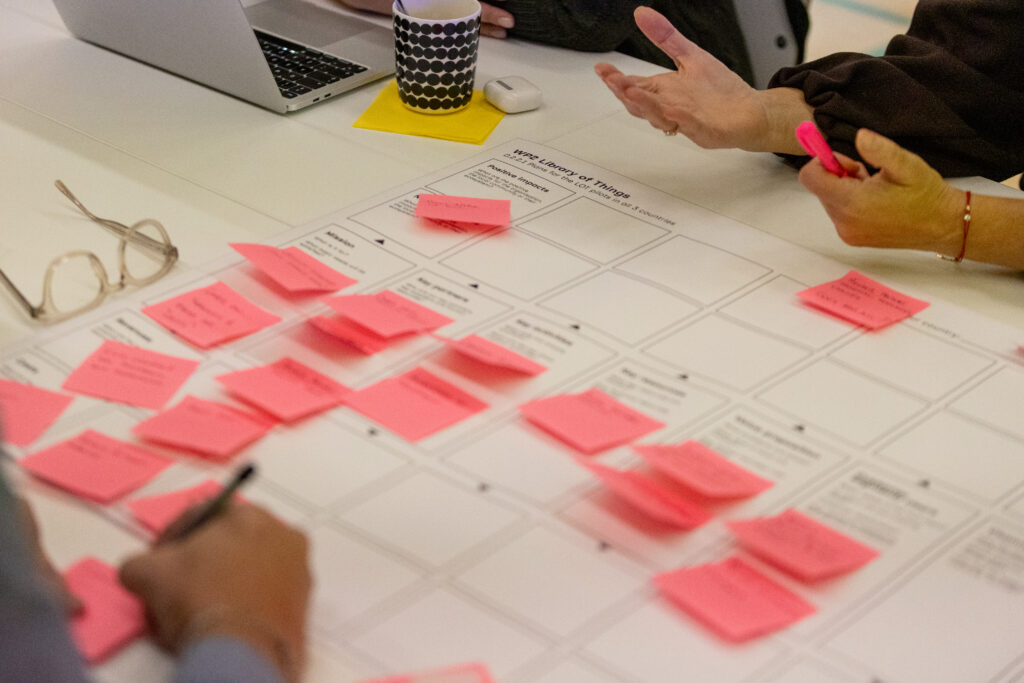
What should a Library of Things look like when local needs, resources, and partnerships are different in every country? To answer this question the ReSolutions partners filled in a canvas to explore the user needs, resources, partnerships, and likely challenges. They also considered what happens to products after lending, and how repair, reuse, spare parts and recycling could become part of the model. A large canvas and a collection of notes provided the starting point for more detailed LOT plans that are to be completed by January.
Images Björn Lans.
Original canvas by Circulab.
Finland: Lending connected with City library and reuse services
In Kouvola, Parik Foundation, Xamk and Kouvola City Library are developing an accessible service connected with the library’s lending system and Parik’s reuse activities. The planned location at Parik’s premises will place the collection alongside a second-hand shop and used goods donation point. The location also enables items to be inspected, repaired, and maintained close to the lending point. The proximity of reuse and lending services could also make it easier to direct suitable donated items towards repair, resale or lending rather than disposal.
The planning will cover more than putting items on a shelf. Maintenance, electrical inspection, repairing, reception of items and lending equipment were identified as practical parts of running the service. The discussion also considered people who may benefit from access to useful items without having to purchase and store them themselves. Potential users discussed during the workshop included students, pensioners and people who are unemployed, but the service was not seen as relevant only to specific groups. Convenience, occasional need and limited storage space were also identified as reasons why borrowing could appeal to a much wider audience. Suggested communication channels included the library, social media, print materials and local press.
Latvia: Libraries of Things at circular-economy sites
The Latvian pilots are being shaped around the existing services and facilities of Liepājas RAS and ZAAO. Liepājas RAS is considering a Library of Things at a recycling centre, where residents and businesses already bring materials and encounter circular-economy services. ZAAO is exploring a swap-based model that could complement its network of eco-sites. These locations provide a useful starting point by connecting the pilots with existing circular-economy services and visitor flows. The next stage of planning will refine the target users and item range to ensure that the service responds to local needs.
The pilot aims to give residents of Liepāja and the wider Dienvidkurzeme area access to practical items they need occasionally, offering an alternative to buying and storing products. Turning this initial idea into a concrete service model requires looking closely at how borrowing would function in practice. One important consideration is accessibility. The initial Library of Things is planned at the “Ķīvītes” Regional Waste Management Centre, approximately 12 kilometres from Liepāja. This makes accessibility an important aspect to test during the pilot: how will the location influence people’s willingness and ability to use the service? Other practical questions are also helping to shape the pilot: which products should be offered, how their quality will be ensured, how the lending process should work and how the service should be communicated to residents.
Sweden: Making existing resources accessible for people and organisations
Föreningsalliansen is exploring how the Library of Things concept could be expanded to include equipment needed by associations and non-profit organisations for events and activities, in Bollnäs Sweden. This could range from kitchen equipment, tables and chairs to sound systems, tents and stages. Much of this equipment is already owned by local associations. The Swedish pilot therefore aims to explore a digital solution that makes existing resources more visible and accessible for borrowing or renting, without requiring the equipment to change ownership or storage location.
This isn’t the first LoT for Förelningsalliansen. They operate the local Fritidsbanken which is one of the 140 locations of free lending service for sports and leisure equipment. With Förelningsalliansen’s established role as a support organisation for local civil society, coordinating such model of combining physical lending with digital resource sharing is possible. The goal is to increase the use of existing equipment, reduce the need for new purchases and strengthen the ability of local associations to organize events and activities. The LOT pilot can therefore be seen as a community resource: something built not only around products, but also around connections between people and organisations willing to share, repair, donate and reuse.
A shared principle, adapted locally
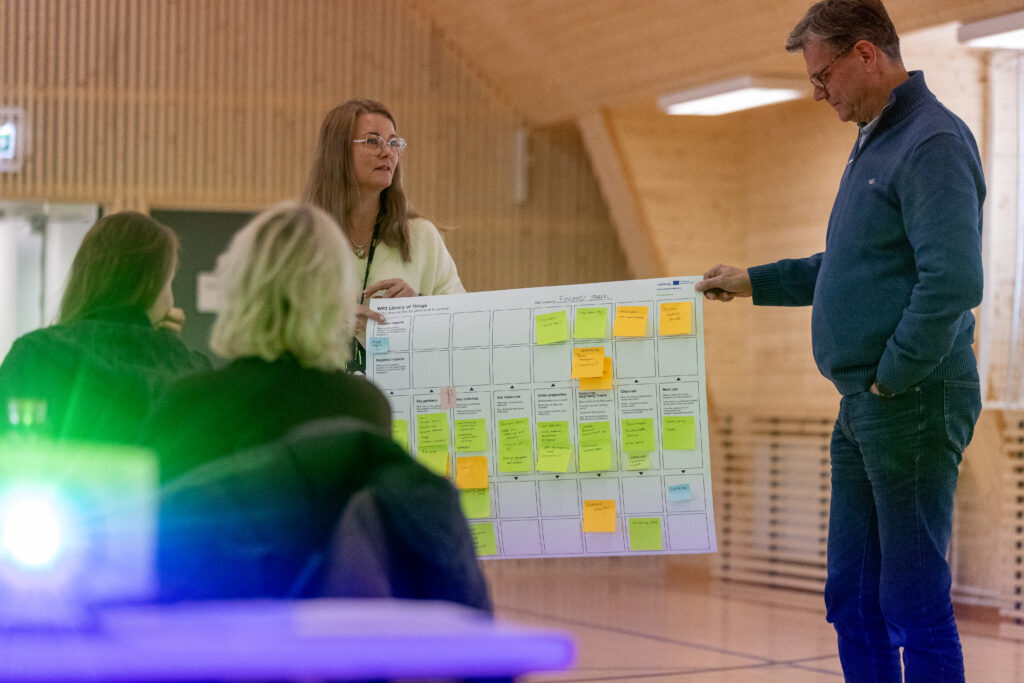
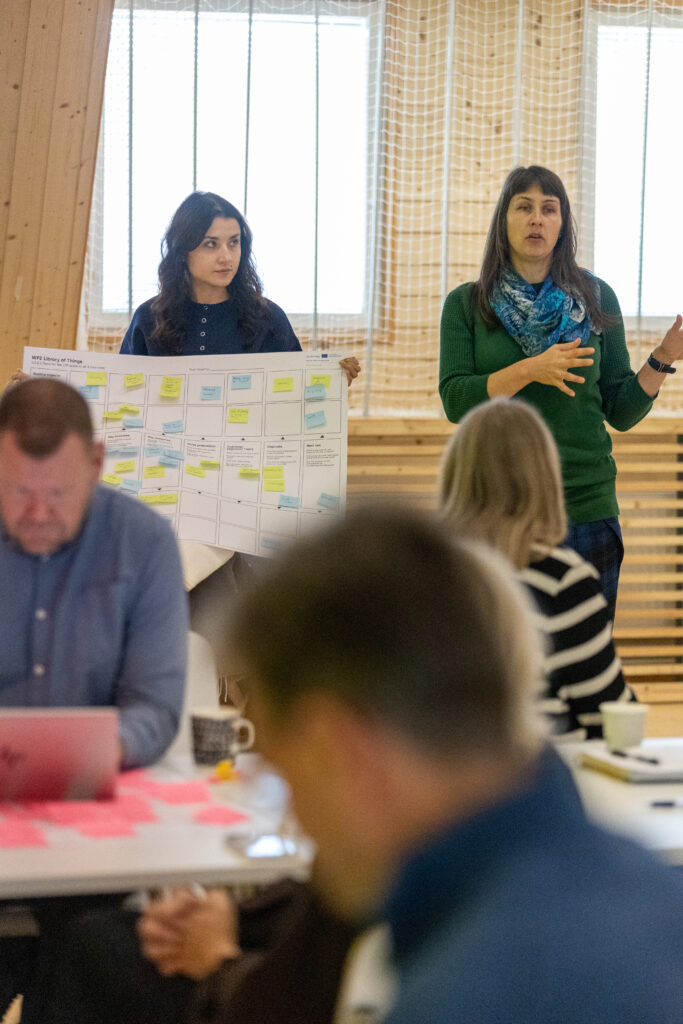
Images Björn Lans.
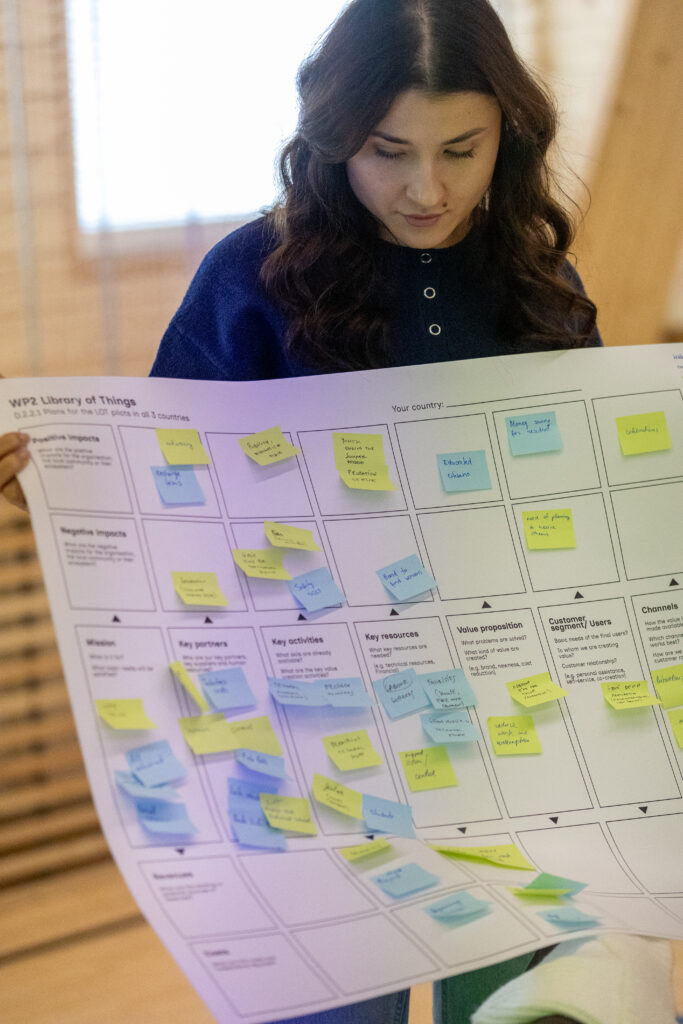
By the end of the workshop, the three canvases looked quite different. The colourful Post-it notes did not represent finished service models. Instead, they now provide foundation for the next stage of planning.
The next step is to turn the ideas into practical pilot plans: what will be offered, how borrowing will work, how products will be maintained and managed, and how the services will reach their intended users. Although the approaches differ across the three countries, they are built around the same principle: a Library of Things is more than products. It is about creating smarter ways for communities to access, share and keep resources in use.
Each pilot can adapt this circular-economy principle to local users, partners, infrastructure and opportunities. The workshop also identified shared priorities including visibility, clear communication, reliable maintenance and cleaning practices, simple lending procedures and strong local partnerships.
Learning from this process will be just as important as testing the services themselves. The country plans will be brought together to identify common elements and locally specific approaches, while observations and experiences will be collected throughout the piloting. Shared indicators, such as user and loan numbers, repeat use, product utilization and user satisfaction, can help the partners understand not only whether the Libraries of Things are being used, but how they contribute to keeping products and materials in circulation for longer.
In this sense, the workshop was not about finding one perfect Library of Things model. It was about creating three locally relevant starting points and a shared learning process to explore how the same concept can work in different settings.
The workshop was part of ReSolutions partner meeting in Kouvola, Finland on October 2026. To read more on the partnermeeting please see the previous article here: Working towards a shared circular economy goal in Kouvola, Finland