
CIRRIWATER survey maps current irrigation water reuse practices
Survey seeks answers to help support the development of more efficient and sustainable water and nutrient management
The EU-funded Baltic Sea Region project CIRRIWATER – More Efficient Circulation of Horticultural Irrigation Surplus Water Means Less Wastewater aims to establish a baseline of current irrigation water recirculation practices in horticultural production. To assess how widely irrigation water recirculation is currently used and identify the main challenges and opportunities, the project has launched a survey targeting greenhouse growers.
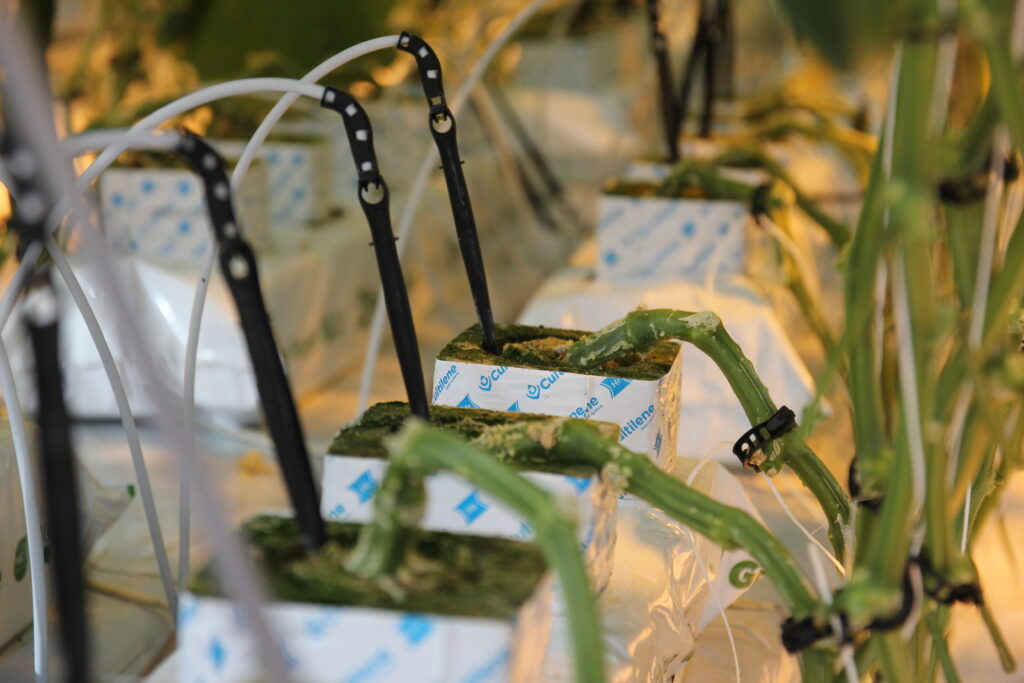
The survey is aimed at greenhouses and vertical farms operating in Latvia, Estonia and Southern Finland. It is available in English, Latvian, Estonian and Finnish. Growers producing fruits, vegetables, berries and other horticultural crops are encouraged to participate. Responses from other relevant operators across Europe are also welcome and greatly appreciated.
The survey seeks to establish how common irrigation water recirculation systems are, how much water and nutrients are recovered and reused, and what challenges growers encounter when operating these systems. The results will help the CIRRIWATER project team identify potential pilot sites where water and nutrient recirculation can be further developed and implemented safely and cost-effectively.
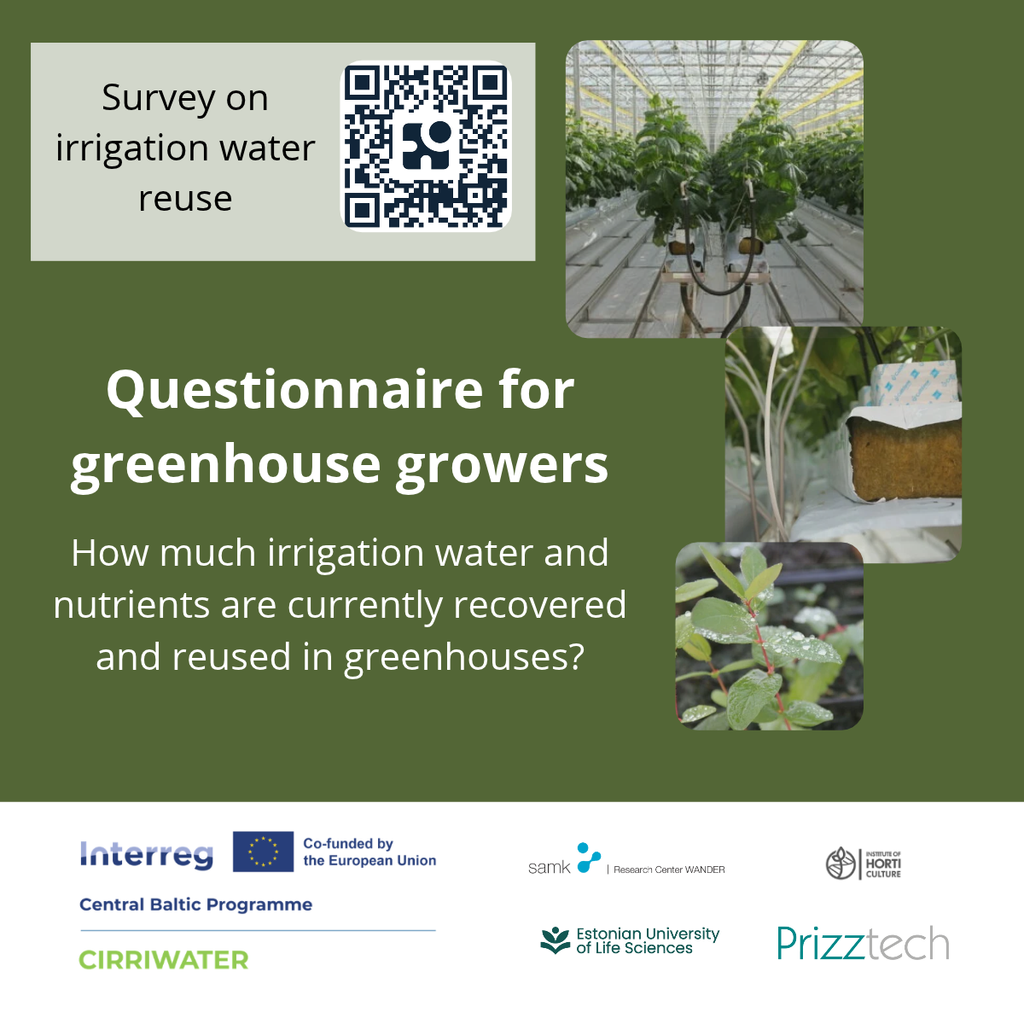
The responses will provide a baseline for current practices, including the proportion of greenhouses using irrigation water recirculation systems and the operating principles of these systems. By combining this overview with growers’ experiences, the project aims to identify and share best practices and support stakeholders in adopting water and nutrient recirculation solutions in both existing greenhouses and new greenhouse developments.
Take part in the survey
The first phase of the survey will be open throughout November 2026.
Contact information
Finland:
- Main contact person: Sari Repka, Satakunta University of Applied Scences (sari.repka@samk.fi)
- Technical support regarding the survey: Julia Pihlavisto-Hakala, Prizztech Ltd. (julia.pihlavisto-hakala@prizz.fi)
Estonia:
- Peeter Laurson, Estonian University of Life Sciences (peeter.laurson@emu.ee)
Latvia:
- Liga Lepse, Latvian Institute of Horticulture (liga.lepse@lathort.lv)