Co‑creating AI for Archives
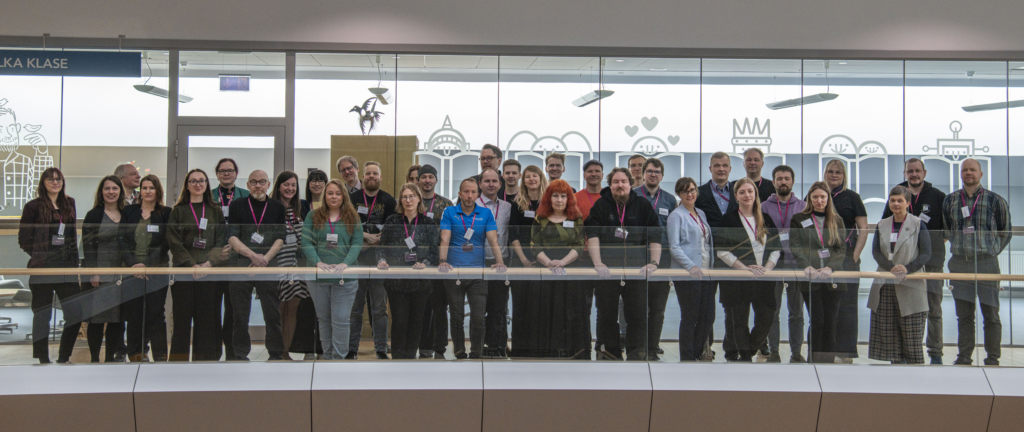
ArchXAI Workshop brought together archivists across borders. On 23–24 April 2026, archivists, researchers, and AI developers from Finland, Estonia, and Latvia came together in Riga for the AI Enhanced Archival Workflows Workshop, hosted by the National Archives of Latvia. The two-day event was designed as a hands-on, cross‑border collaboration space where local archival professionals played a central role in shaping how future AI tools should work in real archival settings.
The workshop opened with an introductory presentation by Anssi Jääskeläinen, who introduced the AI theme and presented the objectives of the ArchXAI project. He explained that ArchXAI aims to modernise archival services across borders by developing AI‑powered solutions for handwritten text recognition (HTR), optical character recognition (OCR), automated indexing, and an AI‑assisted toolset for both end users and internal archival work. The goal is to make historical documents easier to find, understand, and use for archivists, researchers, and citizens.
Learning Across Borders: Shared Challenges and Shared Solutions
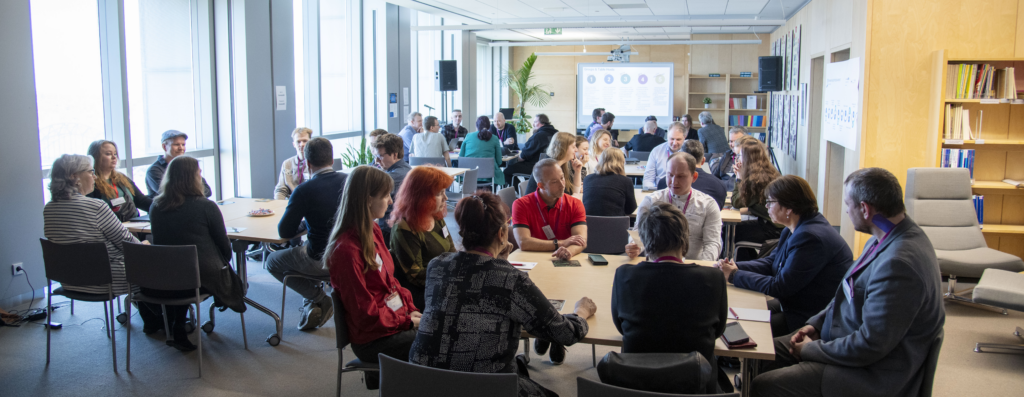
The first day of the workshop, led by Anna Ollanketo and Marianne Heikkinen, focused on understanding everyday archival work from the perspective of archival experts. Before the workshop, a small development team examined information request processes in the participating archives by gathering background information and conducting initial interviews. This exploratory phase revealed that the processes involve multiple interconnected challenges, which were taken up in the workshop for further joint reflection rather than formal analysis.
By comparing practices and pain points across Estonia, Latvia, and Finland, participants were able to jointly define what kind of AI support would help — and what would not. In their discussions, archivists highlighted a limited number of priority capabilities they would expect from an AI-assisted tool, especially easier access across multiple systems and guided search support for both staff and the public.
Co‑design in Practice: Archivists Shaping AI Tools
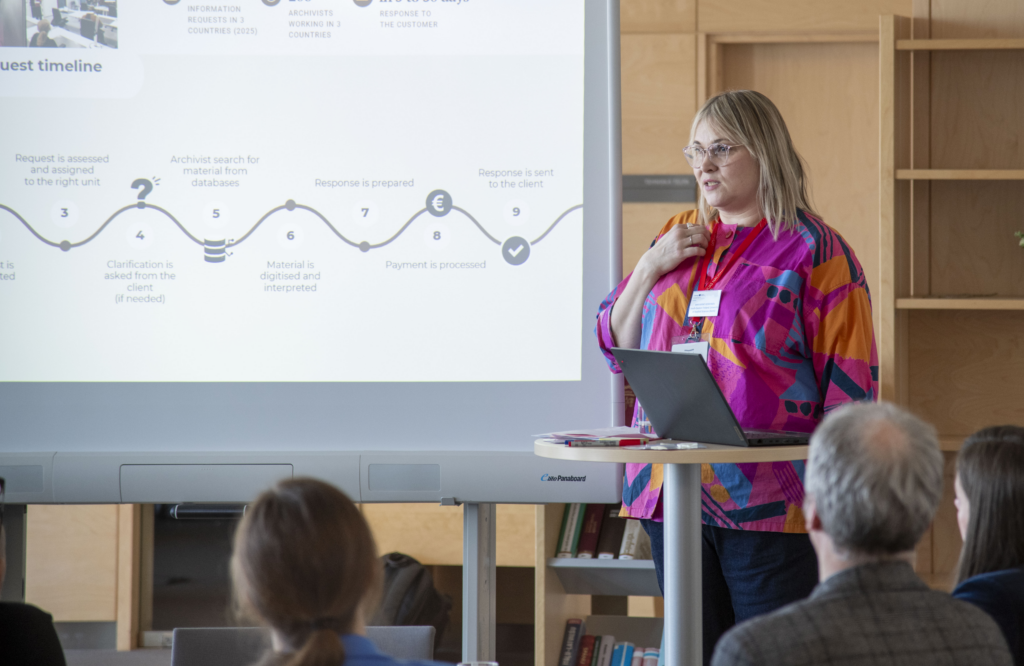
The second day moved from analysis to co‑creation. In interactive sessions facilitated by Mira Kolari, participants worked together to explore and prioritise features for an AI‑assisted Archivist Toolset. Through group discussions and practical exercises, archivists from different countries compared workflows, reflected on responsibilities, and evaluated where AI could realistically reduce manual work. The result was a shared, cross‑border vision for AI tools that support archivists in a responsible and practical way, and as an assistant, not a replacement.
Later sessions, led by Paul J. Aru and Tarvo Kärberg, introduced concrete AI components already under development, including named entity recognition, personal data detection, and experimental tone analysis. Live demonstrations showed how these modules could be integrated with existing archival systems.
The workshop featured two ArchXAI demos that illustrated how AI can support everyday archival work. The first demo showed how archival document images can be converted into searchable text and enriched by automatically identifying key information such as names and places. This demonstrated how AI can support information retrieval and reduce manual work when handling archival materials. The second demo focused on handwritten text recognition, showing how AI can transcribe historical handwritten manuscript pages into digital, readable text. Together, the demos provided concrete examples of how ArchXAI tools can improve access to archival content and support archivists in working with both printed and handwritten sources.
Building Trustworthy AI Together
The workshop showed that trustworthy AI in archives must be developed together with practitioners and through cooperation across organisations and countries. The Riga workshop brought archival professionals together to discuss shared challenges and practical needs related to everyday archival work.
ArchXAI also opened workshops for local stakeholders, e.g. private archives, museums, universities and researchers. The stakeholders were actively involved in defining development priorities together with project team. The workshop gathered over 40 archival and IT specialists, and Latvian stakeholders.
The next ArchXAI workshop will be organised in Estonia in spring 2027.