
From Waste to Value: Reclaimed materials create a new meeting place for young people in Eskilstuna
A new community meeting place was inaugurated last week as part of the Urban Furniture initiative, demonstrating how circular thinking can transform local resources into attractive and functional public spaces.
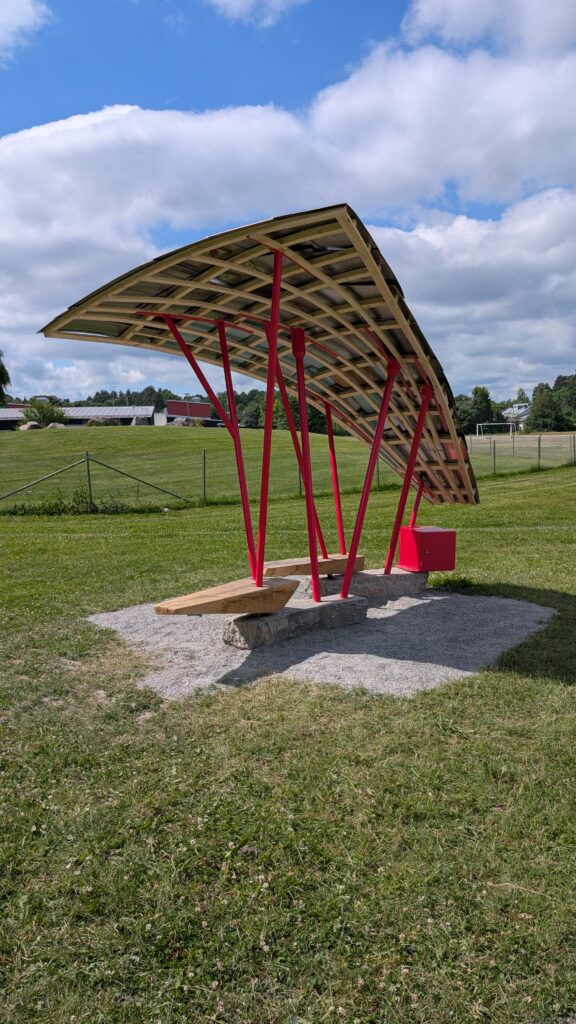
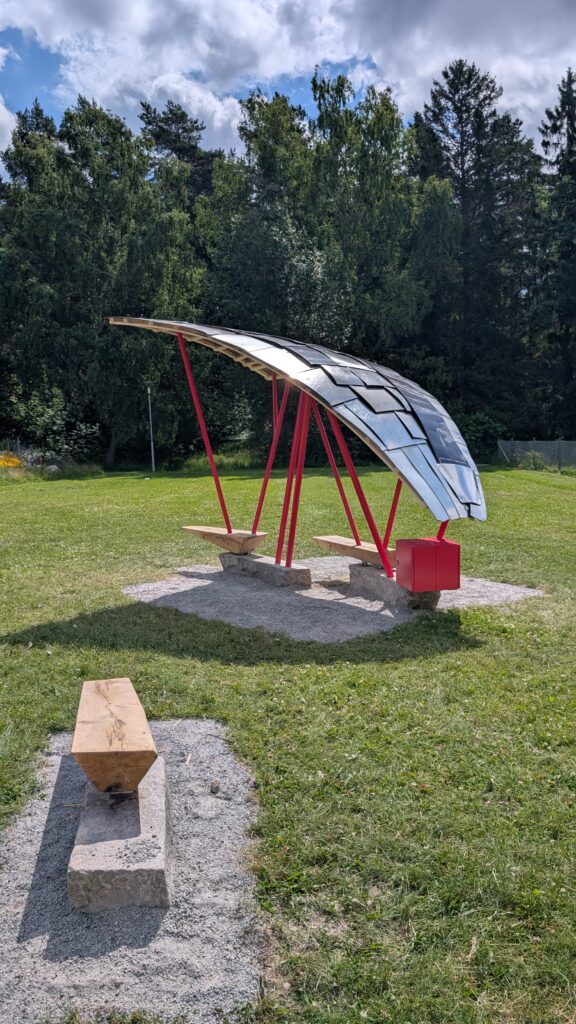
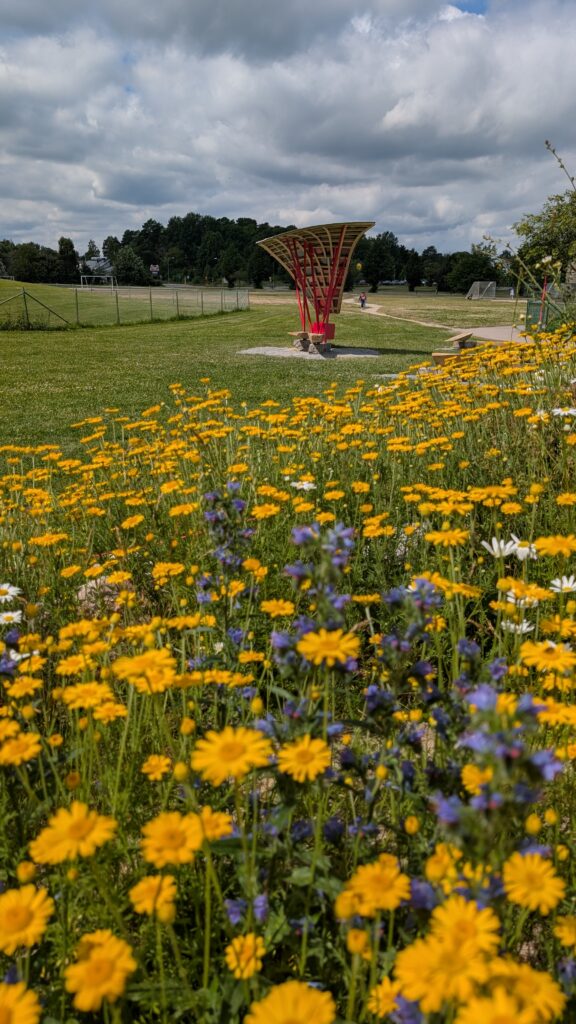
The furniture in Fröslunda, Eskilstuna.
What makes this installation unique is not only its design, but also the story behind the materials. The structure was developed based on ideas and wishes gathered from young girls living in the area, ensuring that the final result reflects the needs of the people who will use it most.
The meeting place is built largely from reclaimed and locally sourced materials. The roof is made from stainless steel sinks recovered from a former nursing home that is currently being converted into office space. The wooden frame was constructed from trees thinned during municipal forest management in Eskilstuna, giving new value to resources that would otherwise have had limited use.
The installation also demonstrates how sustainability and innovation can go hand in hand. Solar panels integrated into the structure generate renewable energy, which is stored in a battery and made available through charging points where visitors can recharge their mobile phones.
The initiative is also an example of how collaboration between projects can create added value. The Waste to Value project and the Urban Furniture project share a common ambition: finding new ways to use local resources more efficiently while creating tangible benefits for communities. By exchanging knowledge and experiences, the projects help accelerate the transition towards more circular and sustainable urban environments.
Urban Furniture is funded by the European Union and the Driving Urban Transitions (DUT) Partnership, supporting innovative approaches to sustainable urban development across Europe. The new meeting place in Eskilstuna illustrates how European cooperation and local engagement can come together to create practical solutions with environmental, social and economic benefits.
More than just a piece of urban furniture, the installation is a tangible example of how local materials, renewable energy and community participation can be combined to create lasting value. It shows that materials often considered waste can become resources that contribute to vibrant, inclusive and sustainable public spaces.