Me and Flodis – Fighting forever chemicals, one floating raft at a time
By Helinä Lind, Student Assistant, Water and Environmental Protection Research Group, Turku University of Applied Sciences.
Discovering the world of forever chemicals
Before joining the project, I was familiar with the term “forever chemicals”, or PFAS compounds, mainly from Teflon coatings and an environmental problems course I took early in my studies. Over the past year, however, I have learned much more:
- PFAS compounds are exceptionally effective at repelling water, grease, and dirt.
- Besides frying pans, they are used in technical clothing, cosmetics, firefighting foams, and food packaging.
- They have spread throughout the environment and accumulated in living organisms worldwide.
- They are known to affect, among other things, reproductive health.
- Even if all PFAS were banned today, the work of removing them from the environment would continue for a long time. That is why they are called forever chemicals.
The BalticPFASResolve project develops measures and tools to reduce emissions of harmful PFAS compounds. Alongside Turku UAS, the EU-funded project involves Mikkeli Development Miksei Ltd from Finland and partners from Sweden, Estonia, and Latvia.
From idea to floating filter
From the very beginning, my work focused on the Kuninkoja pilot site, where the goal is to build different types of filters that capture PFAS and channel the water flowing through the urban stream through them. PFAS compounds originating from firefighting foam had already been detected in groundwater near the airport.
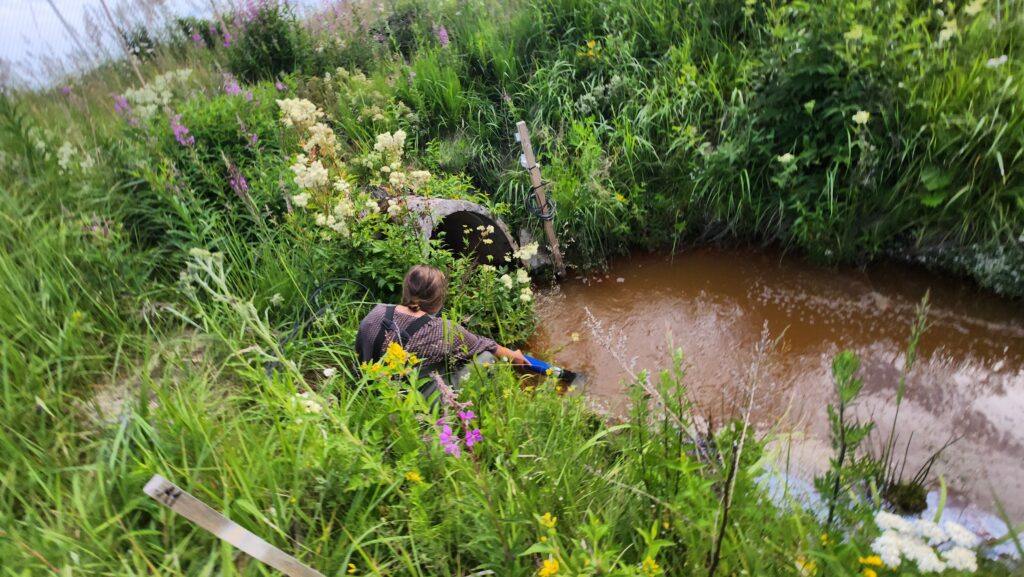
Early on, I had the opportunity to join experts in surveying the site and discussing the most suitable location for constructing the pilot. We installed pressure sensors in selected channels to monitor fluctuations in water levels and flow volumes. Maintaining these sensors and collecting data from them became part of my routine for months. In addition, we measured flow rates using handheld equipment.
Turning plants into pollution fighters
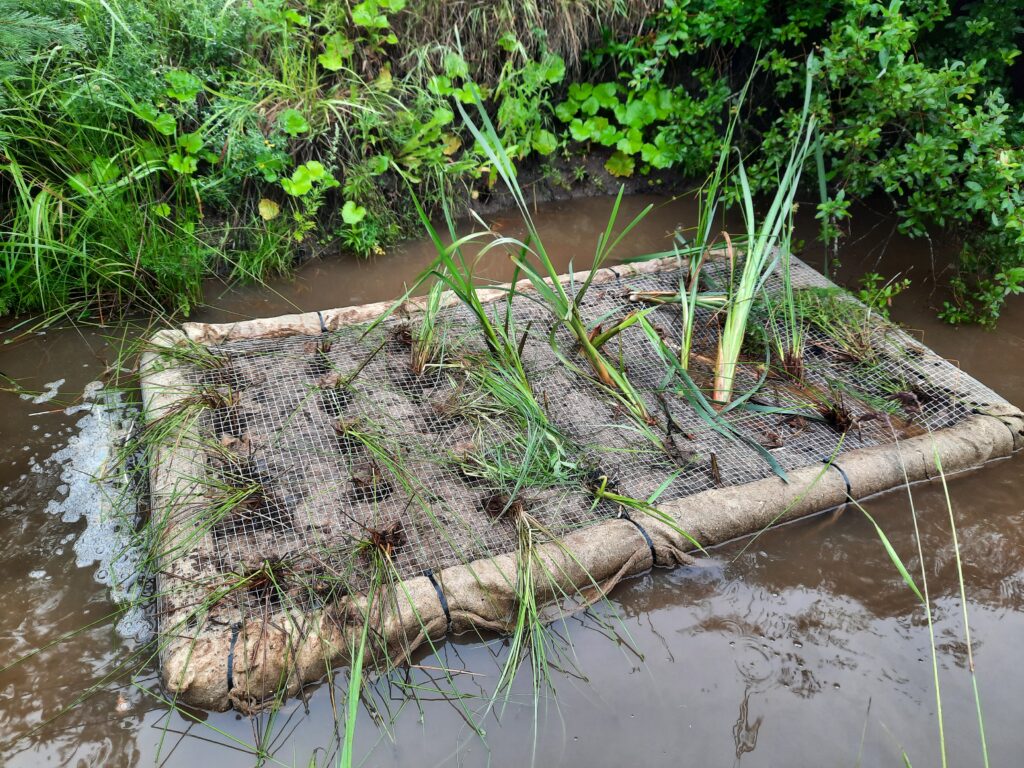
Together with another student assistant, I was given an independent task: designing floating rafts for plants that would serve as one of the filtration structures at the pilot site. The rafts are planted with sedges (Carex) and other plant species known to absorb PFAS compounds. As the plants grow, they capture forever chemicals. Once mature, the vegetation is harvested and incinerated at high temperature, where the PFAS are broken down.
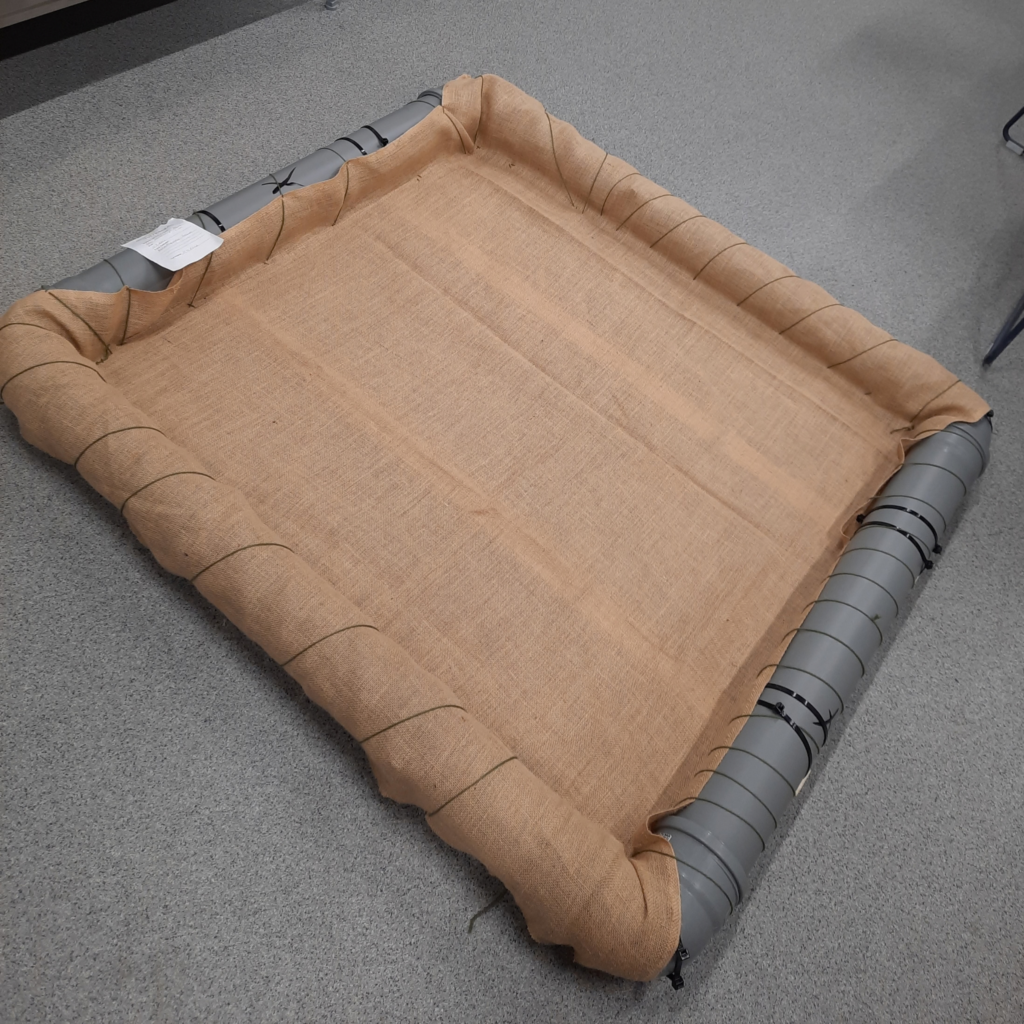
During the winter, we began designing the plant rafts and built the first prototype. We searched online for guidance and sought advice from more experienced colleagues. Choosing the right materials turned out to be a lengthy process. For example, we wanted to avoid coconut fiber imported from far away, and we were concerned about how different plastic materials would withstand changing weather conditions. The prototype we eventually built was named Flodis, and its “birth certificate” was a long list of improvements needed to make it more practical.
In early summer, I researched materials and their prices. It was astonishing to see how much prices for drainage pipes could vary! Hemp was chosen as the filling material because of its excellent moisture-retention properties and because it is produced locally. Still concerned about weather conditions, we also decided to wrap the drainage pipes in hemp felt for additional protection.
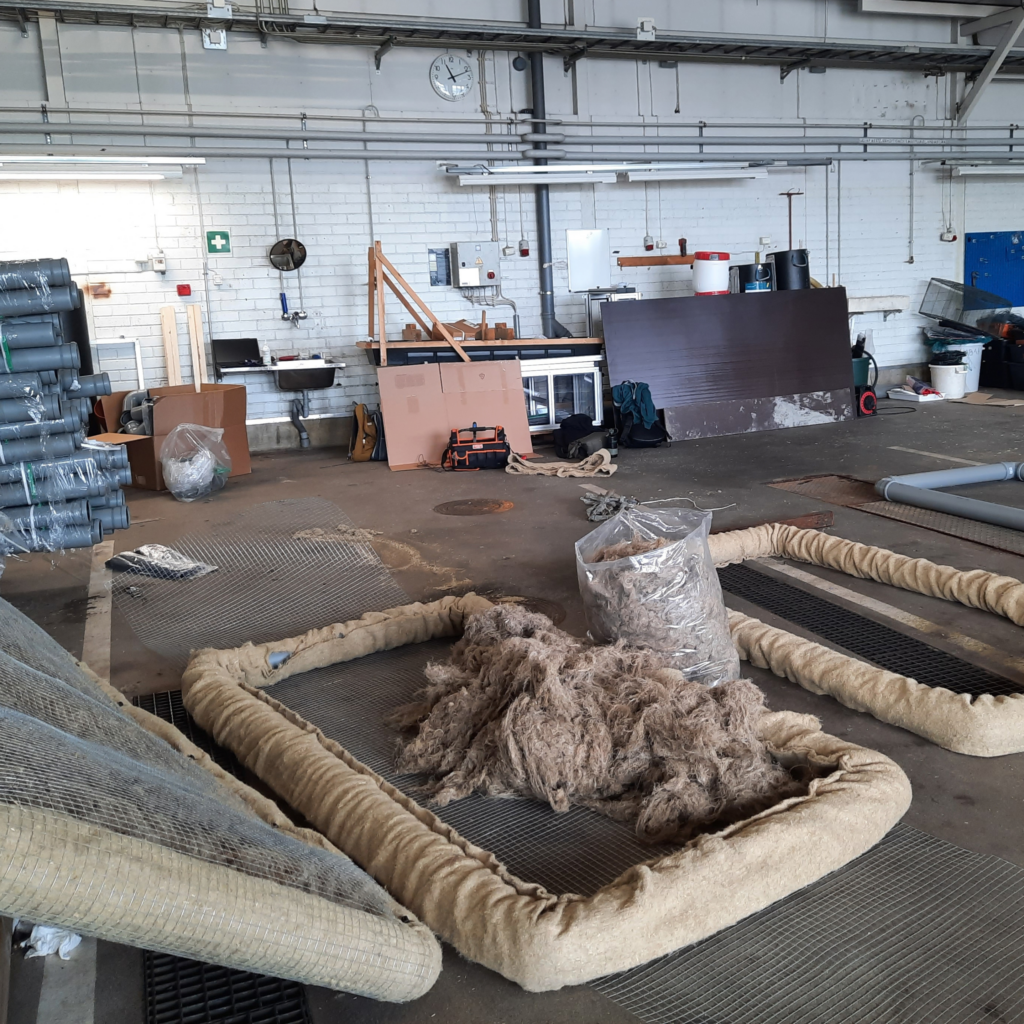
Ready for action in the stream
By July, construction work was in full swing. The second prototype, Flodis 2.0, a nearly finished version, was launched into the stream. We planted existing wetland plants from the site, including cattails and bladder sedge, onto the raft. A few weeks later, the raft was thriving, and the plants were still healthy and growing.
Now I am simply waiting eagerly and sharpening my shovel, because the plan is to begin excavating the full pilot installation this autumn. And the Flodises, our floating plant rafts, are standing by, ready for action.