Reducing nitrogen input to the Baltic Sea: The circular economy approach taken by Liepāja
Water experts from Riga Technical University and Liepāja’s water utility company, “Liepājas ūdens” have collaborated to develop a technology for improving water quality in the Baltic Sea. A pilot device that tackles nutrient pollution coming from sludge compost leachate has been installed on-site at Liepāja. This technology prevents excess nitrogen from entering the Baltic Sea and contributes positively to its environmental status.
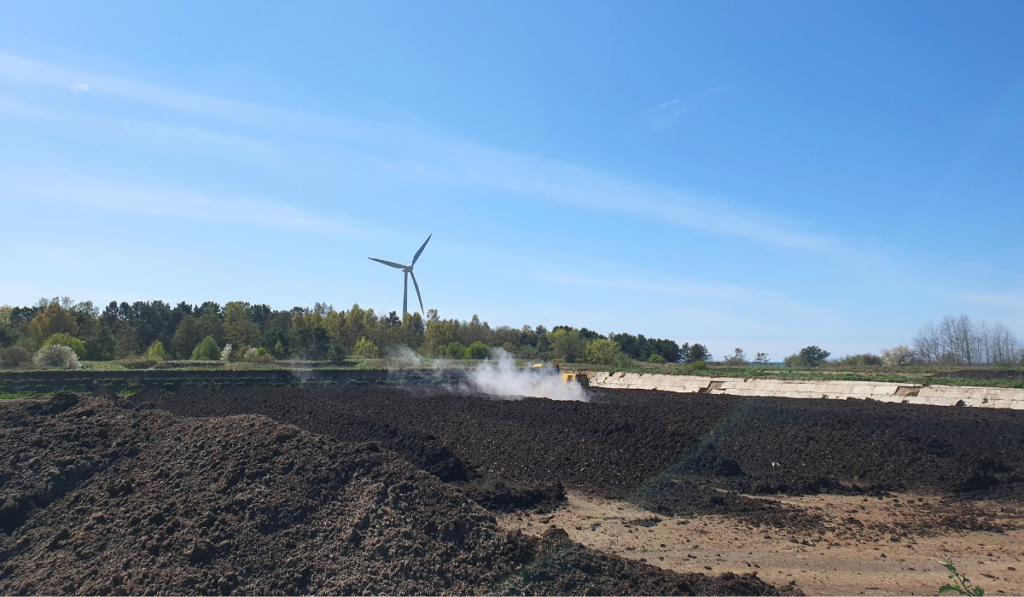
Fostering the collaboration between academia and industry, the WSSP project has brought together researchers from Riga Technical University (RTU) and engineers from Liepāja’s water utility company, “Liepājas ūdens” (LW). The Latvian water experts have worked in a joint effort to develop a technology that tackles nutrient pollution.
Latvian project partners take on the challenge of compost leachate treatment
Located on the western coast of Latvia, Liepāja is Latvia’s third largest city and home to 67 000 people. The wastewater treatment plant (WWTP) of Liepāja is situated just north of the city, right next to the Baltic Sea coast. The WWTP, operated by LW, treats 5.3 million m3 wastewater annually before discharging the treated water into the Baltic Sea. Unfortunately, the Baltic Sea ecosystem is heavily impacted by nitrogen and phosphorus inputs coming both from rivers and direct discharges to the sea. The nutrient inputs are driving eutrophication and biodiversity loss in the Baltic Sea, and it has not yet achieved good ecological status.
Liepāja WWTP, including the sewage sludge composting field, is located within the watershed of a small stream called Cietokšņa kanāls (Fortress canal) which drains directly into the sea. The entire catchment area of Cietokšņa kanāls covers 68 km2 and features mostly forest and agricultural land, with some urban and industrial zones.
Liepāja WWTP manages excess sewage sludge by composting, an approach that is unique in the context of Latvia. Here, the composting process utilizes sludge together with local agricultural waste streams (such as grains) producing compost – a valuable organic fertilizer. However, besides producing compost, a liquid byproduct is also generated during the process. This byproduct – called leachate – drains at the bottom of the compost piles due to moisture of the materials, decomposition of organic matter, and precipitation from rain. Compost leachate is rich in nutrients and may contain pollutants such as heavy metals and pathogens. Uncontrolled release of leachate is a concern for surface water, groundwater and soil quality in the watershed because it contributes to diffuse pollution. Therefore, proper management and treatment of leachate is important for water utilities that want to implement sludge composting in their operations.
Liepāja WWTP is an excellent site for developing leachate treatment technologies as their composting field has a paved, impervious surface and a drainage canal where the leachate can accumulate, thereby preventing pollution from entering the natural environment. Currently, leachate from the composting field is collected and returned to the wastewater treatment process. However, returning leachate to the treatment line has disadvantages such as increased treatment load and increased energy consumption for the plant.
A pilot device for nitrogen recovery
In summer of 2026, a pilot-scale nitrogen recovery system has been installed at Liepāja WWTP to target leachate coming from the sludge composting field. The pilot device consists of several units: ultrafiltration, nanofiltration and hollow fiber membrane contactor.
The treatment starts with removing larger particles from the leachate to enable successful application of the membrane contactor unit. By using a selective membrane contactor system, it is possible to remove nitrogen (as ammonia gas) from leachate. In the final step of the process, ammonia from the leachate reacts with an acidic solution, thus forming ammonium sulphate which is a well-known fertilizer. The implemented pilot system simultaneously reduces nitrogen pollution and demonstrates a circular economy approach to water protection.
Leading by example
Throughout the WSSP project, RTU and LW hope to develop a sustainable and practical approach to leachate management that could be applicable to other sludge storage facilities in Latvia, particularly aiming at those with limited infrastructure (e.g. unpaved surface, no collection channels). Working in close collaboration, the Latvian partners will continue to monitor the performance of the pilot device in Liepāja, with the long-term goal of reducing nutrient load to the Baltic Sea.
About the project
Improving water management with a watershed-based operational model in the Central Baltic Sea area
The Baltic Sea is one of the world’s most sensitive and polluted seas. About half of the nutrient load in the Baltic Sea comes from diffuse pollution, which accumulates for example from urban areas, agriculture, and forestry. The WSSP project promotes a practical and resource-wise Watershed Safety Plan (WSSP) operational model that enables municipalities, water utilities and other relevant actors to reduce the amount of diffuse pollution from reaching the Baltic Sea.