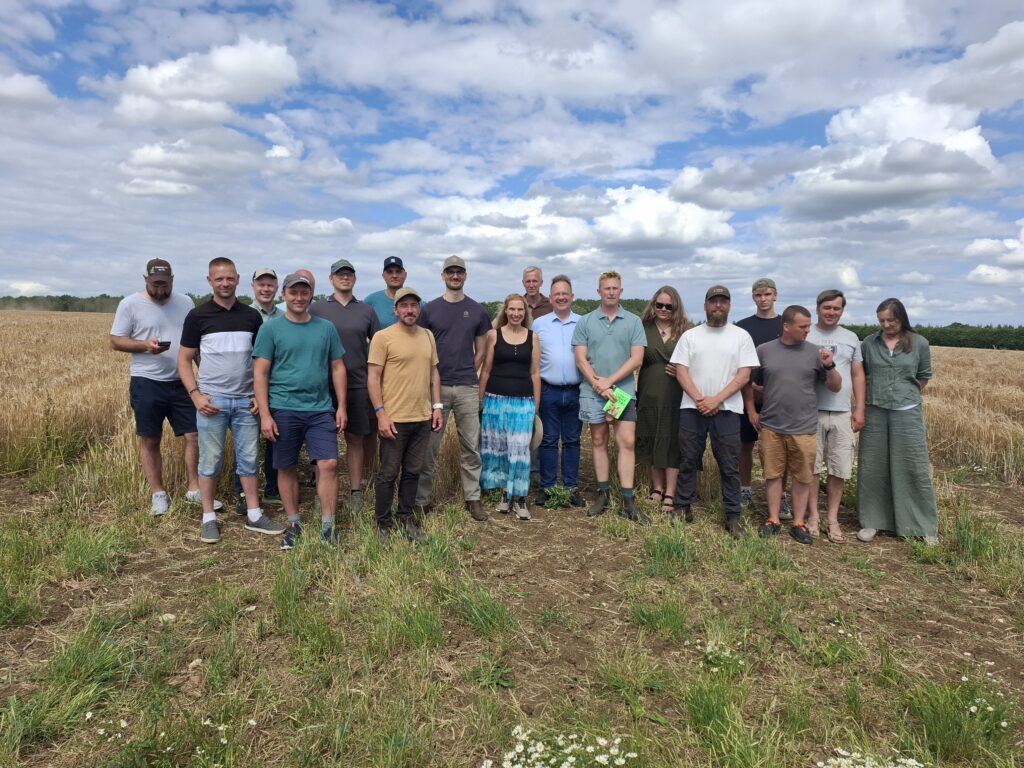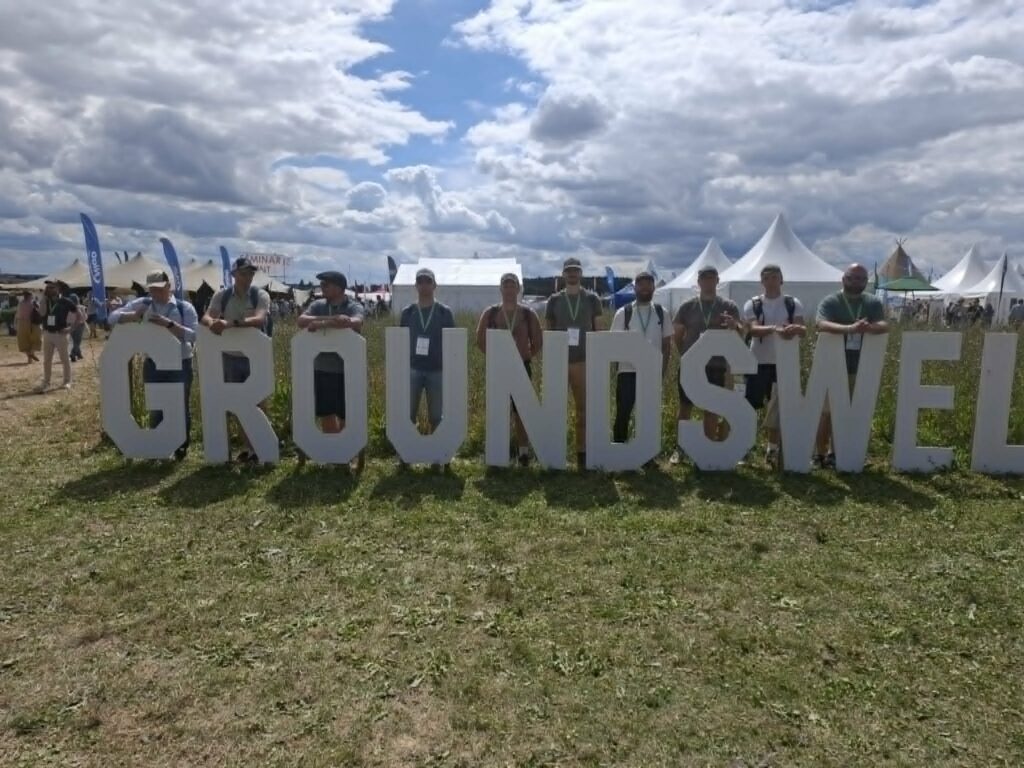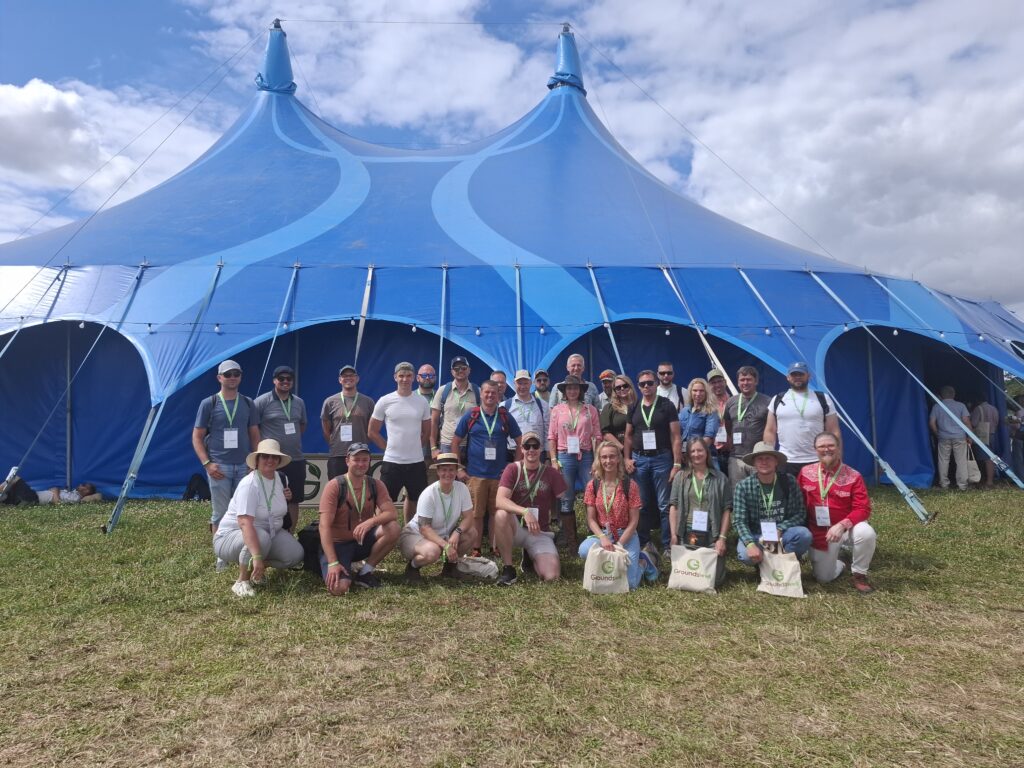
ReGen AGRI demo farmers in Groundswell
On 01.-02.07.2026, demo farmers and team members of the ReGen AGRI project visited the Groundswell Regenerative Agriculture Festival in the United Kingdom.
Held for the tenth time at Lannock Farm in Hertfordshire, the festival serves as a forum for farmers and everyone interested in food production and the environment to learn about both the theory and practical applications of regenerative agriculture. Over the two-day event, nearly 500 speakers from around the world—including farmers, researchers, advisers, experts and policymakers—shared their knowledge and experience with more than 10,000 participants. The programme featured over 250 seminars, panel discussions and practical demonstrations. Around 375 companies and organisations also exhibited at the festival, showcasing solutions, projects and products that help farmers produce food sustainably while working in harmony with nature.
On 30.06.2026 day before the festival the group had 2 farm visits:
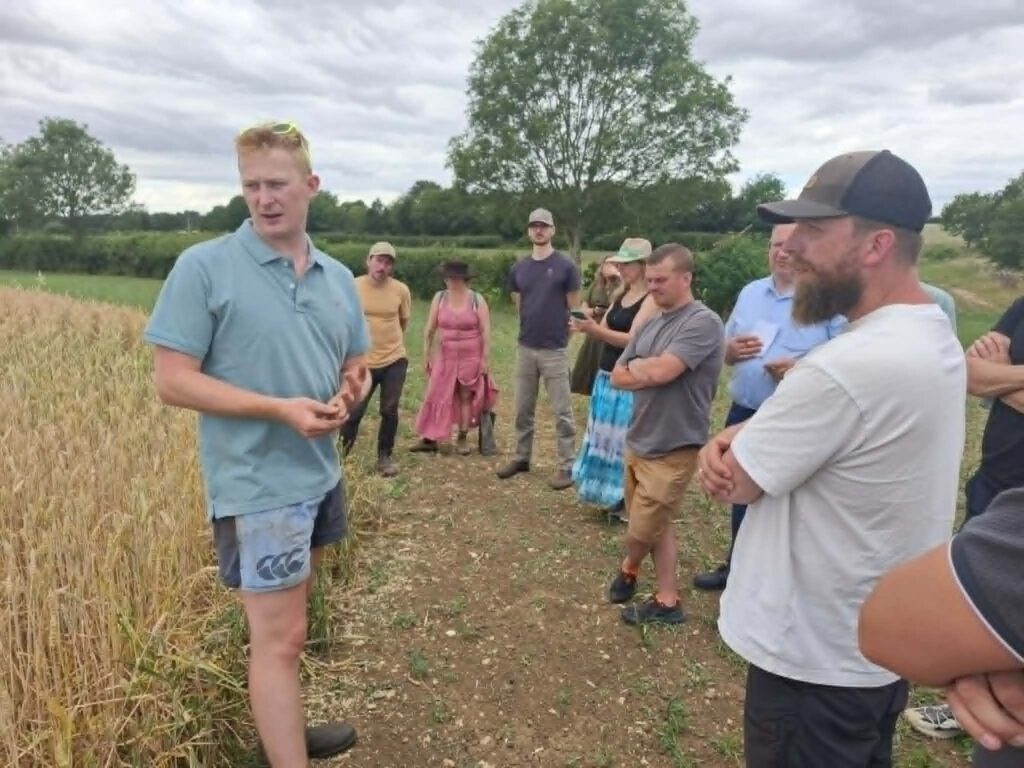
The first visit was to Wildfarmed, a company working with a growing network of around 150 farmers who produce cereals using practices that prioritise soil health, biodiversity and reduced input use. To create added value, Wildfarmed operates a fully traceable farm-to-fork supply chain, purchasing grain directly from farmers and processing it into Wildfarmed-branded flour and other food products, which are supplied to bakeries, restaurants and major retailers. The visit was hosted by Ed Brown, Head of Agriculture at Wildfarmed, who supports farmers through agronomic advice and the implementation of regenerative farming practices.
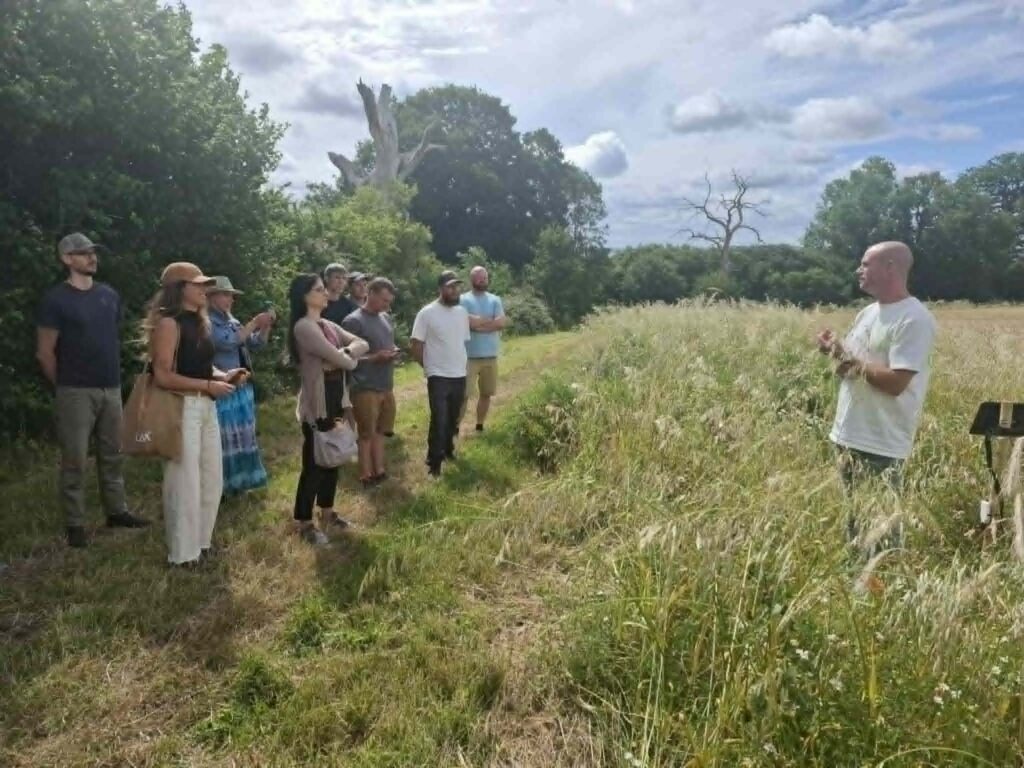
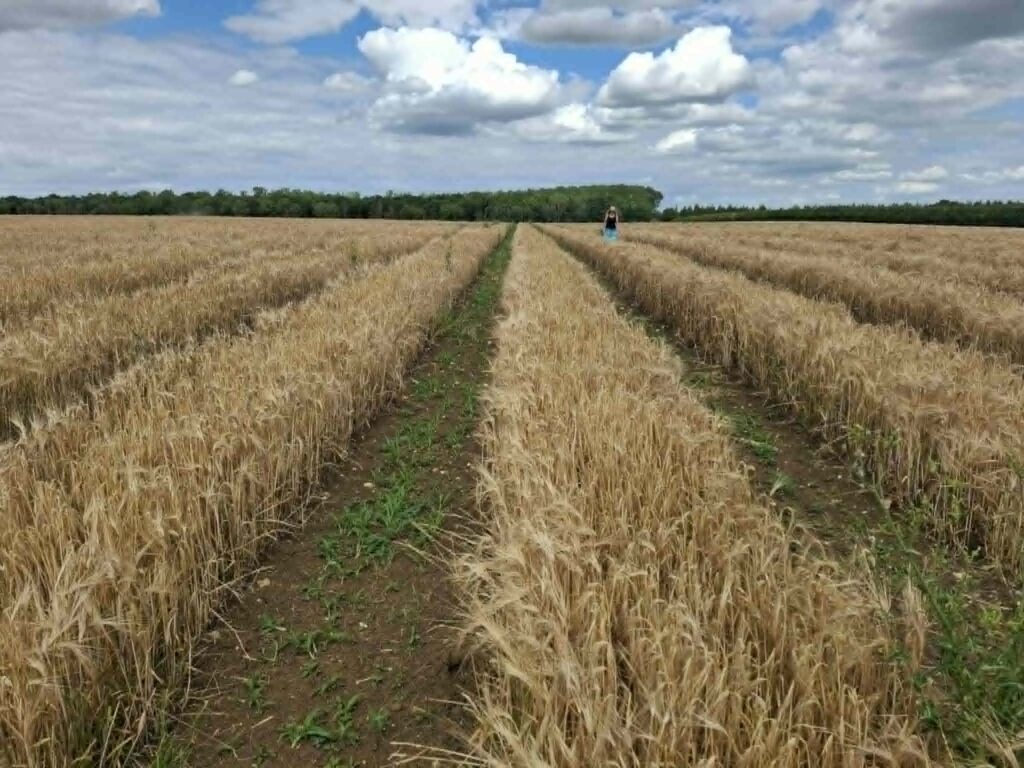
The group then visited the farm of Ben Adams, an arable farmer and agronomy consultant based in Oxfordshire, where a wide range of soil types and cropping systems are managed. Ben is widely recognised for his pioneering intercropping trials and for developing practical, farm-scale approaches that increase crop diversity within arable rotations. Alongside farming, he works as an agronomy consultant, helping other farmers design and implement more diverse, lower-input production systems. During the visit, participants had the opportunity to observe the harvest of winter barley on one of the farm’s trial fields. According to Ben, this was the earliest start to the winter barley harvest in the farm’s several-hundred-year history. The trial field featured alternating strips of winter barley alongside flax, sorghum, millet and soybeans. After the barley harvest, a cover crop mixture is sown in its place. At the end of September, the remaining crops are harvested and winter barley is sown again. In October and December, sheep are rotationally grazed across the entire field using a mob grazing system. This integrated approach makes it possible to harvest multiple crops within a single growing season while also grazing livestock twice on the same field.