
Successful NATO & EDF Conference Highlights Opportunities for SMEs in Defence Innovation
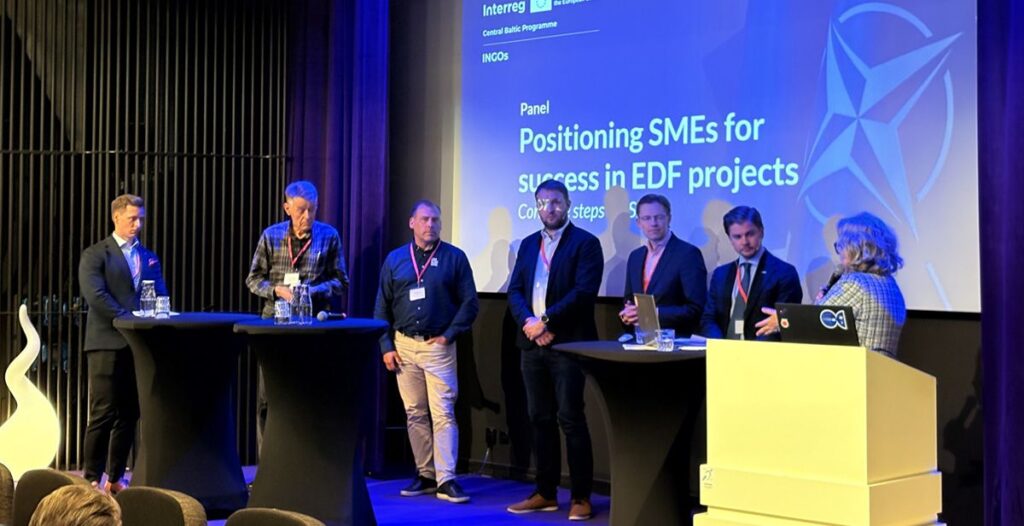
On 29 April 2026, around 100 participants from Sweden, Finland, Estonia and Latvia gathered for a full-day conference focused on opportunities within NATO and the European Defence Fund (EDF). The event brought together representatives from government, industry, research organisations and innovative SMEs, creating a dynamic platform for knowledge-sharing, collaboration and new connections.
The conference aimed to increase understanding of how SMEs can engage with NATO and EDF initiatives, while also showcasing real-world examples and practical guidance on navigating these complex ecosystems. Through expert presentations, company case studies and two panel discussions, participants gained valuable insights into both strategic developments and hands-on approaches. The conference was co-organized and partially funded by Central Baltic -program funded project Export to Internationa NGOs.
Growing Opportunities in a Changing Defence Landscape
A central theme throughout the day was the rapidly evolving defence landscape. Increased geopolitical uncertainty and NATO’s expanded ambitions are driving significant investments in defence capabilities, with innovation and efficiency identified as key priorities.
Speakers highlighted how NATO membership opens new opportunities for Swedish and Finnish companies, particularly through procurement channels such as NSPA and NCIA. At the same time, efforts are being made at national level to improve transparency, communication and access for SMEs, including initiatives to lower entry barriers and provide clearer guidance.
However, challenges remain. Bureaucracy, long decision-making processes and the complexity of the defence market were frequently mentioned. The importance of improving dialogue between government and industry—especially for SMEs—was emphasised as a key factor for future success.
DIANA – Accelerating Dual-Use Innovation
The NATO DIANA accelerator programme was presented as a major opportunity for innovative companies. Designed to support dual-use technologies, DIANA offers funding, mentorship, access to testing facilities and a strong international network.
Company representatives shared their experiences from participating in DIANA, highlighting benefits such as increased visibility, credibility and direct access to end users and decision-makers. For many SMEs, the programme acts as a “door opener” into the defence sector.
At the same time, speakers stressed that participation requires commitment and resources, as the programme is intensive and fast-paced. Companies are encouraged to prepare early and ensure they can dedicate sufficient capacity.
European Defence Fund – Collaboration is Key
The afternoon sessions focused on the European Defence Fund (EDF), which plays a central role in strengthening Europe’s defence capabilities through collaborative research and development projects.
A consistent message was that cooperation is essential. EDF projects are built around multinational consortia, bringing together large companies, SMEs and research organisations. SMEs were highlighted as crucial contributors, particularly when it comes to innovation, niche technologies and agility.
Participants were encouraged to:
- Carefully analyse work programmes and identify relevant calls
- Network actively and build partnerships early
- Consider both partner and subcontractor roles
- Participate in matchmaking events and info days
Several speakers also shared practical experiences from ongoing EDF projects, illustrating both the benefits—such as funding, market access and new partnerships—and the challenges, including administrative requirements and the need for significant preparation.

The Power of Networks and Collaboration
Across both NATO and EDF discussions, one message stood out clearly: networks and collaboration are critical.
Whether entering a DIANA programme, responding to an EDF call or participating in NATO procurement, building relationships with partners, larger companies and public actors is essential. Many successful collaborations are built on existing networks and previous cooperation.
Panel discussions reinforced that SMEs should not hesitate to engage, even if the system initially seems complex. Persistence, preparation and proactive outreach were repeatedly highlighted as success factors.
Strong Engagement and Positive Outcomes
The event concluded with an interactive networking session, where participants had the opportunity to meet speakers in smaller group discussions. This format enabled deeper dialogue, new connections and concrete follow-up opportunities. Overall, the conference demonstrated strong interest in defence-related innovation across the region and confirmed the growing importance of SME participation in both NATO and EU initiatives
Key Takeaways
- Defence investments and innovation efforts are increasing rapidly
- NATO and EDF offer significant opportunities for SMEs
- Dual-use technologies are becoming increasingly important
- Collaboration and networking are essential for success
- Preparation and understanding of processes are key to participation
The event was widely appreciated by participants and highlighted the importance of continued initiatives to support SMEs in navigating and contributing to the evolving defence ecosystem.