
From local startups to international scaleups: lessons from the NBSCALE project
How can startups from small home markets successfully expand into international markets? The NBSCALE project set out to answer this question by supporting growth-oriented companies across Finland, Sweden and Estonia, and by developing a structured methodology for scaling beyond borders. The main objective was to help startups understand the journey ahead and acquire the skills and tools needed to enter a new market, create a plan, and execute it.
The project was led by Business Turku (Finland) and implemented together with project partners Movexum (Sweden) and Tallinn Science Park Tehnopol (Estonia). While the project has concluded, its results continue to highlight key challenges and opportunities for startups in the Central Baltic region. Finland, Sweden and Estonia, each with strong innovation but small domestic markets, collaborated to combine expertise, identify shared barriers to scaling and internationalisation, and develop more effective solutions. The partnership strengthened networks, opened new markets, and created a more supportive environment for startups to grow internationally.
“Cross-border collaboration enabled by Interreg Central Baltic funding provided partner organisations with an opportunity to implement a scale-up programme with international leverage. Together, we were able to bring world-class experts to support companies across the key building blocks of scaling, while providing comprehensive support tailored to companies’ needs by combining the expertise within our organisations,” says Johanna Puhtila, who was the Project Manager at Business Turku at the time.

Building the foundations for international growth
Startups in countries like Finland, Estonia and Sweden share a common reality: domestic markets are small, and growth often depends on early internationalisation. However, entering new markets is rarely straightforward.
“The challenge for most startups is that each new international market is different: with its own regulations, customer behaviour and distribution channels,” says Jini Nälsén, Project Manager at Movexum.
NBSCALE was designed to address this gap. The programme focused on helping startups not only plan their expansion, but also build the capabilities required to execute it successfully.
A structured methodology for scaling beyond borders
At the heart of the project was a carefully designed methodology that guided startups from early-stage preparation to concrete international market entry. Rather than focusing on rapid expansion alone, the approach emphasised strong foundations, informed decision-making, and real-world validation.
- The journey began with the Growth Lab, where startups strengthened their internal readiness for scaling. This included developing sales and marketing capabilities, defining their ideal customer profile, and ensuring that their team and organisational structures could support growth. A strong emphasis was placed on using data to identify and prioritise the most promising international markets.
- The second phase, the Scaling Lab, shifted the focus towards international strategy. Here, startups revisited and refined their value proposition and business model to fit the realities of a new market. This helped them better understand differences in customer needs, competition, and market dynamics while reducing the risk of applying a “one-size-fits-all” approach to expansion.
- Finally, the Market Discovery Mission translated strategy into action. With financial support, startups entered their target markets to meet potential customers, partners and investors face-to-face, allowing them to validate assumptions and build local networks.
“One of the most impactful components was the Market Discovery Mission. It gave startups the opportunity to step directly into their target markets and validate their assumptions on the ground,” Nälsén explains.
Together, these three elements created a clear progression from preparation to execution. This ensured that startups did not just plan their internationalisation, but actively tested and advanced it in practice. As Nälsén notes, the programme also provided concrete learning experiences:
“In some cases, this hands-on approach led to critical insights. For example, one startup initially struggled to enter the German market, but after refining its strategy through the NBSCALE programme, it later succeeded in acquiring customers there.”
Learning by doing and the power of cross-border collaboration
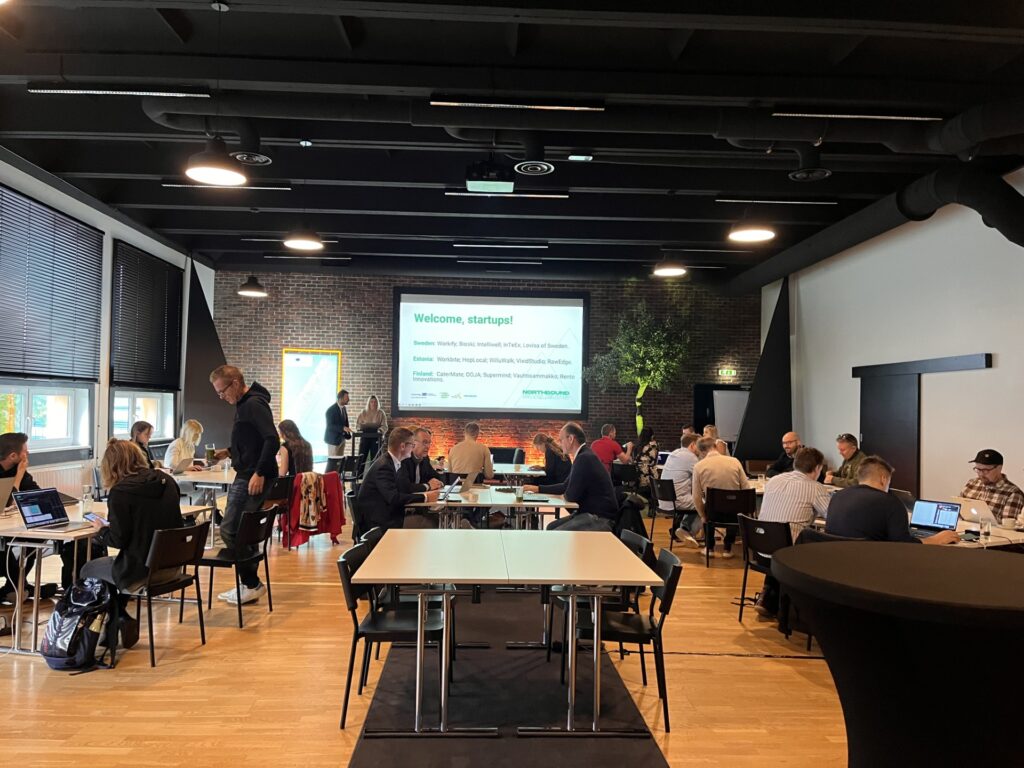
A key strength of the NBSCALE programme was the combination of workshops, mentoring, peer learning and practical market visits. Workshops provided structure and shared frameworks, while mentoring helped tailor these insights to each company’s specific situation. At the same time, peer-to-peer learning created a collaborative environment where founders could exchange experiences and learn from one another.
“For startups, progress depends on more than ideas, it requires real-world testing, honest exchange, and exposure to different markets. Startups were able to share what worked, what didn’t, and what they would do differently—offering practical insights that are often more immediately applicable than theory alone, and turning collective experience into a faster, more confident path to growth across borders.” says Anne-Liisa Elbrecht at Tallinn Science Park Tehnopol.
This collaborative approach also led to tangible outcomes, including partnerships between startups across countries and even new customer relationships within the cohort.
The cross-border nature of the programme also played a crucial role in its success. By bringing together partners and startups from three countries, NBSCALE enabled a broader exchange of knowledge, perspectives and networks.
“Cross-border learning and the sharing of best practices in scaling delivered excellent results not only for the participating companies, but also for the organisations implementing the programme. Through the collaboration of complementary top-tier expertise and ambitious, capable companies, true success stories were —and will be —created.” adds Puhtila.
Exposure to different ways of working also helped startups adopt a more international mindset from the outset, an essential factor when scaling across markets.
From insights to impact
In total, the programme supported 43 companies, and most of them achieved concrete growth results and a scale-up status. These included increased sales, international customers, new partnerships, expanded teams and raised investments.
Some companies reported significant business growth during the programme. One startup increased its sales fivefold, while another grew revenue by over 60% and expanded its team.
Beyond individual companies, the project also contributed to strengthening regional innovation ecosystems by building networks, increasing competence and supporting job creation.
“I would also highlight the value of pro bono support. Successful entrepreneurs—many of whom had once received support themselves—were eager to get involved and give back, becoming a highly significant source of support for the companies participating in our programme, while also gaining new ideas and learning new things themselves,” notes Puhtila.
Key lessons for future programmes and looking ahead
The NBSCALE experience also generated valuable insights for future initiatives. One key takeaway is the importance of combining structured learning with real-world validation. Another is the need for startups to ensure they have achieved product–market fit at home before focusing on international expansion, and to recognise the importance of achieving ‘export market fit’ when entering new markets.
The project also demonstrated that scalability can—and should—be assessed and developed systematically.
Although the NBSCALE project has now concluded, its methodology continues to live on. Elements of the approach are already being applied in new programmes, with further developments such as the integration of artificial intelligence to support scaling.
Looking forward, strengthening the scaleup ecosystem in the Central Baltic region will require continued collaboration, between startups, support organisations and investors alike.
For startups considering international expansion, Nälsén offers a clear piece of advice:
“Take the time to understand the true scalability of your product, business model and organization, and get to know your target market well before entering it.”
Text: Anne Jylhä, National Contact Point Finland, 20.4.2026