
Cycle4Climate Presents Innovative Cycling Interventions and Research Findings in Riga
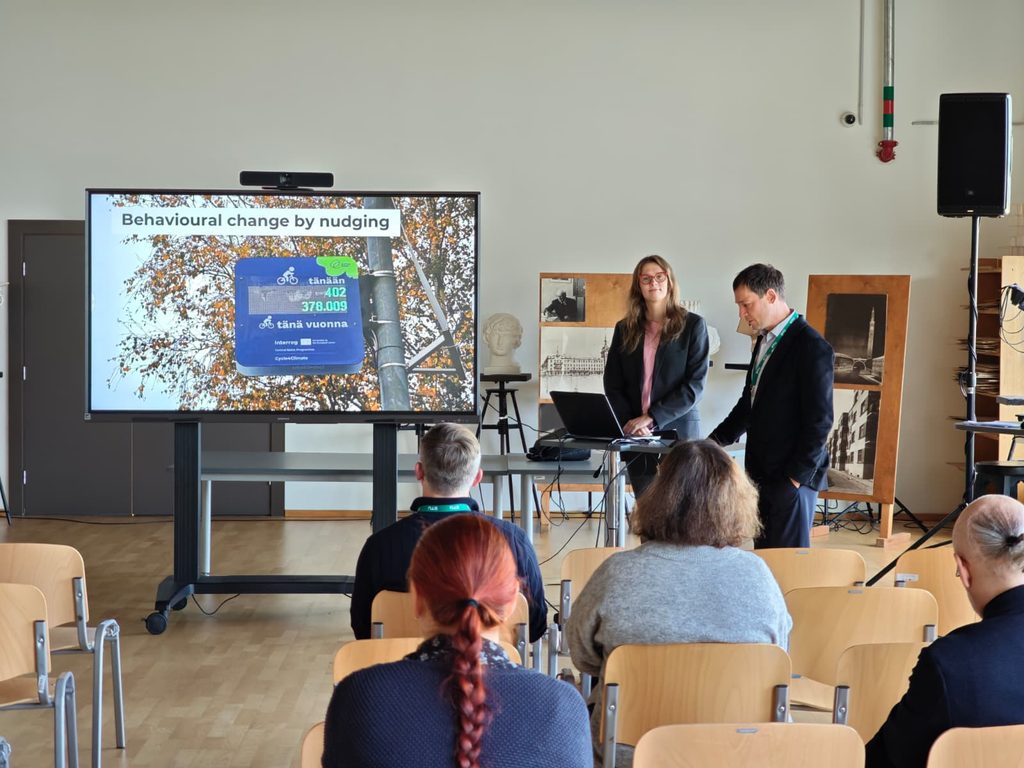
On 5 October, the Cycle4Climate project was represented at UnBoxed 2026, an international conference hosted by Riga Technical University (RTU) Design Factory in Riga. Organised within the Design Factory Global Network, the conference brought together educators, researchers, and innovation practitioners to share practical methods and experiences in creative problem-solving, collaborative design, and experimentation.
Interactive Workshop at UnBoxed 2026
Andra Marta Babre and Emīls Rode from Riga Technical University presented an interactive demonstration titled “Design to Nudge Cycling”, drawing on two years of experience from the Cycle4Climate project. The presentation explored how participatory design methods can support municipalities in developing creative interventions that encourage residents to cycle instead of driving. Particular attention was given to the challenges of translating innovative ideas into municipal action, as institutional processes often favour familiar, lower-risk measures.
Brainstorming Solutions for Every Age Group
The demonstration included a 20-minute brainstorming session, during which participants worked in groups to develop cycling interventions for different target groups. Proposed ideas included gamified cycling campaigns for schoolchildren, workplace cycling incentives and tax benefits for commuters, cycling meetups and excursions for seniors, secure bicycle storage and maintenance facilities, and the transformation of city centres to prioritise pedestrians and cyclists.
The session provided an opportunity to reflect on how creative ideas can be developed into feasible interventions that municipalities could integrate into their regular practices. The discussions offered fresh perspectives on encouraging behavioural change and supporting more cycling-friendly urban environments.
Research Insights from Four Partner Cities
On 16 October 2026, researchers from the Cycle4Climate project presented their paper “Evaluating Co-designed Cycling Interventions for More Liveable Cities: Experience from Four Nordic-Baltic Cities” at a scientific conference hosted by Riga Technical University (RTU).
The study explored how co-design methods contributed to cycling interventions in four partner cities: Espoo, Gävle, Pärnu, and Riga, and how participatory planning could become part of municipalities’ regular practices.
The findings showed that co-design helped municipalities identify stakeholders, engage residents, and refine intervention designs. Examples included adjustments to bicycle lane infrastructure in Gävle, citizen input on bicycle maintenance post locations in Pärnu, and student involvement in bicycle parking shed design in Riga.
Lessons Learned and Future Outlook
At the same time, the research identified challenges. Intervention concepts were often defined before co-design began, limiting opportunities to explore alternatives. Organisational barriers, limited resources, and the concentration of knowledge among individual project staff also constrained wider adoption.
The research highlights the value of introducing co-design earlier in project development, strengthening municipal capacity, and using local behavioural data to inform intervention planning. Future research will explore the development of a practical co-design toolbox to support municipalities in planning more effective cycling interventions.