
REISFER study explores seagoing staffs’ views on the decarbonisation of island ferry traffic in the Central Baltic Region
The first cross-regional examination of seagoing staffs’ views on the decarbonisation of island ferry traffic in the Central Baltic Region was published by REISFER in May 2026.
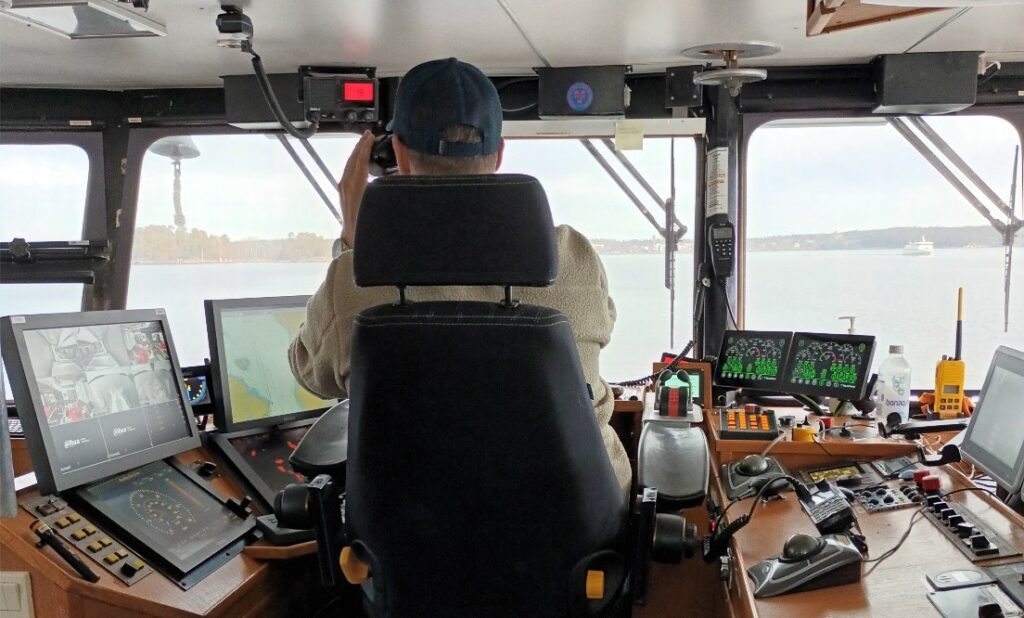
Based on 26 interviews with captains, mates, and chief engineers in Estonia, Finland (including Åland), and Sweden, the study explores how those working at sea perceive emisson reduction measures and the future of sustainable ferry operations. The study was conducted by University of Turku, Tallinn University of Technology, and Swedish National Road and Transport Research Institute VTI.
Despite differences in vessels, routes, and operating environments, many perspectives were shared across region. Ferry crews demonstrated strong professionalism and a practical understanding of the complex conditions in which island ferries operate, balancing safety, schedules, passenger needs and changing environmental conditions.
Overall, attitudes towards decarbonisation were positive. Electrification, particularly hybrid solutions, was widely seen as the future of ferry transport, while eco-driving and voyage optimisation were identified as important tools for reducing emissions and improving operational efficiency.
The study highlights that seagoing staff posesses valuable firs-hand knowledge of both operational environment and the practical implementation of emission reduction measures. Interviewees emphasised the importance of communication, management support, training and opportunities for face-to-face dialogue, reminding that successful decarbonisation depends not only on new technologies but also on close collaboration with ferry crews.
The REISFER project sincerely thanks all interview participants and our ferry partners for their valuable time, insights, and support in making this study possible!