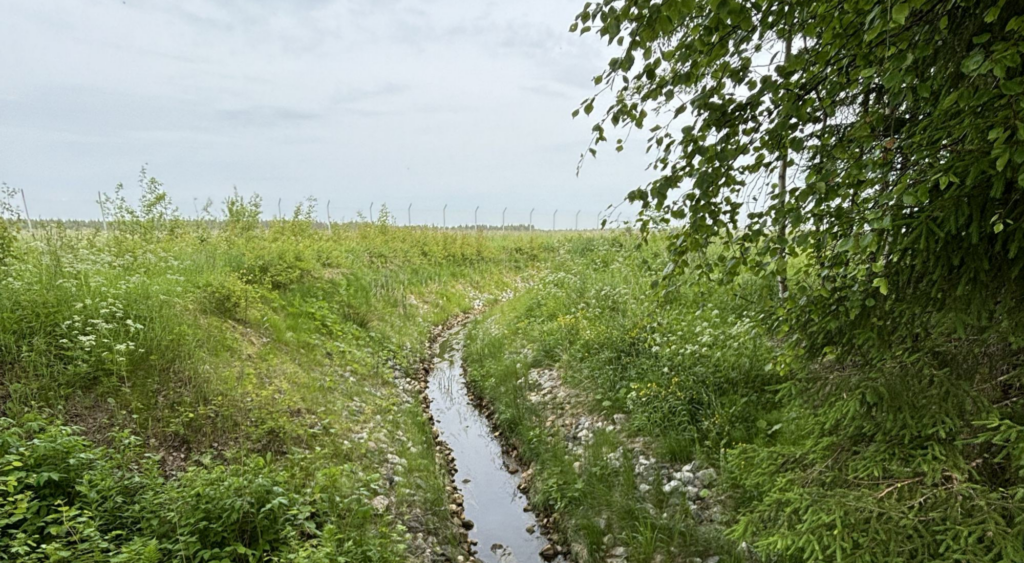
Taking water samples in Kuninkoja – hands-on work in BalticPFASResolve
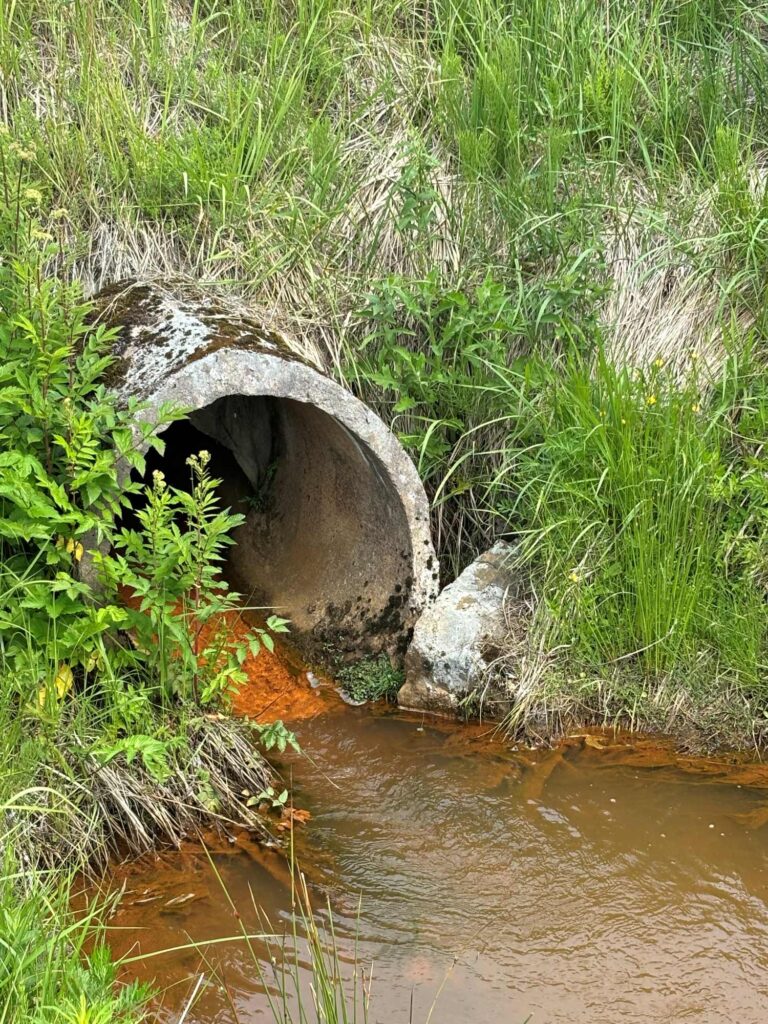
On-site work is an important part of understanding and reducing PFAS pollution. In Kuninkoja, a small but ecologically valuable urban stream in Turku, Finland, project assistants from the BalticPFASResolve project have been out in the field taking water samples as part of the ongoing monitoring and pilot work.
Kuninkoja flows directly into the Baltic Sea, and previous studies have shown that PFAS concentrations in the stream are consistently higher than expected. Earlier sampling carried out by Turku University of Applied Sciences has pointed to the airport area as a source of pollution, including stormwater and contaminated groundwater entering the stream.
By taking water samples at the planned remediation site, the project team gathers essential data on PFAS levels and overall water quality. For the project assistants, sampling days mean practical fieldwork: collecting water, documenting conditions, and ensuring that the samples can later be analyzed. In addition to collecting water samples, the water flow in the stream is also monitored. This hands-on work directly supports the planning and evaluation of the remediation pilot.
The data collected in Kuninkoja will be used to assess how well nature-based PFAS remediation solutions work under real conditions. At the same time, the sampling work helps build knowledge that can be shared through the BalticPFASResolve project, supporting cleaner waters locally and regionally.
Authors: Turku UAS project team
BalticPFASResolve is an Interreg Central Baltic Programme 2021-2027 project co-funded by the European Union. BalticPFASResolve will empower municipalities and water utilities to identify PFAS hotspots and implement targeted remediation programmes. The project will test innovative technical solutions in stormwater and wastewater systems and promote cooperation with firefighting services, including airport rescue teams. You can read more about the project here.
The content of this material does not necessarily represent the official position of the European Union.