


ArchXAI (AI-enhanced Cross-Border Archives) is an international collaboration that brings together archives and research organisations from Finland, Estonia and Latvia to transform how historical records are accessed and used.
By combining archival expertise with modern artificial intelligence technologies, the project develops new digital services that make archival information easier to find, understand and use.
Analog archives to searchable digital collections
Digitized archival collections are a prerequisite for the use of AI tools. ArchXAI focuses on digitizing carefully selected collections from each participating archive, and on creating a standardized digitization process, where both the value and barriers of creating digital collections have been recognized.
To further enhance the accessibility and usability of digitized collections, ArchXAI uses AI based Optical Character Recognition (OCR) and Handwritten Text Recognition (HTR) technologies. The project develops text recognition models for Russian, Estonian and Latvian languages and uses these models to convert handwritten and printed archival collections into machine-readable and searchable data. For model development, experts have transcribed thousands of pages of handwritten archival material.
First versions of HTR models in all three languages have been developed. The models have been published online at https://huggingface.co/Kansallisarkisto. In the next phase, the digitized and text recognized archival collections will be published online for researchers and the wider public to use.
AI methods for analysing and indexing archival materials
This work explores how AI methods can help archives make digitised materials easier to search, review and reuse. It compares practical open-source model candidates for multilingual archival processing, including named entity recognition, detection of personally identifiable information, tone and sentiment analysis, and semantic search.
The preliminary evaluations show that dedicated NER models are currently the strongest option for identifying people, organisations and places at scale, while LLM-based extraction is more suitable for targeted enrichment or fallback use. Tools for detecting personal data (PII) are being assessed for sensitive information review and anonymisation, and embedding models are being tested for semantic and cross-language search. Tone and sentiment analysis remains more experimental and requires careful validation for archival material.
These results help ArchXAI choose suitable AI components for future open-source services and demos. The next phase will test the most promising methods on real archival texts, OCR/HTR output, collection descriptions and multilingual search examples from the project partners. Further technical notes, preliminary evaluation results and development updates are published in Github ArchXAI development blog.
AI-assisted toolset for archivists and general public
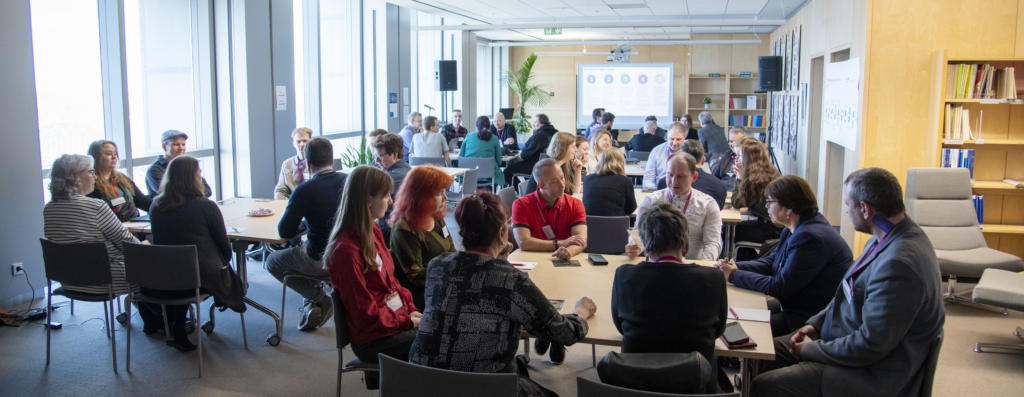
ArchXAI focuses on understanding everyday archival work from the perspective of archival professionals. A small development team explored information request processes in the participating archives through background research and initial interviews. This exploratory phase revealed a set of interconnected challenges, which were further examined through joint reflection in a co‑creation workshop held in spring 2026.
Development work has concentrated on comparing everyday practices and shared pain points across the National Archives of Estonia, Latvia, and Finland. Through this cross‑border collaboration, archivists and project partners have jointly identified where AI support can provide real value and have co‑created key features for an AI‑assisted toolset.
The next phase of the project focuses on planning a public AI tool.
Read more about this collaborative work in the Riga workshop article.
All solutions developed in the project will be released as open-source tools and piloted in the participating national archives. Through cross-border cooperation and shared historical collections, the project demonstrates how artificial intelligence can help archives provide faster, more accessible and more efficient public services while preserving and promoting Europe’s cultural heritage.
The technical development and project outputs are documented openly and shared through the ArchXAI GitHub repository:
🔗 https://archxai.github.io/
Open demos and testing
Can AI read old handwiriting? Give it a try!
DEMO 1: AI for Archival Documents (printed text, images, tables and document structure)
This demo shows how AI can analyse archival document images and convert their contents into searchable digital text. In addition to text extraction, the AI can identify key information such as names, places, tables, and other document elements. It provides a simple example of how ArchXAI tools could support the processing, organisation, and retrieval of archival records.
Demo 2: AI for Handwritten Text Recognition (HTR): Estonian, Finnish, Swedish, Latvian
This demo shows how AI can recognise and transcribe handwritten text from historical manuscript images into readable digital text. Unlike the first demo, this example focuses specifically on handwritten materials, where traditional text recognition methods often fail. It demonstrates how ArchXAI can improve access to historical archival collections through AI-based Handwritten Text Recognition (HTR).
Demo 3: The Estonian HTR demo allows users to test the Estonian HTR model developed in the project
Demo 4: The Cyrillic HTR demo allows users to test the Cyrillic HTR model developed in the project
Please note: The demos are experimental and may be updated or removed as development progresses. This page will be updated accordingly when demos change.
Join the ArchXAI Stakeholder Community
We invite external stakeholders to join the ArchXAI project and collaborate with us.
We welcome interest in participating through interviews, surveys, pilot activities, workshops, and other forms of collaboration. By joining, you will have the opportunity to contribute to co‑development and co‑innovation activities within the project.
If you are interested, we invite you to share your contact details and become part of the ArchXAI stakeholder community.

Find ArchXAI on social media