

About ReCreateBiobased
Transforming Unmanaged Biomass and Recycled Materials into Sustainable Value Chains for a Cleaner Baltic Sea
Across the Central Baltic region, vast amounts of local biomass—such as overgrown coastal common reed—and industrial side-streams remain underutilised, often decomposing in nature or ending up as waste.
The ReCreateBiobased mission is to pilot, develop, and scale practical circular economy solutions that turn local coastal biomass and recycled material side-streams into valuable, biobased products. By substituting virgin and fossil-based raw materials with renewable local resources, ReCreateBiobased aims to cut carbon emissions, boost regional competitiveness, and directly contribute to the ecological recovery of the Baltic Sea. The endeavour is a multi-disciplinary partnership of research institutions, businesses, and regional stakeholders.
Our Primary Biomatter Use Case: Common Reed (Phragmites australis)
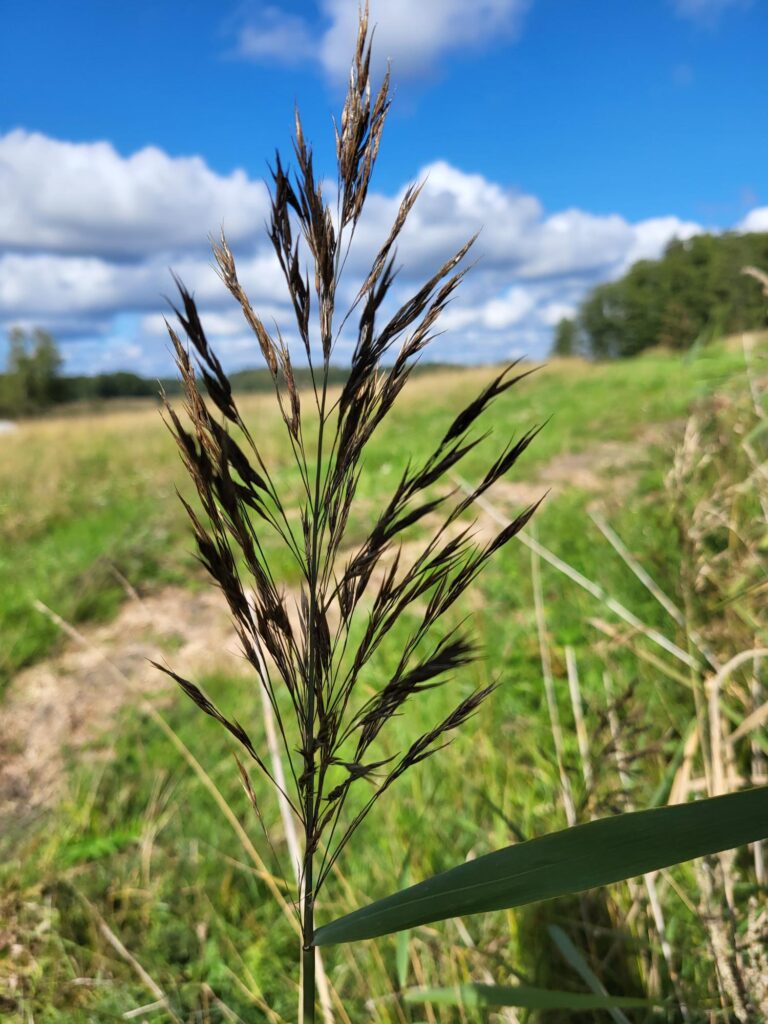
Common reed is a fast-growing, naturally occurring tall grass along the shallow coastlines and bays of the Baltic Sea. Due to historical nutrient runoff, coastal grazing decline, and warming climate conditions, common reed has expanded aggressively. The reed growth has covered all other vegetation in many coastal bays in areas of tens – or even hundreds – of hectares. While unmanaged reed beds choke out native biodiversity and restrict access to coastal areas, harvested reed is a rich, versatile bioresource.
Benefits of Utilizing Coastal Biomatter
- Alternative Raw Material Source: Reed biomass can be processed into eco-friendly building materials, packaging, bio-composites, substrates, soil improvers, and acoustic or insulation panels.
- Fossil Fuel & Virgin Material Substitution: Replaces non-renewable, petroleum-based polymers and resource-intensive virgin fibers in everyday and technical applications.
- Habitat Restoration: Controlled harvesting thins out dense reed monocultures, restoring open coastal landscapes, meadow ecosystems, and habitats for wading birds, fish spawning, and diverse coastal flora.
In addition, ReCreateBiobased is looking to find ways to benefit from other biomatter materials as well. Our primary focus is on fibrous materials, and our alternative material catalogue is under development.
We Aim to Improve the Health of the Baltic Sea
The Baltic Sea is one of the most sensitive and heavily eutrophicated marine environments in the world. High concentrations of nitrogen and phosphorus fuel massive algal blooms, decrease water clarity, and deplete oxygen on the sea floor.
How ReCreateBiobased Makes a Difference:
- Active Nutrient Removal: As common reed grows, it absorbs large quantities of phosphorus and nitrogen from coastal waters and seabed sediments. When reed is left unmanaged to die and rot, these bound nutrients are released back into the aquatic ecosystem, continuing the cycle of eutrophication. Harvesting reed physically removes these excess nutrients from the marine environment.
- Preventing Anoxic “Dead Zones”: Decaying biomatter on the shoreline consumes vital oxygen in shallow waters. Clearing excess biomass prevents localized oxygen depletion, fostering healthier aquatic conditions for fish, invertebrates, and benthic ecosystems.
- Recycling Nutrients Back to Land: Instead of polluting the sea, the nutrients captured in harvested biomass are safely transferred to terrestrial applications—such as circular fertilizers, growing substrates, or soil enhancers—closing the nutrient loop responsibly.
Upcycling & Integrating Recycled Side-Streams
ReCreateBiobased goes beyond pure biomaterials by exploring synergies between biological resources and technical recycled materials.
Comprehensive Upcycling Strategies:
- Combining Biomass with Recycled Polymers & Non-Biomaterials: The project pilots innovative compound materials that mix harvested reed fibers with recycled plastics, secondary industrial byproducts, and construction waste streams.
- Elevating Waste to High-Value Applications: Rather than downcycling or incinerating side-streams, we process low-value waste into high-performance biocomposites and structural products with long lifespans.
- Closing the Material Loop: ReCreateBiobased tests the entire product lifecycle—from raw biomass collection and compounding to end-of-life recycling and re-entry into the production loop. This ensures materials remain in continuous economic use rather than becoming waste.

Creating New Cross-Border Value Chains & Business Opportunities
Converting underutilised biomass into commercial reality requires overcoming technical, logistical, and market barriers. ReCreateBiobased acts as a catalyst to connect the supply chain into an integrated, profitable ecosystem across the Central Baltic region.
How We Build the Value Chain:
- Logistics & Harvesting Solutions: Developing a re-deployable method framework for harvesting, handling, transporting, and storing biomass without disrupting fragile coastal soils.
- Processing & Material Scaling: Testing and refining compounding techniques to standardize biomass quality for industrial manufacturing.
- Market-Driven Product Development: Working directly with SMEs and manufacturing partners to design, prototype, and validate market-ready end-products.
- Cross-Border Collaboration: Bringing together businesses, municipalities, harvesters, and researchers from Finland, Sweden and Latvia to build scalable, transferable business models that can be replicated across northern Europe.
Expected Project Outcomes
Over its 3-year duration, ReCreateBiobased will achieve key milestones in resource efficiency in the Baltic region:
- Tested Circular Protocols: Practical guidance and tested methods for collecting, processing, and upcycling coastal biomatter and side-streams.
- New Biobased Prototypes: Demonstrated high-value material and product concepts utilizing common reed and recycled materials.
- SME Guidance & Business Models: Open-access frameworks and cross-sector networking opportunities enabling businesses to launch circular ventures.
Follow ReCreateBiobased on social media


Find ReCreateBiobased on social media