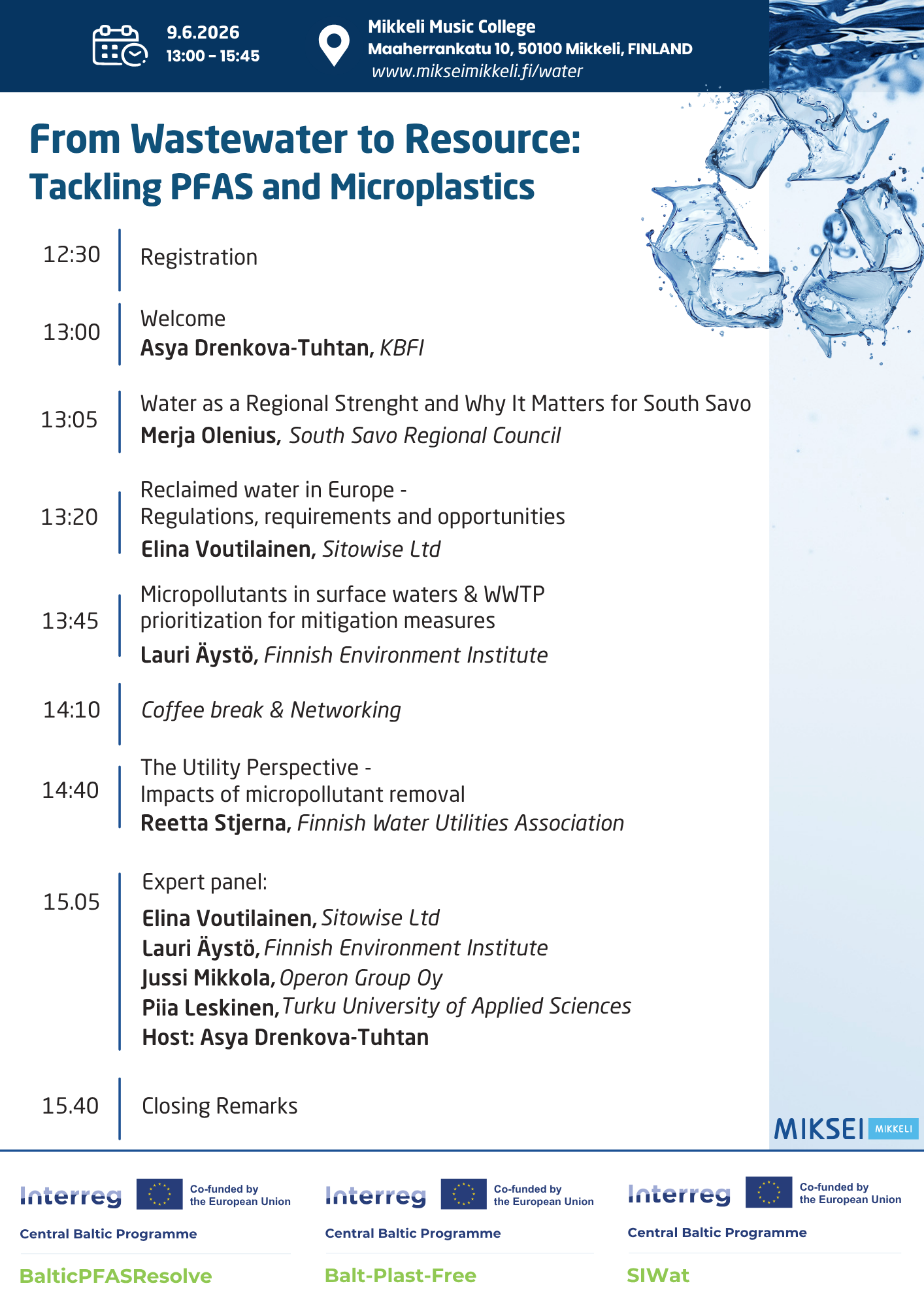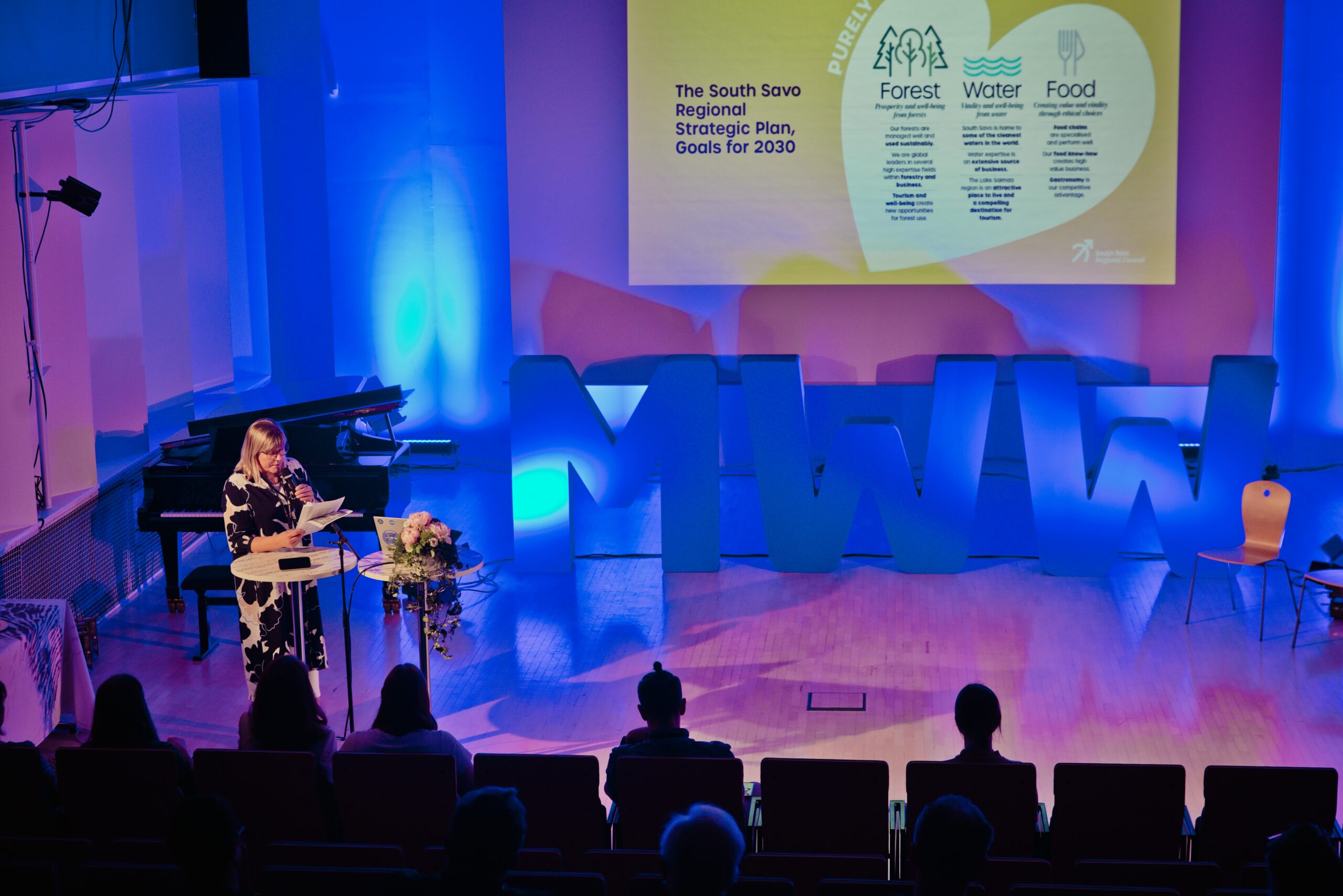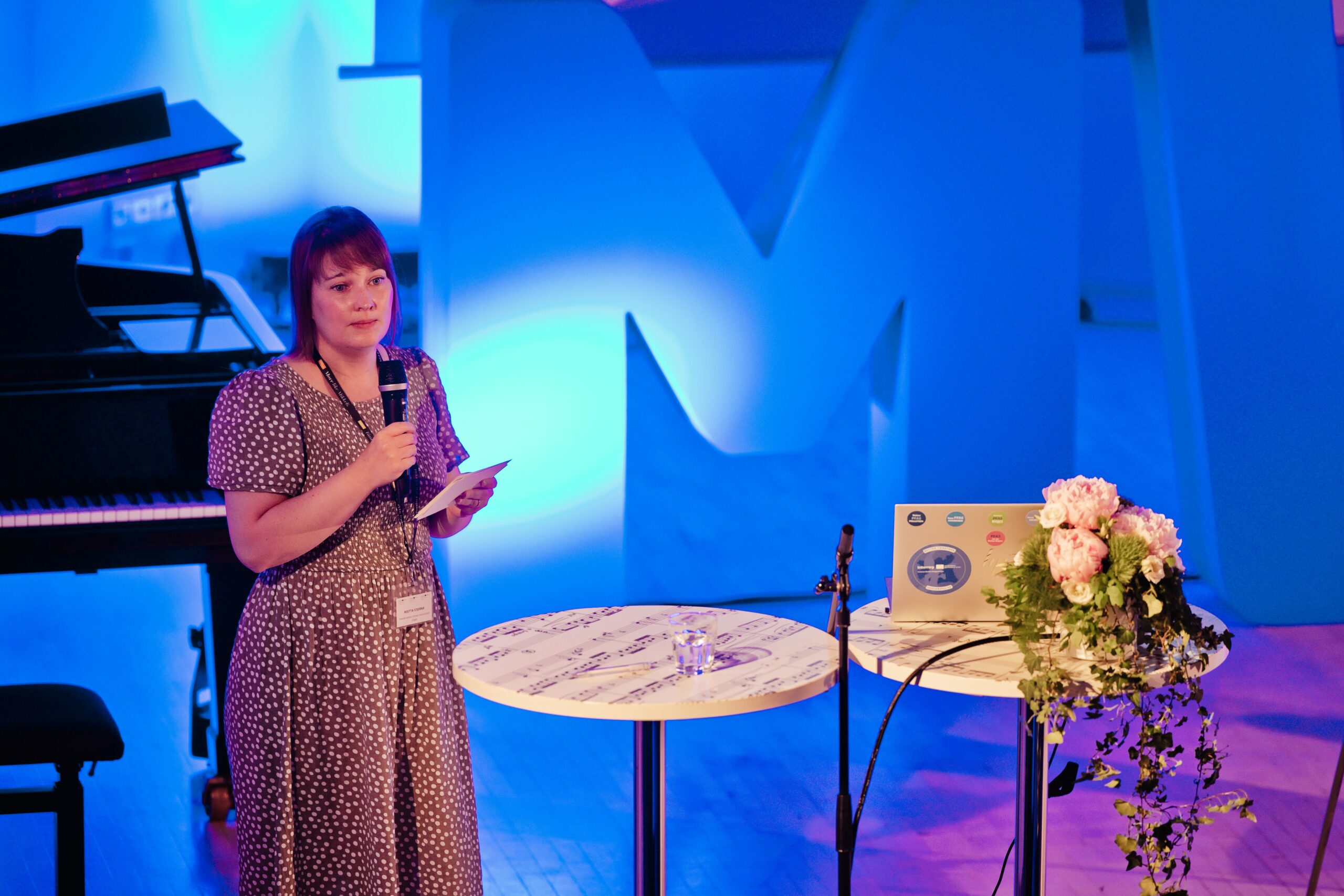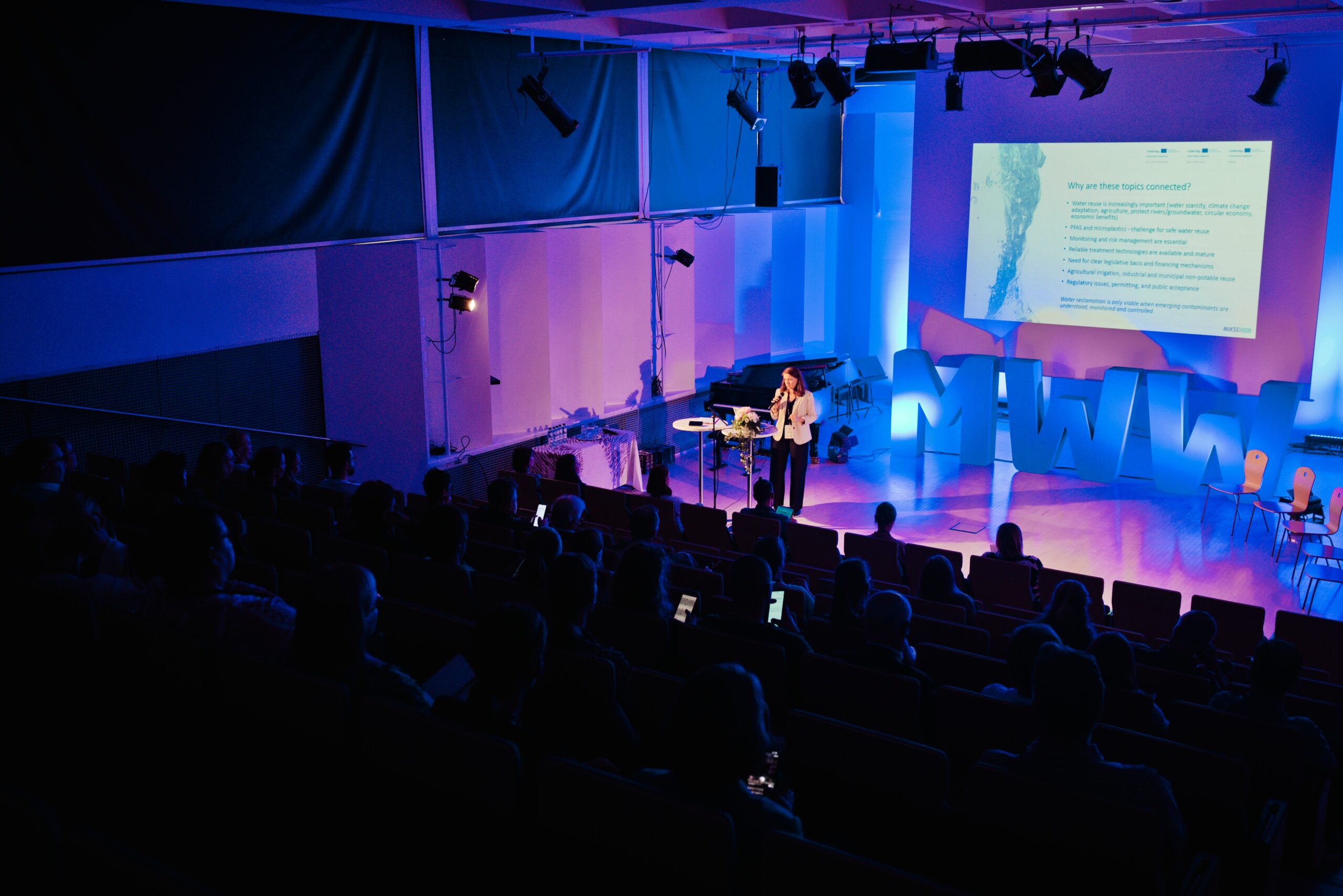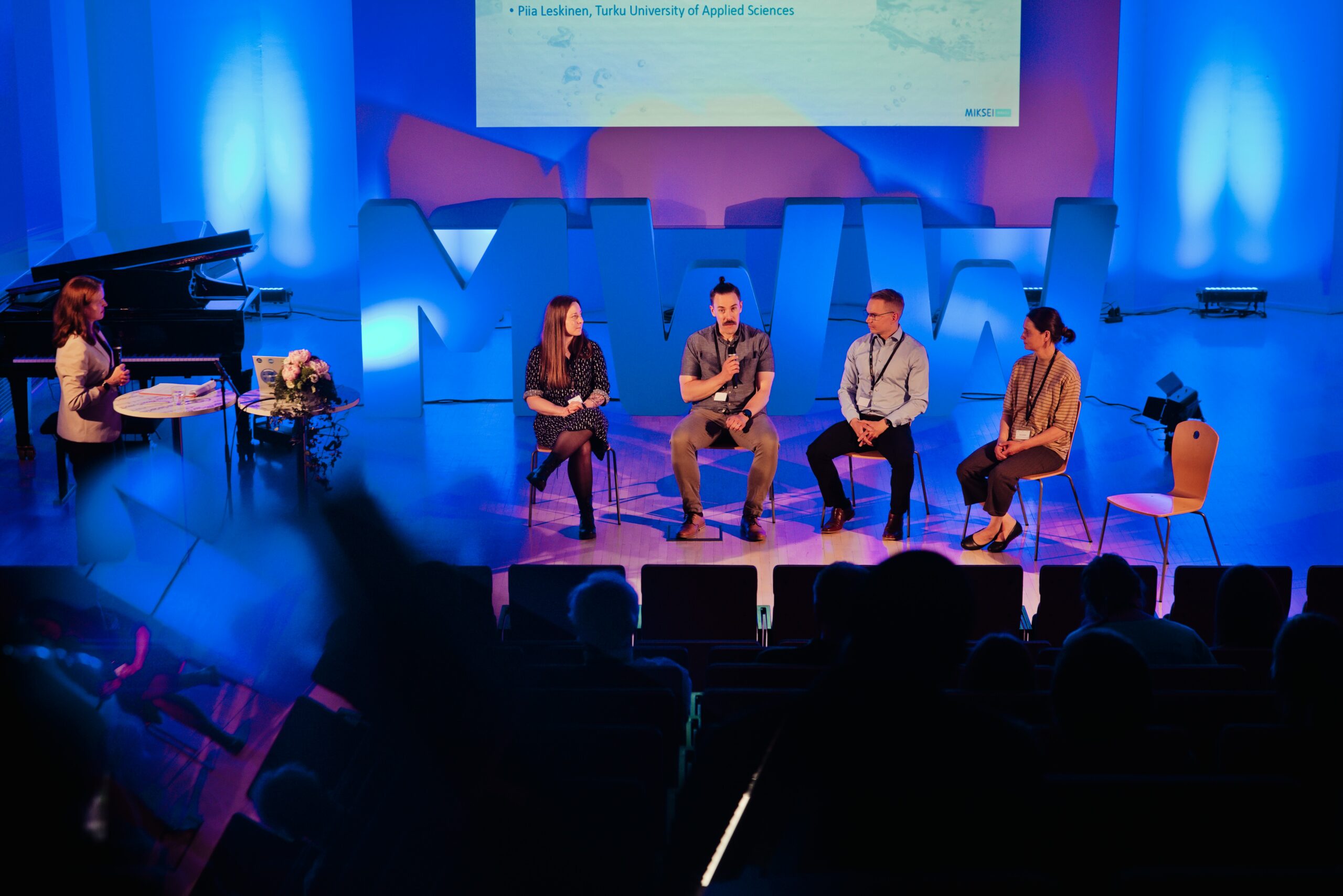
From Wastewater to Resource: Tackling PFAS and microplastics -event highlighted key challenges and opportunities in water reuse ahead of ETWT 2026
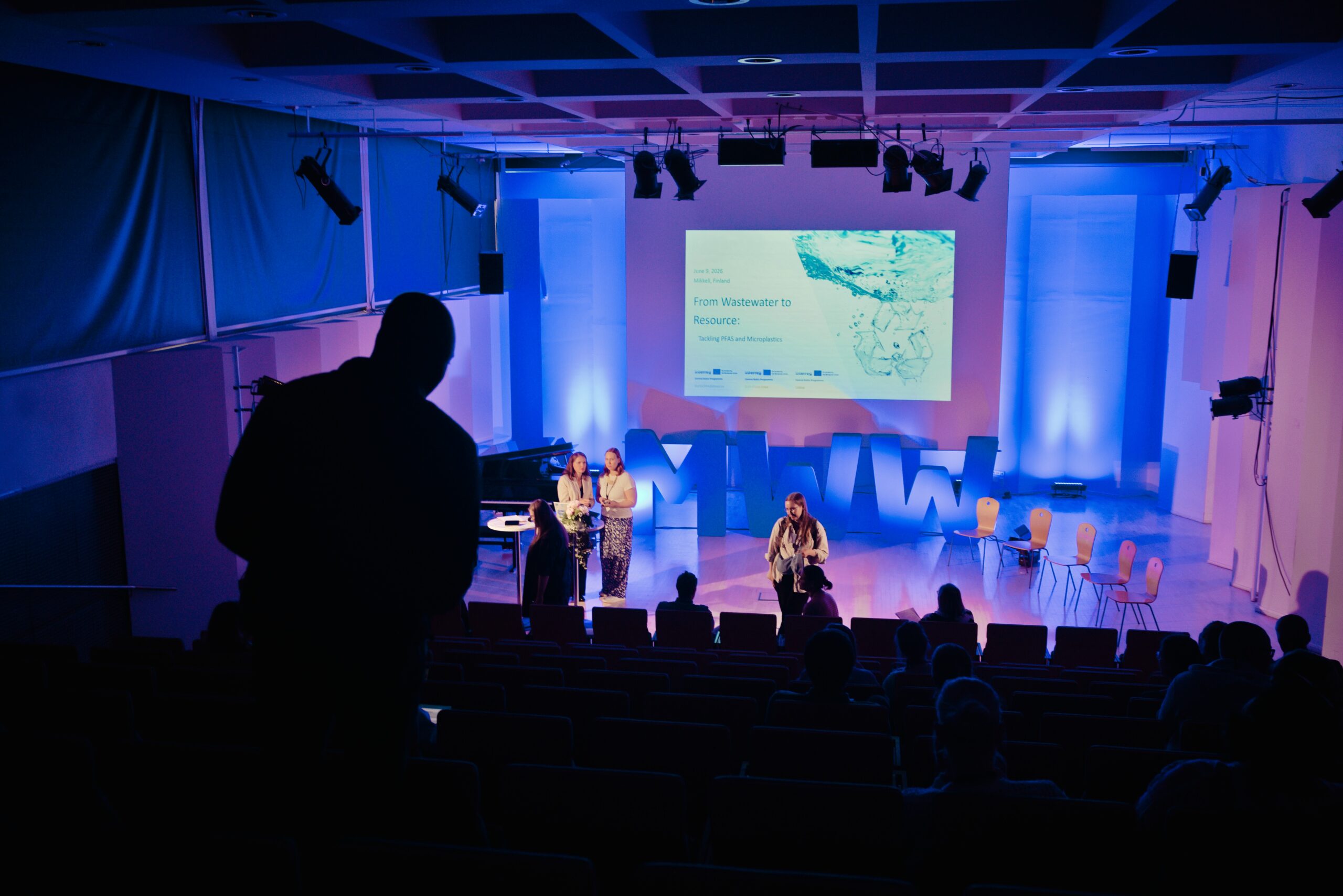

Mikkeli, 9 June 2026 – More than 50 water sector experts, researchers, technology developers, public authorities and industry representatives gathered in Mikkeli on Tuesday for a seminar exploring the future of water reuse, emerging contaminants and sustainable water treatment solutions. The event served as an ideal opening and warm-up to the International Conference on Emerging Trends in Water Treatment (ETWT 2026), which continued in Mikkeli on 10–11 June and brought together international experts to discuss the latest advances in water treatment technologies and water sustainability.
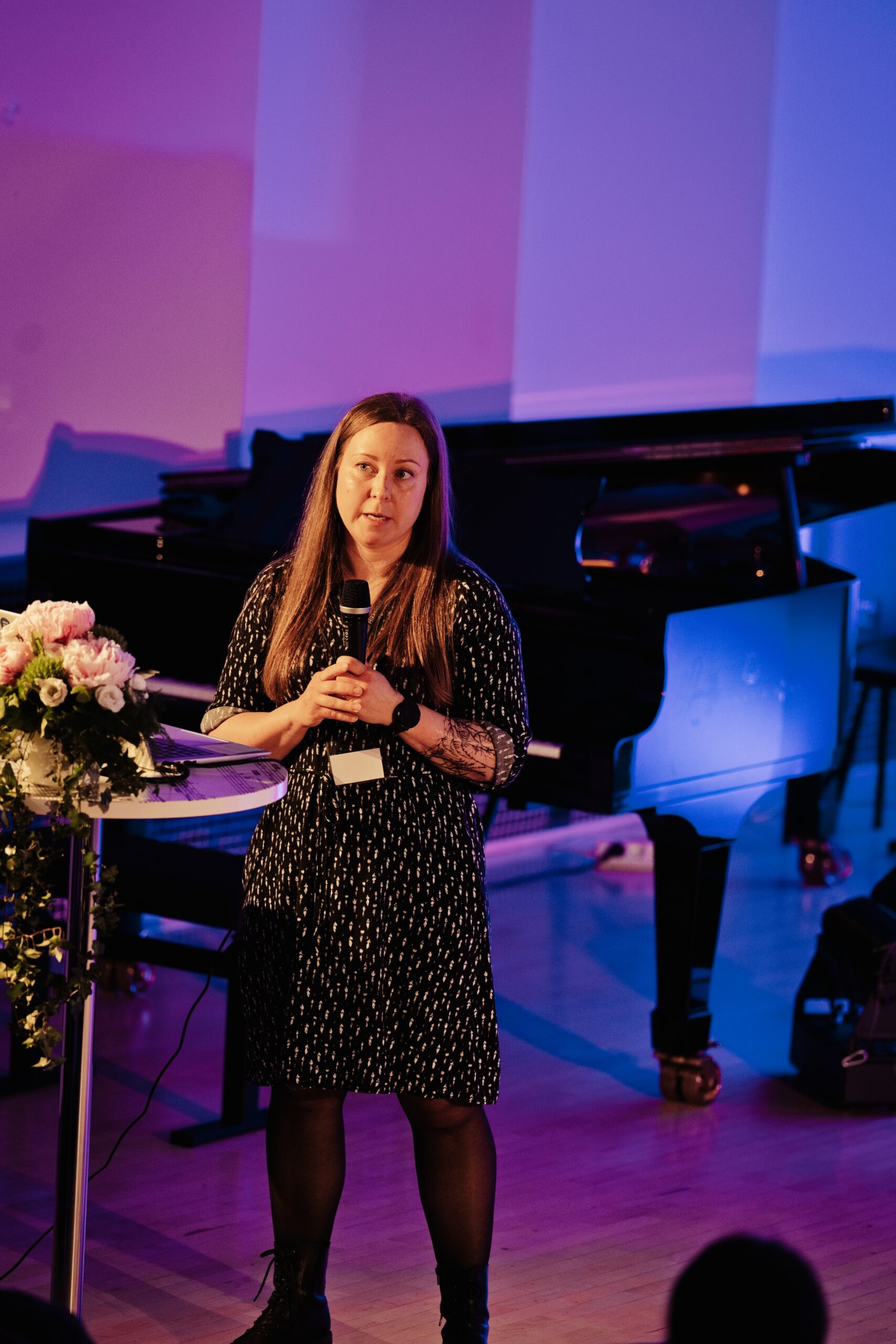
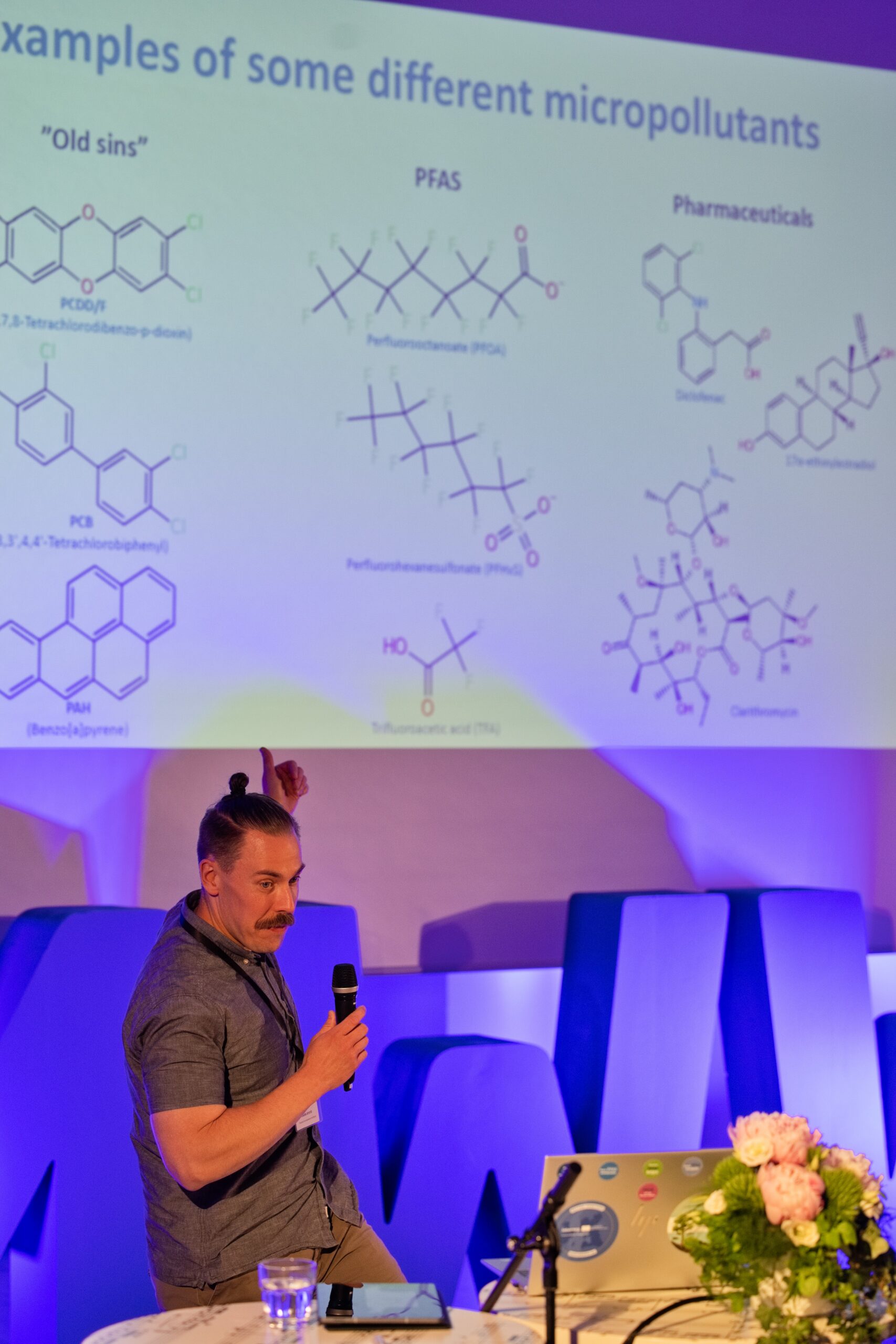
The three project joint event attracted approximately 60 participants from Finland and abroad. Through presentations, discussions and interactive Mentimeter sessions, participants shared their perspectives on the most pressing challenges facing water reuse and advanced water treatment today.
The event was organised by BalticPFASResolve, Balt-Plast-Free and the SIWat projects.
Investments and public acceptance identified as key barriers
Audience responses revealed a clear consensus that financing and investments remain among the most significant obstacles to wider implementation of water reuse solutions. Participants also highlighted regulatory challenges, public acceptance, infrastructure limitations and the growing complexity of emerging contaminants such as PFAS, microplastics, pharmaceuticals and other micropollutants.
Many respondents pointed to the need for:
- Increased investment in water reuse infrastructure and innovation
- Clearer regulatory frameworks and permitting processes
- Greater public awareness and trust in water reuse technologies
- Improved understanding of contaminant risks and treatment performance
- Scalable treatment methods that are both technically effective and economically feasible
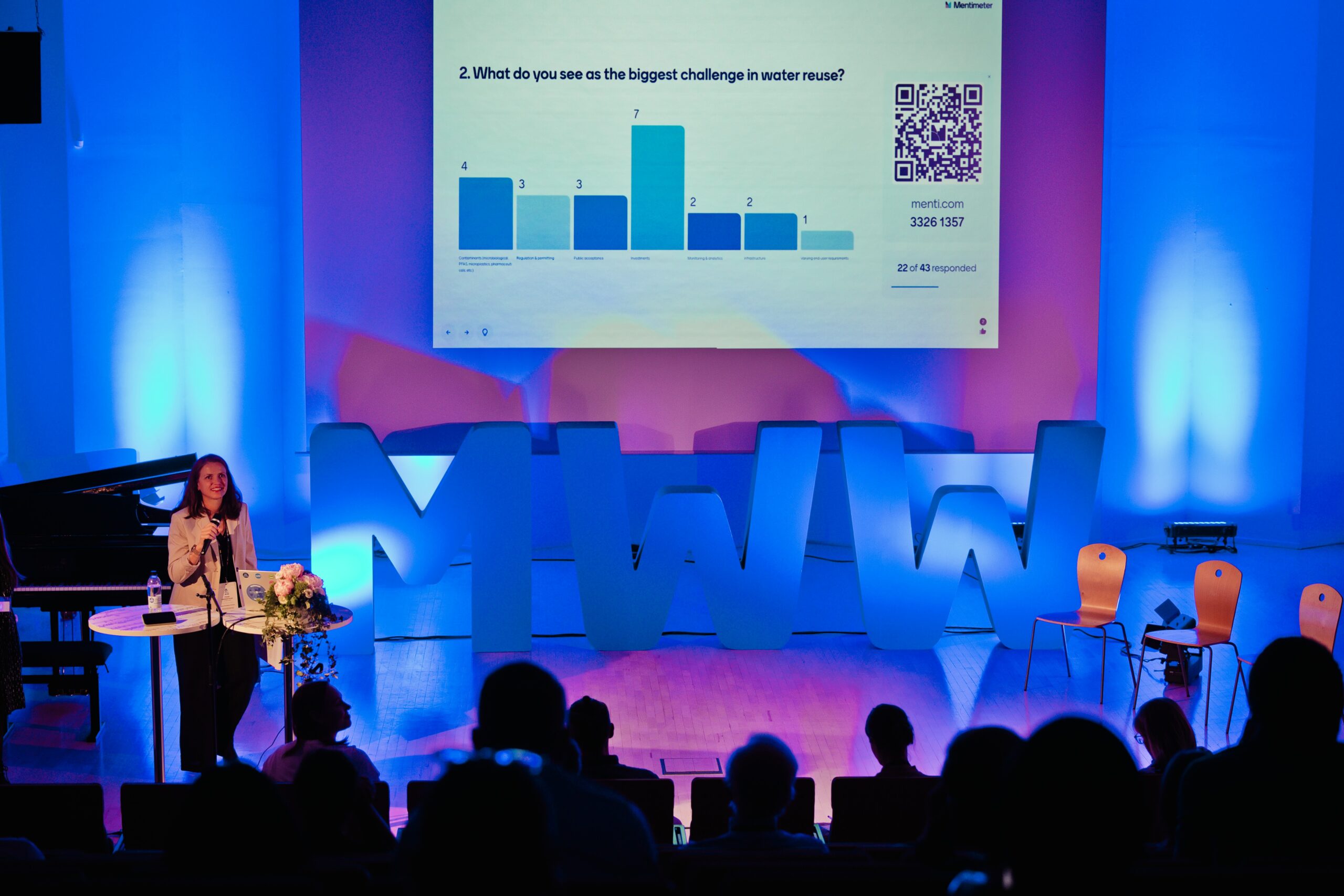
Comments from participants emphasized that the rapidly evolving contaminant landscape creates uncertainty for both regulators and technology providers. Several respondents noted that achieving public confidence in treated and reused water remains essential for successful implementation.
Understanding risks remains a major knowledge gap

One of the seminar’s Mentimeter polls focused on knowledge gaps related to water reuse and emerging contaminants. The most frequently identified challenge was risk interpretation, followed by understanding effective treatment and mitigation options.
Participants also expressed a strong need for:
- Reliable monitoring and analytical methods
- Better understanding of contaminant sources and pathways
- Clearer regulatory expectations
- Practical guidance on treatment performance and implementation
The results suggest that while technological solutions continue to advance rapidly, stakeholders are seeking stronger evidence, harmonized monitoring approaches and practical risk-assessment frameworks to support decision-making.
Strong alignment with ETWT 2026 themes
The seminar discussions closely reflected the themes that will be explored throughout ETWT 2026, including emerging contaminants, advanced treatment technologies, monitoring methods, circular economy solutions, regulation and sustainable water management. The conference aims to provide a platform for researchers, practitioners and decision-makers to exchange knowledge and develop actionable solutions for future water challenges.
The strong engagement during the seminar demonstrated the growing importance of water reuse and contaminant management across the Nordic and European water sectors. Participants actively contributed insights from research, industry and public administration, creating a valuable foundation for the international discussions taking place during ETWT 2026.
As global water challenges continue to evolve, the seminar highlighted a common message: successful water reuse will require not only technological innovation, but also collaboration, investment, effective regulation and public trust.
Photos: Pihla Liukkonen / Kontrastia