
The 2nd Island Ferry Summit focused on advancing the green transition in maritime transport
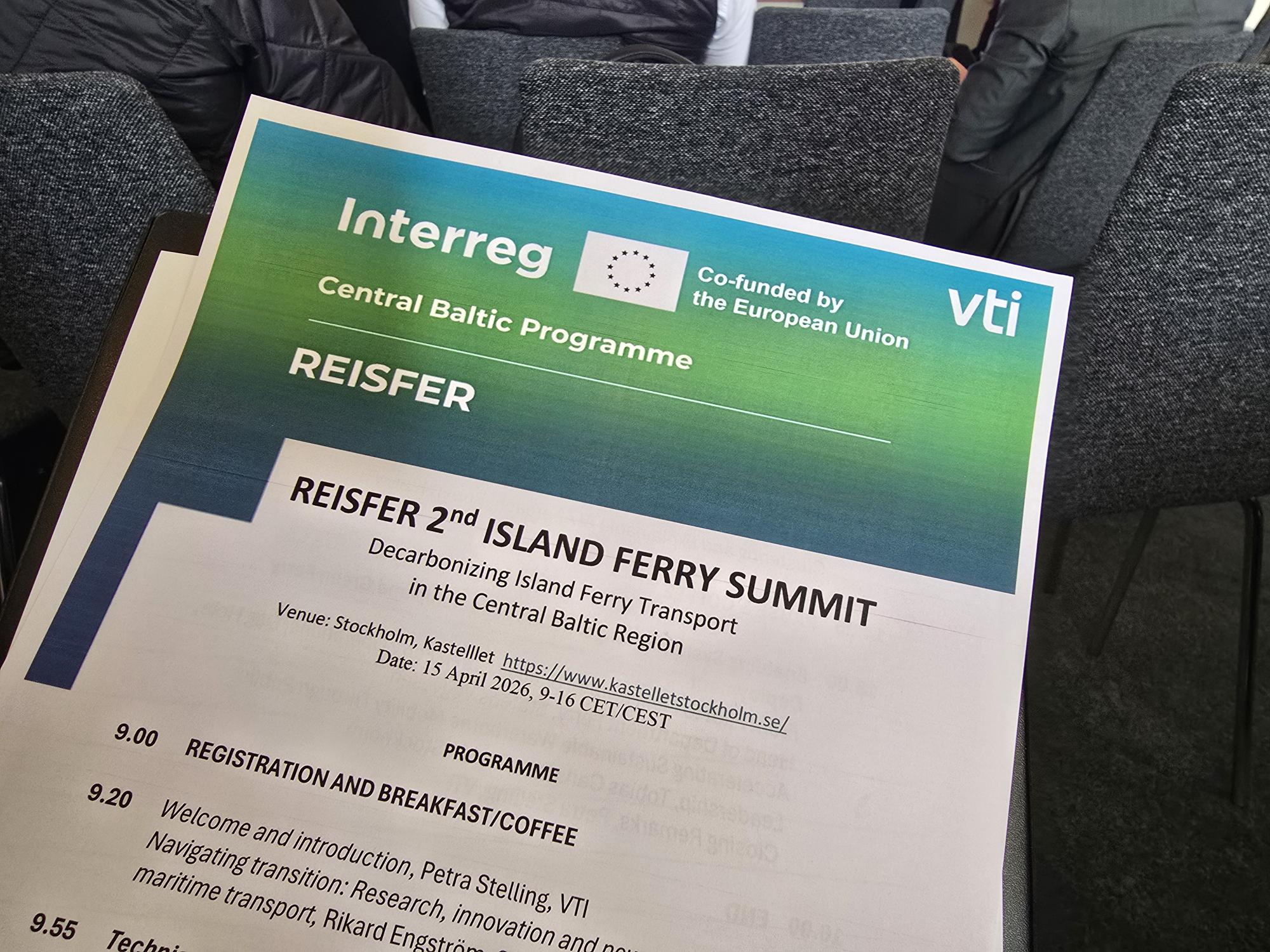
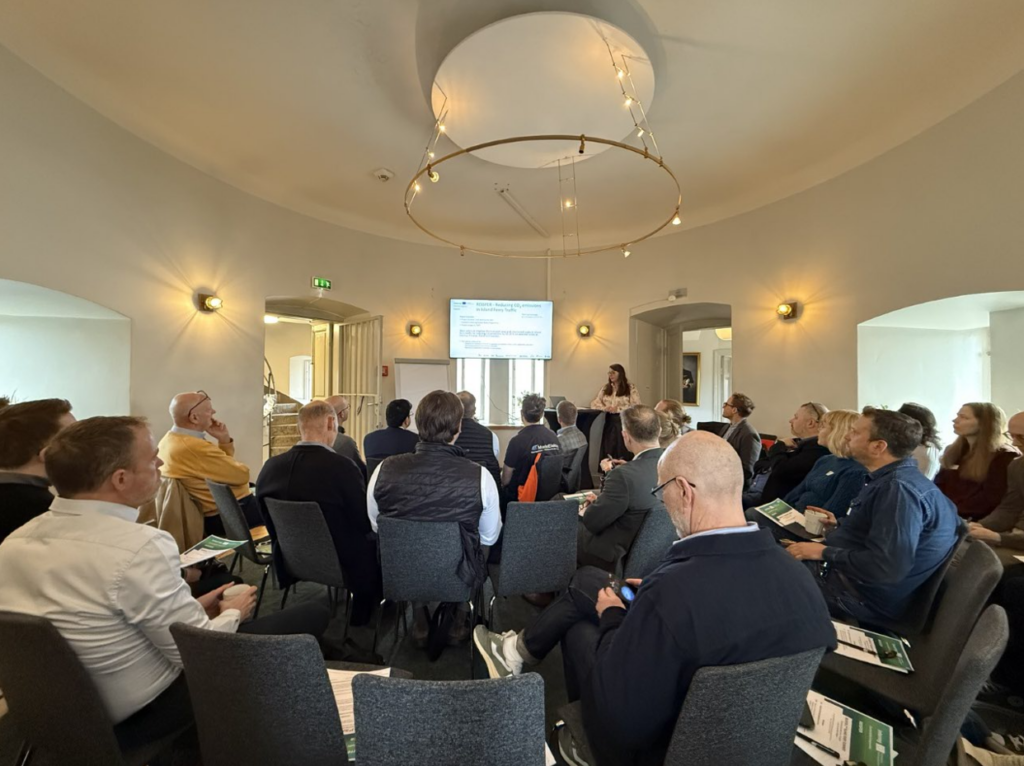
On 15 April 2026, the REISFER project held its 2nd Island Ferry Summit in Stockholm, bringing together a diverse group of industry experts, public authorities, researchers, and operators to explore pathways toward decarbonising island ferry transport in the Central Baltic region. Hosted at Kastellet, the summit provided a platform for sharing practical experiences, emerging technologies, and importance of data analysis – highlighting the momentum of the green transition in maritime mobility.
A Sector in transition
The morning sessions set the tone with insights into innovation and transformation across the maritime sector. From large-scale system change to vessel-level retrofits, speakers demonstrated how the transition is already underway. A recurring theme was the importance of adapting existing assets, illustrated by examples of ferry modernisation and hybridisation, as well as leveraging cross-sector innovation.
Scania representatives noted that while automotive engineering solutions are not directly transferable to maritime applications, they offer a valuable starting point for scaling electrification. This cross-industry exchange reflects a broader trend: the maritime sector is increasingly drawing from other industries to accelerate development. Blidösundsbolaget highlighted how their philosophy has long been to optimise solutions from other markets, but also stressed the urgency created by green procurement requirements. The need to implement new technologies ahead of upcoming contracting periods is pushing operators to act quickly and decisively. As Fredrik Liw emphasised, successful innovation requires not only the right platform and technical approach, but also the willingness and courage to actively pursue development.
Technology, experience, and real-world Pilots
Technology providers brought forward perspectives grounded in long-term experience. EST-Floattech, for instance, described how a 15-year-old company can already be considered a “dinosaur” in the rapidly evolving maritime battery sector, underscoring both the pace of change and the value of accumulated expertise. At the same time, real-world pilots remain essential. The Silverö ferry project stands out as a key testbed for Blidösundsbolaget and its partners. Beyond technical validation, the pilot is generating valuable operational insights from energy performance to the everyday experiences of captains adapting to new propulsion systems.
Infrastructure and the wider system
Discussions also moved beyond vessels themselves. Trafikverket highlighted the need to ensure that ports keep pace with technological developments, stressing that infrastructure must meet modern standards to enable the transition. Importantly, planning should not be limited to coastal areas and that understanding inland mobility needs is equally critical for designing effective ferry services. And while the conversation often centres on technology and efficiency, there is also a human dimension to ferry transport. As noted in a Bloomberg perspective shared during the summit, “there is a romance to it… the commute by boat can be a winding-down time.” This reminder reinforces the unique role ferries play in creating not just transport solutions, but meaningful travel experiences.
Data, behaviour, and operational insights
The afternoon sessions shifted focus toward data-driven insights and operational behaviour. Presentations based on energy management systems, GPS data, and crew interviews revealed the complexity behind ferry performance.
Nina Svensson introduced the concept of the “Captains’ Effect,” challenging assumptions about speed and efficiency: a faster-driving captain is not always the first to arrive, and a slower approach does not automatically guarantee lower energy consumption. Variations in route distance and operational patterns point to the need for deeper analysis. Robert Klar reinforced a fundamental principle of data science: poor input leads to poor output, highlighting the importance of high-quality data in shaping reliable conclusions. Complementing this, Minna-Liina Ojala shared early findings on crew perceptions, offering insight into how sustainability and eco-driving principles are understood and applied in practice.
Public leadership and policy frameworks
The final session addressed the role of public authorities in enabling the transition. Experiences from Norway demonstrated the impact of strong political commitment to green shipping. As Dag Hole noted, sustained policy support has been key to advancing both environmental performance and cost efficiency. However, challenges remain particularly the shortage of ferry crews, which continues to affect service reliability. Infrastructure investment was another critical topic. In Norway, operators are typically responsible for building charging infrastructure, making long-term contracts (10–15 years) essential for securing return on investment.
From the Region Stockholm perspective, Tobias Carlsson highlighted a different challenge: maritime transport currently represents only a small share of around 1% of public transport usage. This makes funding allocation difficult, even as the sector must continuously adapt to evolving urban development patterns. The region’s innovation strategy emphasises the importance of acting as a testbed and facilitator, encouraging collaboration rather than leading every initiative directly.
Looking ahead
The REISFER 2nd Island Ferry Summit demonstrated that the transition to sustainable ferry transport is not a single-track process. It requires coordinated progress across technology, infrastructure, operations, and policy that are supported by collaboration between academia, public and private stakeholders. Above all, the discussions highlighted a shared commitment to shaping a cleaner, smarter maritime future.
The REISFER project extends its sincere thanks to all presenters, participants, and partners for their valuable contributions, insights, and active engagement throughout the day. Your expertise and collaboration are essential in driving this transition forward.
The final year of the REISFER project has still a lot to offer. We are looking forward to seeing all stakeholders in our 3rd Island Ferry Summit, held in early 2027.
Find presentations from the Summit here:
Navigating transition: Research, innovation and new possibilities in maritime transport. Rikard Engström, Swedish Transport Administration
From Diesel-electric to battery-hybrid future – the transformation of Stella. Mathias Karlsson, Finferries
Energy storage on Silverö – the battery system explained. Jelle Meindertsma, EST-Floattech B.V
Powering sustainable shipping with automotive components. Deepak Shekhar and Johnny Rohdin, Scania
Assessing data from EMS to gain insights for developed sustainability. Nina Svenson, VTI
Sea-going staff’s views on decarbonization of island ferry traffic in the Central Baltic region. Minna-Liina Ojala, University of Turku
Fuel efficiency and operational patterns in ferry services – a GPS-based clustering and explainable AI approach. Robert Klar, VTI
Accelerating sustainable waterbourne mobility through public leadership. Tobias Carlsson, Region Stockholm