

From waste to value:
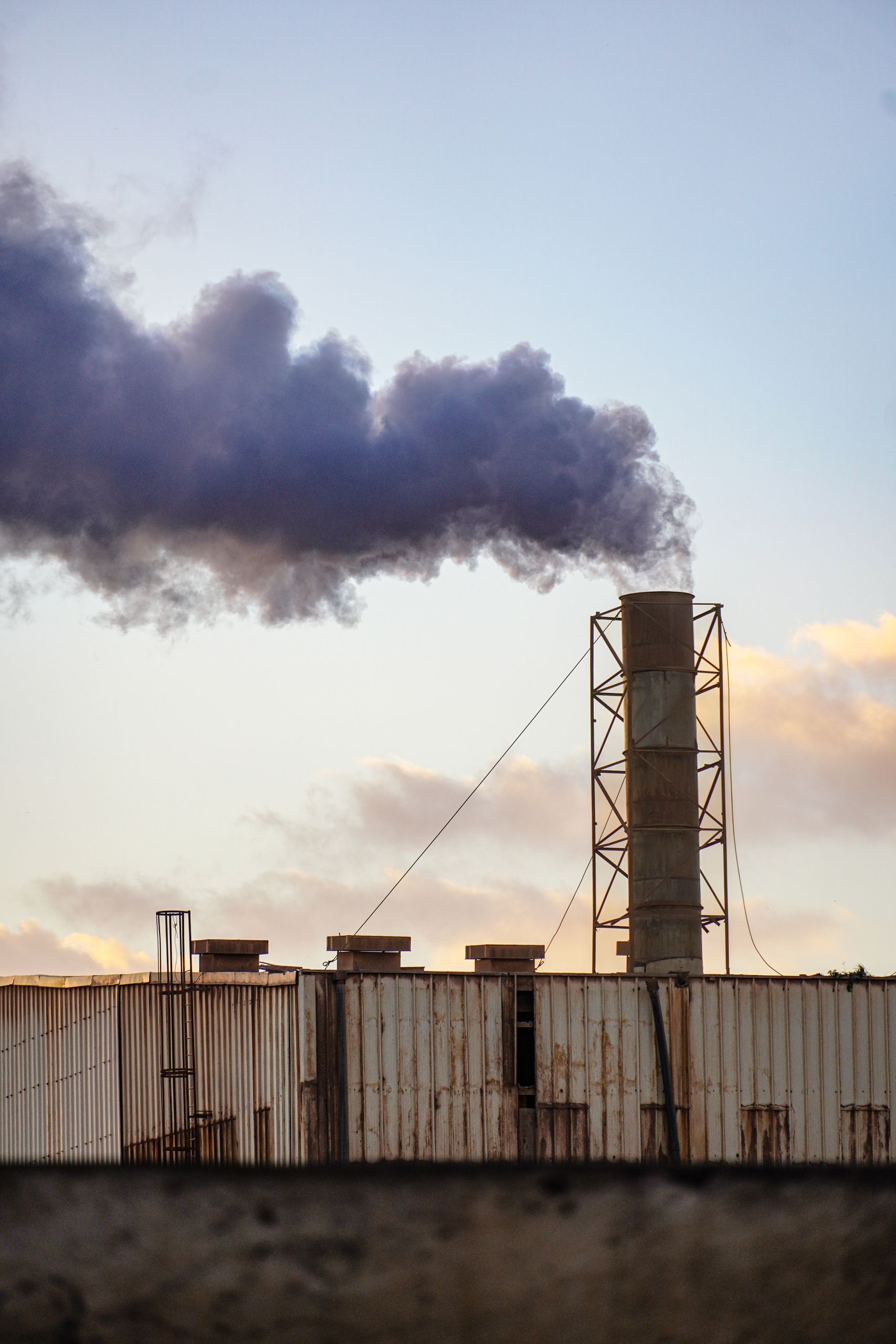
Industries in the Baltic Sea region import fossil-based CO₂ for use in their industrial processes, even though locally available biogenic CO₂ already exists. Today, much of this biogenic CO₂ is simply released into the atmosphere instead of being captured and put to use.
Capturing biogenic CO₂ alone is not enough. For the solution to be climate-smart, economically viable, and legally compliant, an entire value chain must be established, from capturing, purifying, and transporting the CO₂ to ensuring there are industries that can make use of it.
Bio-CCU
Project approach
Work Packages WP1–WP4
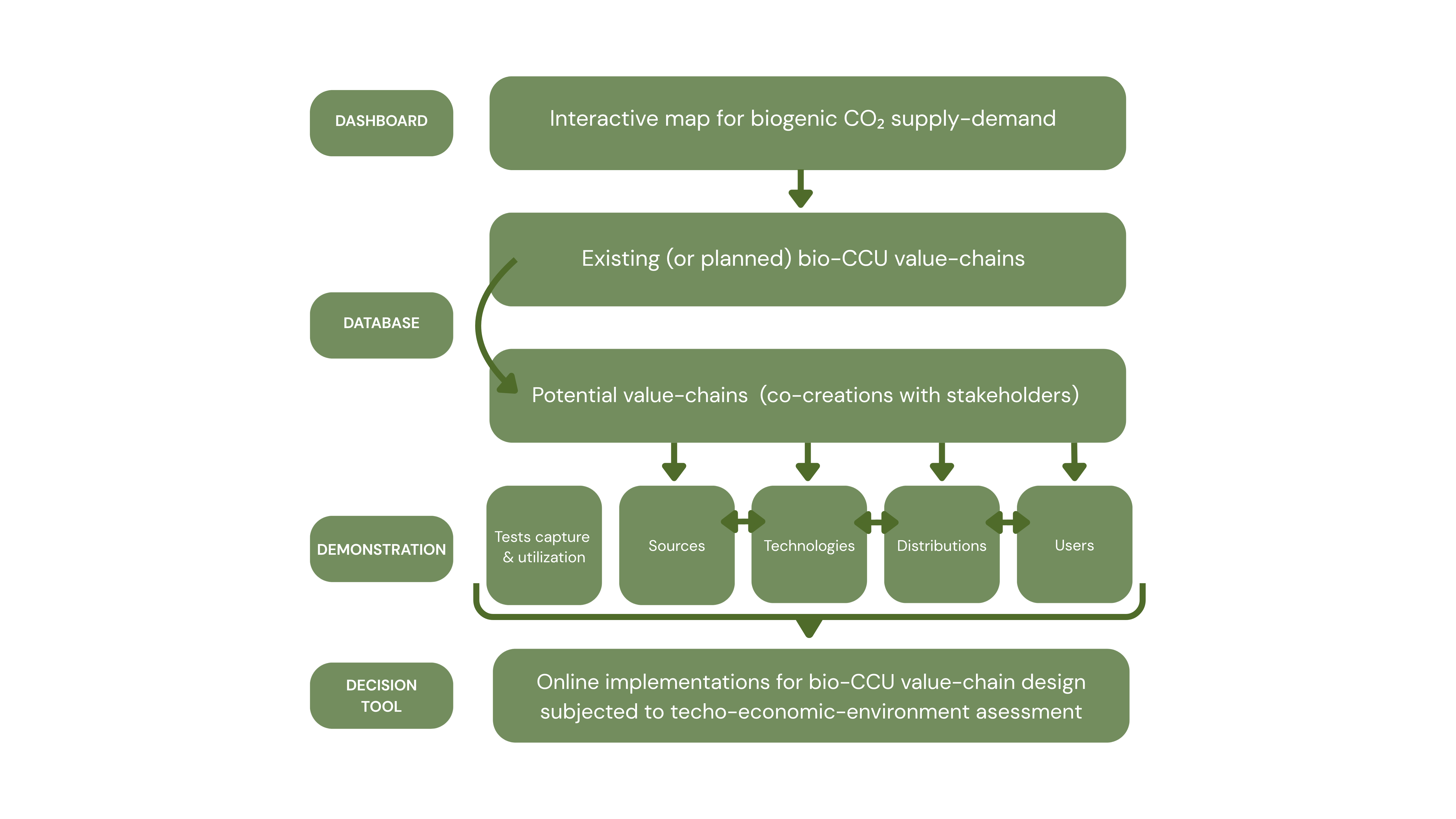
The Bio-CCU project is structured into four interconnected work packages that build on each other in a clear sequence.
Each step provides the foundation for the next, forming a complete pathway from data collection to real-world demonstration.
WP1 –
Dashboard
Maps the availability and demand of biogenic CO₂ across the Baltic Sea region. It identifies where CO₂ is produced, where it could be used, and how it flows between different sectors.
The results are compiled into a digital CO₂ biogenic dashboard that visualises regional bio-CCU opportunities. WP1 also aims to raise awareness of how bio-CCU can contribute to carbon neutrality in sustainable cities.
WP 2 –
Database
Builds on the results from WP1. Using the mapped data, a user-friendly database of existing and potential bio-CCU value chains is developed.
The work includes case studies, stakeholder workshops, and system analysis to understand how value chains function today and how they can be improved or scaled.
WP 3 –
Decision Tool
Is based on the outputs from WP2. It transforms the database and value chain knowledge into a web-based decision-support tool that assists users in designing and evaluating bio-CCU value chains.
The tool provides recommendations based on techno-economic and life-cycle environmental assessments, comparing biogenic and fossil-based alternatives before being tested with stakeholders and launched online.
WP 4 – Demonstration
WP4 demonstrates the complete bio-CCU value chain at two industrial pilot sites and provides real-world data to improve the decision tool developed in WP3.
The work tests how biogenic CO₂ can be captured, purified, and reused in applications such as greenhouse cultivation and microalgae production. The resulting biomass is converted into biochar for soil improvement, demonstrating the value chain in practice.
Bio-CCU
Visualization:

Find Bio-CCU on social media