

EASWork
ended
EASWork
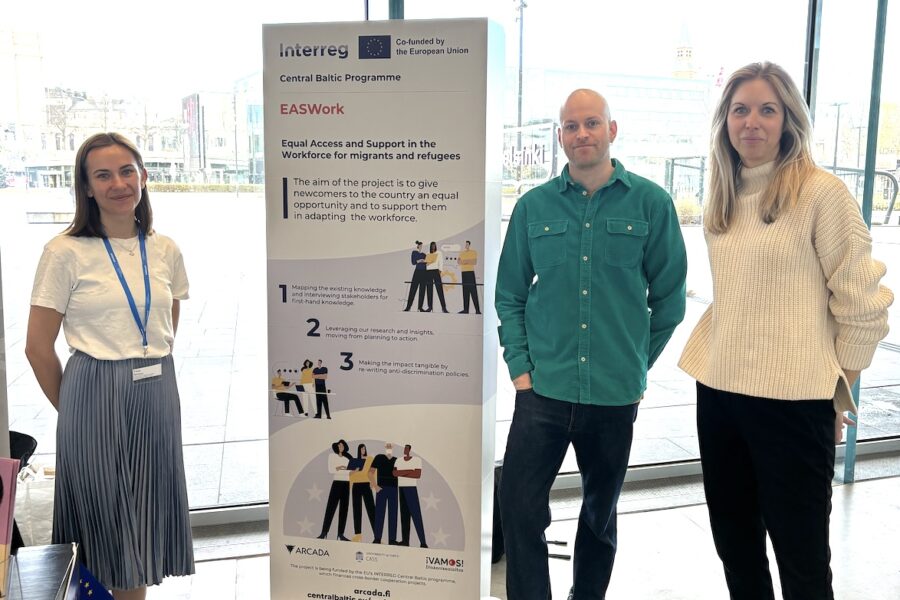
The focus of this project aims not only at giving newcomers to the country an equal opportunity but supporting them in adapting in the workforce. It is the right of employees to have access to support to perform their best, and it is in the interest of employers, sectors, and countries in the region to provide that support as an integral part of the employment policies in both Finland and Estonia. It is essential that both countries have work environments that support international employees in achieving their full potential in the local working environment. The overall objective of this project is therefore to work together with organizations in Finland and Estonia that often hire the largest amount of migrant workers to understand what their current anti-discrimination policies are and how these can and need to be improved to support migrant workers in the current and future context of diversifying work forces.
Results
Creating inclusive and supportive workplaces for migrants and refugees has become an increasingly urgent priority in both Finland and Estonia. With growing global mobility and recent crises, such as the war in Ukraine, both countries have experienced new waves of migration that demand swift and thoughtful responses. This project was developed in recognition of the fact that inclusion in the labor market goes beyond offering equal opportunities on paper. True inclusion also requires that public and private employers understand and support the unique challenges that international employees face, including differences in language, work culture, and societal expectations.
The aim was therefore not only to promote fairness, but to support long-term integration by ensuring that migrant workers are given the tools and environment needed to succeed. In the long run, this benefits both employees and employers, enhancing individual well-being while also increasing workforce stability and productivity at a societal level.
One of the most unexpected challenges encountered, particularly in Estonia, was the issue of self-selection among companies. Those organisations that could have benefited the most from cooperation, and had the potential to positively impact large numbers of migrants and refugees, proved the most difficult to reach. Many showed little interest in the topic, possibly due to perceived administrative burdens or even because they benefited from maintaining the status quo. These companies often declined to engage, even at the level of initial discussion.
In contrast, companies already investing in DEI efforts, cultural sensitivity, and the employment of international staff were the most open to collaboration. However, these organisations often had limited room for additional improvements, as their structures and practices were already relatively inclusive. It became clear that without direct economic incentives, even strong arguments and research-backed recommendations could not persuade those who needed anti-discrimination reforms the most.
Additionally, the project faced a structural challenge due to a miscalculation in the application phase: the Estonian partner was tasked with the same number of interviews and company collaborations as two Finnish partners combined. This imbalance became more evident as the project progressed and influenced the overall implementation capacity across borders.
To find out attitudes, needs and resources of migrants and companies who need workforce.To find out companies practices in DEI (Diversity, Equity, Inclusion), discuss with companies/organisations about adopting and improve their existing anti-discrimination policy. EASWork cooperated with 24 different companies with positive outcome.
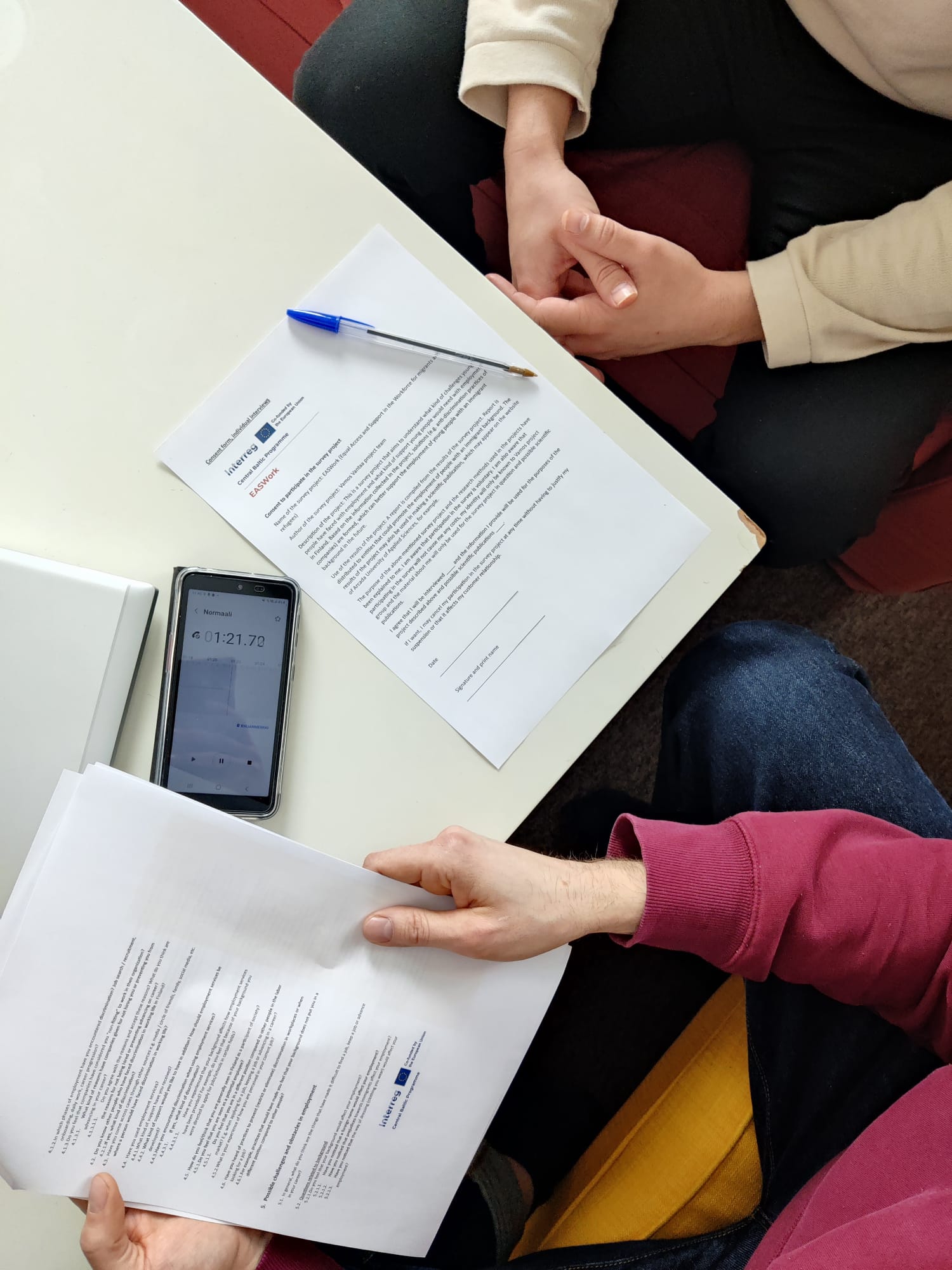
Regarding the solution that was developed, we relied mainly on our research. Lacking convincing evidence of the problems faced by refugees and migrants in Estonia and Finland, our interviews were crucial in establishing the kinds of problems the communities were facing and recognizing the emergent patterns in the labor market that were leading to instances of discrimination. These insights were highly valued in our discussions with companies, and were the main way we were able to illustrate the need for specific anti-discrimination policies. Without our research, it is unlikely we would have been taken as seriously.
We supported each other with knowledge, recruiting companies who were interested in anti-discrimination policy. We shared different approached e.g. Estonia had mostly Ukrainian refugees/migrants and Finland had migrants from several different countries. Impact and aims of the EASWork were achieved both in Finland and Estonia.
Due to the imbalance in the distribution of planned activities, close cooperation among the project partners proved essential. The activities in Estonia were supported through shared expertise and contributions from the Finnish partners. Administrative and project management responsibilities were efficiently handled by the lead partner, ensuring the smooth coordination of the overall project.
Beyond these practicalities, the cross border aspect was useful in comparing situations. Being that refugee and migrant communities in the two rather similar coutnries were so different, it was useful to understand the problems in both–especially where they were the same.
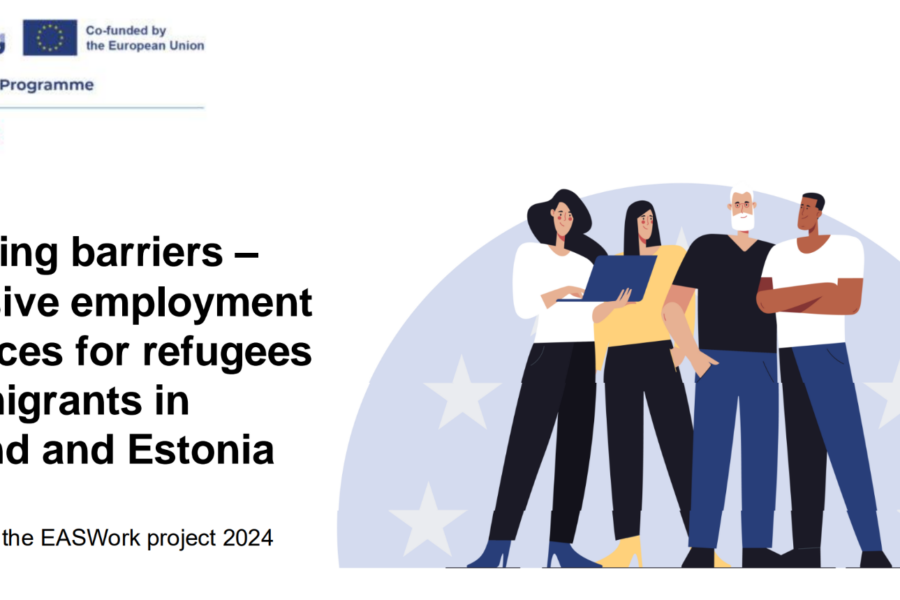
Report: Breaking barriers – Inclusive employment practices for refugees and migrants in Finland and Estonia
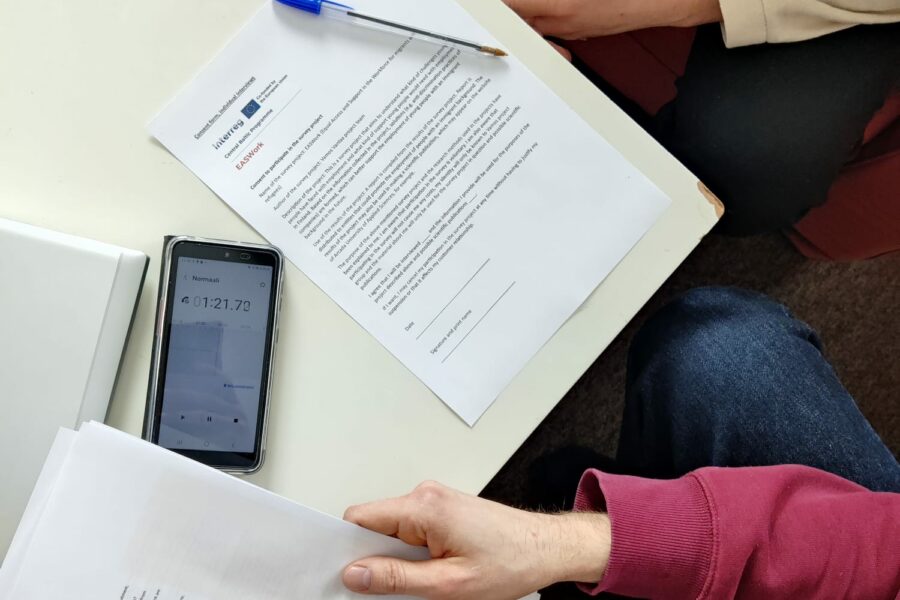
Our report seeks to answer two key questions: What are the barriers that migrants and refugees face in the labor market in Estonia and Finland? And what corporate/firm-level policy recommendations can reduce these barriers and prevent discrimination? Using thematic content analysis, we have extracted insights from interviews conducted in both countries, offering a nuanced understanding of the struggles these individuals encounter.
Expected results
We assess employment trends and migrant workers’ needs in Estonia and Finland by interviewing migrants and collaborating with NGOs and businesses to understand and compare anti-discrimination policies. Following negotiations with businesses, we implement agreed-upon changes in organizational documents. The main output will be on working closely with organizations hiring migrants and refugees, as well as NGOs supporting migrants, to identify and implement necessary policy changes. These improvements will not only enhance organizational practices but also influence the broader business culture in Estonia, Finland, and the entire region. Migrants and refugees will receive crucial support, ensuring their skills match job opportunities, while organizations will benefit from streamlined access to an under-utilized workforce.
Duration 01.10.2023 - 31.03.2025
Total budget
Programme priority
Improved employment opportunitiesProgramme objective
PO6 - Improved employment opportunities on labour marketLead partner
Arcada University of Applied SciencesProject News



Project Events
Project Stories
Gallery

Managing Authority
Joint Secretariat
c/o Regional Council
of Southwest Finland
Visiting address: Linnankatu 52 B, Turku, Finland
Mailing address:
P.O. Box 273,
20101 Turku, Finland
E-mail: info@centralbaltic.eu
Phone: +358 40 550 8408
Find EASWork on social media