

Region of opportunities
ended

Region of opportunities
This project addresses long-term unemployment of national minority women with children in Latvia and Estonia who fall in the age group 15-29 years. Women in both countries bear social responsibilities, such as taking care of children and elderly relatives, and have more domestic duties than men, which makes it difficult to meet rigid requirements of some employers and withstand demanding working conditions. According to a survey, 2/3 of women with children faced discriminatory behaviour of employers either in a straightforward or implicit way. Moreover, jobless years, inability to realise potential and absence of income have a negative impact on target group representatives’ self-esteem and self-confidence.
The project will design and implement a cross-border training course, which will provide women with children with a key business information and help develop essential competencies to launch and run a micro or small company.
Results
The project addressed persistent regional and sectoral challenges in Latvia and Estonia related to the long-term unemployment of young national minority women with children. Despite overall improvements in labour market indicators, this group remains disproportionately affected by economic inactivity due to a combination of structural barriers, including childcare responsibilities, language-related obstacles, discrimination, prolonged career gaps and declining self-confidence.
The project responded to the need for targeted, inclusive solutions that go beyond traditional employment measures and address both economic and social dimensions of exclusion.
The core idea of “Region of Opportunities” was to empower young national minority women with children by positioning entrepreneurship as a realistic and accessible pathway out of long-term unemployment. Rather than focusing solely on business skills, the project aimed to rebuild participants’ confidence, agency and motivation, while equipping them with practical entrepreneurial competencies and a clearer understanding of self-employment opportunities.
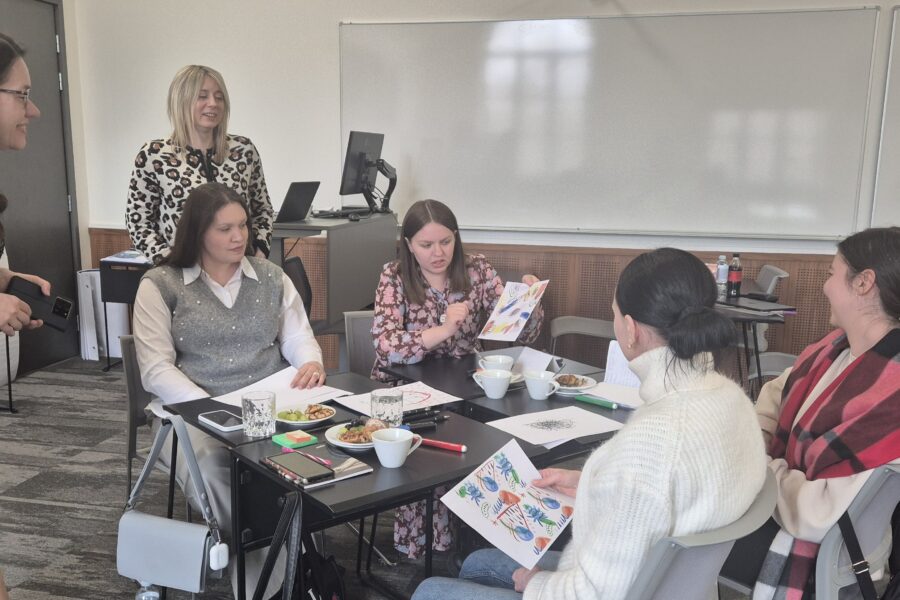
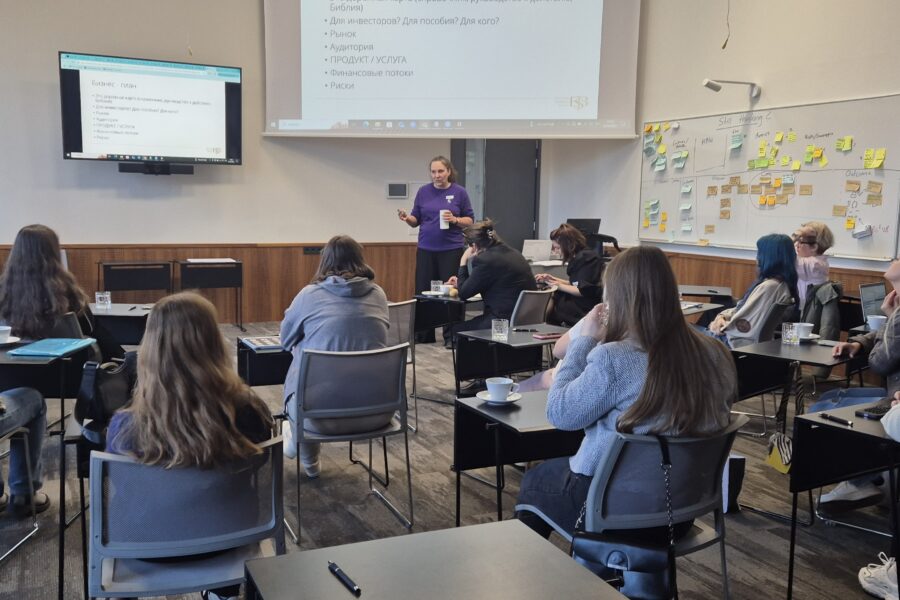
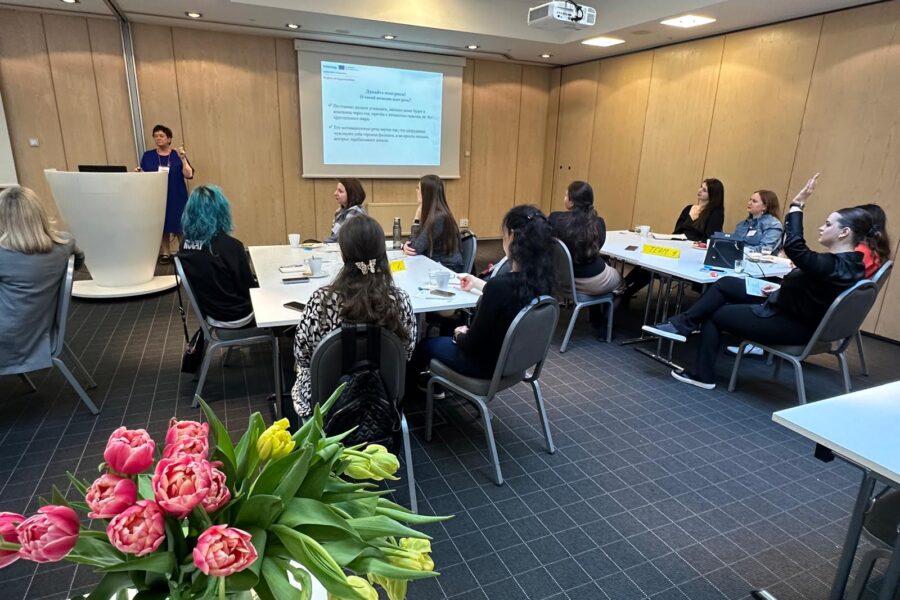
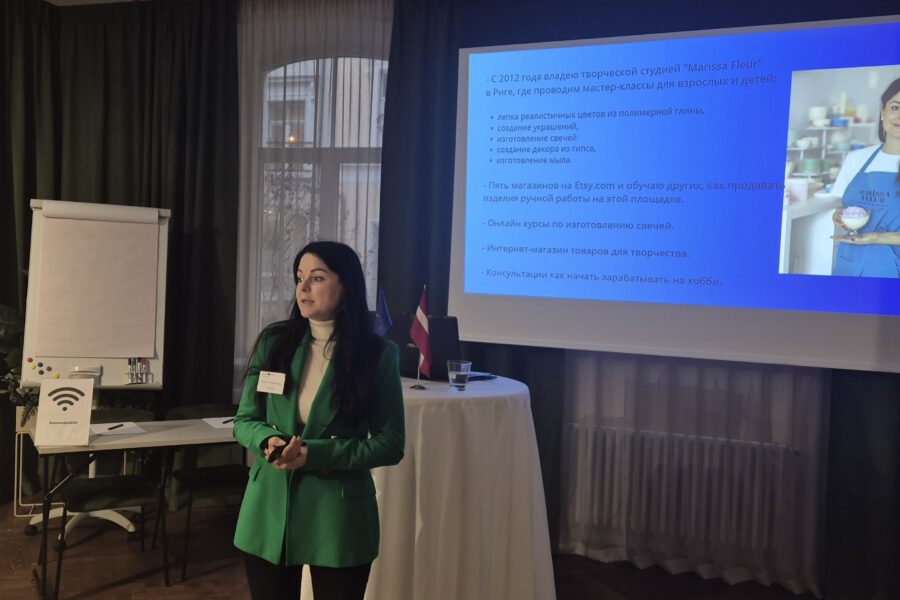
To achieve this, the project partners developed and implemented a comprehensive entrepreneurship training course consisting of 9 structured events and a total of 131 learning hours, delivered twice in two training cycles. The course combined confidence-building and self-discovery workshops with practical entrepreneurship training, covering business idea development, planning, and implementation.
The training was designed as a step-by-step learning journey, enabling participants to work on real business ideas from an early stage. In addition to group-based learning, the programme was complemented by personalised mentoring, individual consultations and practical consulting support.
Cross-border cooperation between Latvian and Estonian partners was essential to the project’s success. It enabled the pooling of complementary expertise, the integration of diverse labour market perspectives and the creation of a richer, more relevant training experience. Joint development and delivery of activities ensured consistency, innovation and high quality, while cross-border interaction expanded participants’ understanding of entrepreneurial opportunities in both countries.
The project achieved tangible impact in the targeted regions by strengthening participants’ entrepreneurial capacities, increasing their confidence, and improving their readiness for self-employment or employment. A total of 69 young women participated in the project, and 55 of them successfully completed the course, with several already transitioning into entrepreneurship or employment during or shortly after the programme. Beyond measurable indicators, the project fostered empowerment, peer support, and a strong sense of community—outcomes that participants identified as critical for their long-term personal and professional development.
Training material handbook
The Training Material Handbook, co-developed by the project partners, contains both theoretical content and presentations by business representatives, along with practical exercises.
Expected results
The interactive cross-border training course will last for 10 months, encompass 9 cross-border one-day events and will be conducted twice: in Cycle 1 and Cycle 2.
Each cycle will include 2 modules, namely: Module 1 – You and your business: Awareness-raising conference, self-analytical and confidence-boosting workshop “Who are you? What are you?”, introduction into mastermind groups “Strengths combat weaknesses” and workshop “Imagine your business”. Module 2 – Key business knowledge: Workshops “Sell with confidence”, “Enormous possibilities of the internet”, “Finance fundamentals”, “Branding: make your packaging attractive” and consulting marathon “Clarify it!”.
A total of 66 women will be enrolled in the course during 2 cycles. 54 persons will be active participants. It is expected that 30% of active participants (equals to 16 persons) will start own businesses within 1 year after course completion.
Duration 01.09.2024 - 30.11.2025
Total budget
Programme priority
Improved employment opportunitiesProgramme objective
PO6 - Improved employment opportunities on labour marketLead partner
Latvia University of Life Sciences and TechnologiesProject News


Project Events
Project Stories
Gallery

Managing Authority
Joint Secretariat
c/o Regional Council
of Southwest Finland
Visiting address: Linnankatu 52 B, Turku, Finland
Mailing address:
P.O. Box 273,
20101 Turku, Finland
E-mail: info@centralbaltic.eu
Phone: +358 40 550 8408
Find Region of opportunities on social media